

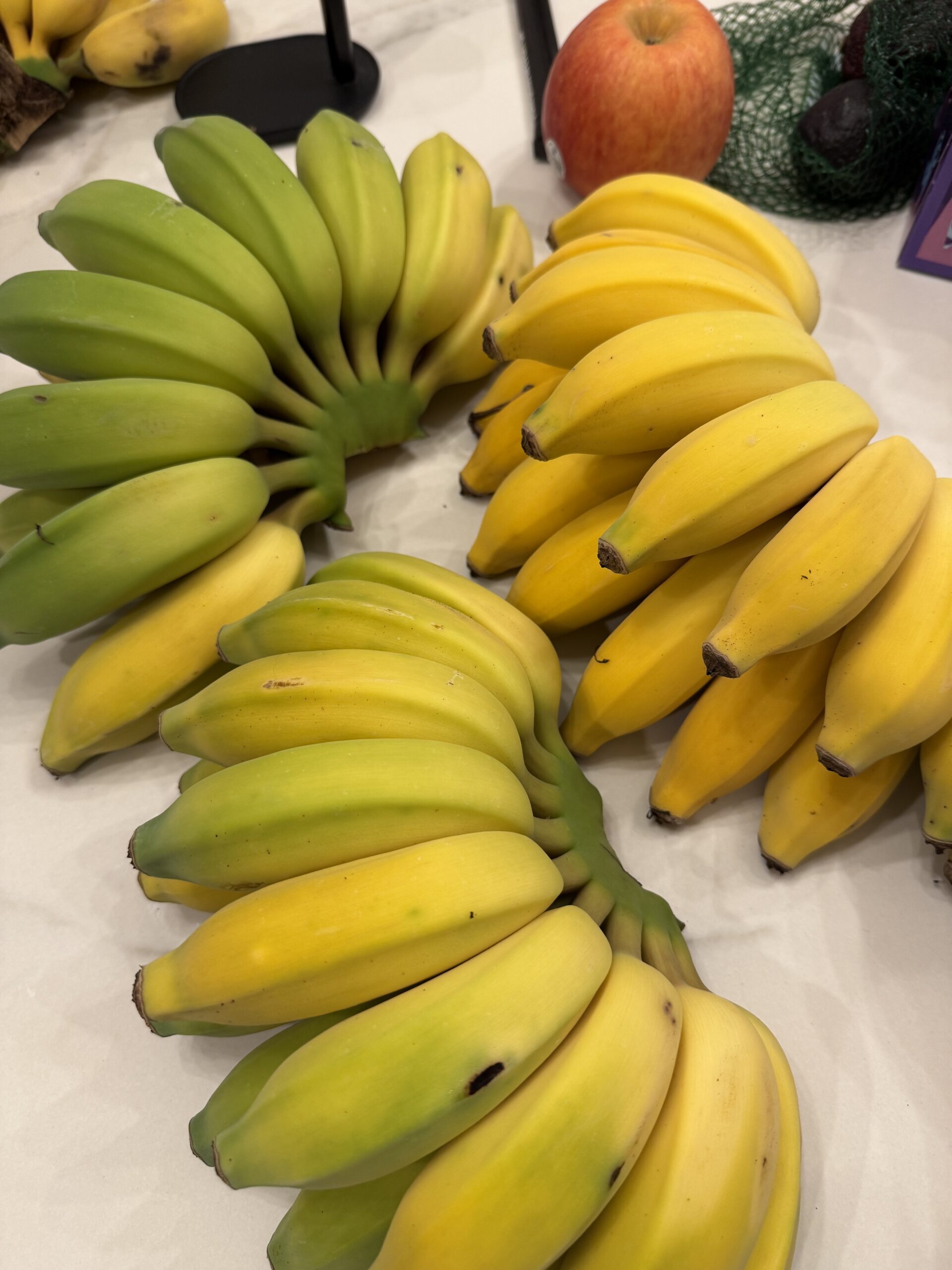
🍌 Plant Profile: Ice Cream Banana (Blue Java)
📊 Basic Information
- Variety Name: Ice Cream Banana / Blue Java (Musa acuminata × balbisiana)
- Planting Date: Late July 2023
- Yield Performance: ★★★★★ (Incredible efficiency; fruiting started in early 2024, less than a year after planting)
- Flavor Profile: Silky smooth texture, distinct vanilla custard notes, melt-in-the-mouth consistency.
📖 Variety Introduction
The Ice Cream Banana is celebrated for its unique dessert-like quality and surprising hardiness, making it a standout in any home orchard.
- Physical Characteristics: The fruits are somewhat shorter and blockier than standard Cavendish bananas. Unripe fruits possess a stunning silvery-blue hue, which ripens into a pale yellow.
- Flavor Experience: Often called the “dessert of the tree,” its texture is more reminiscent of custard or softened ice cream than a typical starchy banana, accompanied by a natural hint of vanilla.
- Growth Habit: Known for vigorous growth. It thrives in the sunny climate of Rowland Heights and boasts a relatively fast turnaround from planting to harvest.
📝 My Planting Record
Two of these trees were added to the garden in late July 2023, and they have exceeded all expectations in terms of speed.
- Rapid Production: By early 2024, the trees had already produced their first bunches. The transition from a new transplant to a fruiting tree in just about six months is remarkable.
- Management Style: This is a low-maintenance variety. Once established, they require very little hands-on intervention to thrive.
- Garden Observation: They are heavy feeders and sun lovers. As long as the nutrient levels are maintained, they grow with impressive speed and strength.
🛠️ Care & Maintenance
- Heavy Fertilization: To sustain the large leaves and heavy fruit bunches, “heavy feeding” is essential. Plenty of fertilizer is the key to their success.
- Shoot Management: Strategic management of new shoots is vital. I limit the number of suckers to prevent them from draining energy from the main plant, selecting only the strongest as successors.
- Sustainable Cycling: Following the rule that “a stalk fruits only once,” I cut down the tree after harvest. The felled trunk is then composted, recycling all that stored biomass and nutrients back into the soil for the next generation.