

🍊 Plant Profile: Fuyu Persimmon
📊 Basic Information
- Variety Name: Fuyu Persimmon
- Planting Time: Original old tree in the orchard, reborn after transplanting
- Yield Performance: ★★★★☆ (Survived a near-death experience and has bounced back completely; currently producing a heavy crop)
- Taste Characteristics: Crisp and sweet like an apple, completely non-astringent, with delicate flesh and unique notes of cantaloupe and brown sugar.
📖 Variety Introduction Fuyu is one of the most popular non-astringent persimmon varieties, and it’s definitely a star in my autumn orchard.
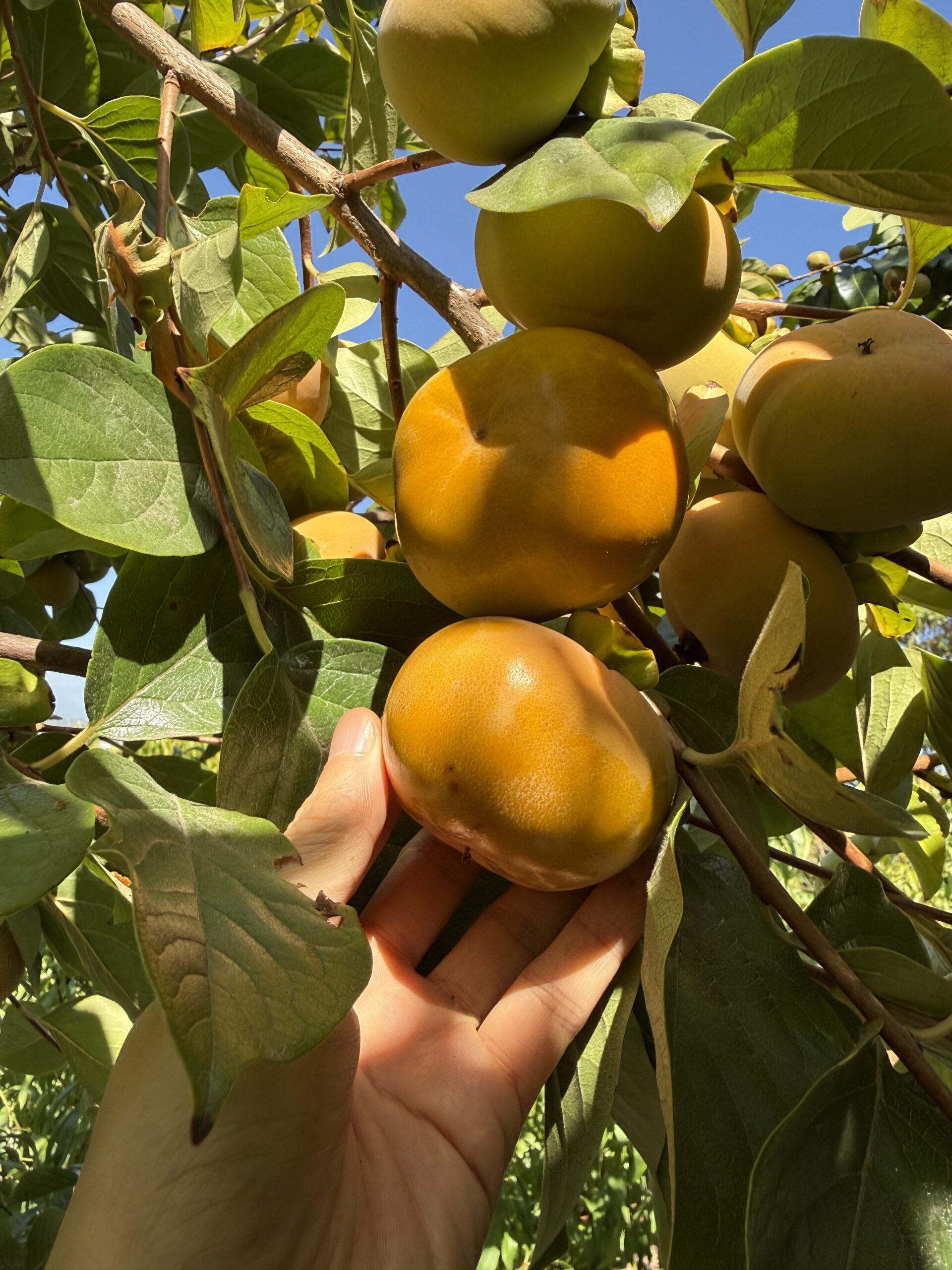
- Appearance: Its fruit shape is flat and slightly squarish. When ripe, the skin turns a highly tempting bright orange, smooth and glossy. Looking at the plump fruits I grew in the photo, the visual appeal is just stunning.
- Flavor Profile: Unlike traditional astringent persimmons that must be soft and mushy to eat, the biggest feature of the Fuyu is that I can bite right into it, skin and all, while it’s still hard and crisp. The taste is refreshingly sweet but not cloying. If you don’t like a mushy texture, this is absolutely the top choice.
- Growth Habit: It loves warm, abundant sunshine and has adapted perfectly to the climate here in Rowland Heights. In late autumn, its leaves will turn beautiful shades of deep red and golden yellow. After the leaves drop, the whole tree looks like it’s covered in little red lanterns, offering incredible ornamental value.
📝 My Planting Record
- A Thrilling Rebirth: This tree has a very rocky backstory. It was actually an old resident that was already here when I first moved in. Later, because I was building a retaining wall at home, I had to undertake a massive transplanting operation. That move severely drained its vitality, and it was on the brink of death. It was truly heartbreaking to see it looking so weak.
- Survival by Amputation: To save it, I made a difficult but ultimately correct decision: I ruthlessly cut off almost all of its branches, making a desperate bet by keeping only two main trunks. It was this extreme, heavy pruning that drastically reduced water evaporation and nutrient consumption, giving the damaged root system a chance to breathe and miraculously saving its life.
- The Gift of Harvest: After a long period of rest and recovery, not only did it stubbornly survive, but today it gave me a huge surprise—it has started fruiting heavily! Looking at the dense, heavy persimmons hanging on the branches, all the hard work and initial reluctance to prune so hard were totally worth it. The vitality of this tree is truly admirable.
🛠️ My Care Essentials
- The Lesson of Severe Pruning: My personal experience taught me that transplanting an old tree carries huge risks, and you have to be willing to “behead” it to balance the damaged root system. Now that it has a new lease on life, my future winter pruning will focus on maintaining airflow and light penetration in the canopy, removing water sprouts and crossing branches to keep it from growing too tall.
- Watering: Even though its reborn root system is now well-established, during the hot California summers and its current heavy fruiting stage, I need to provide deep and consistent watering, while also being careful to avoid waterlogged soil that could rot the roots. Stable moisture effectively prevents autumn fruit drop.
- Moderate Fruit Thinning: Although I’m thrilled to see such a massive fruit load this year, to protect the newly recovered tree from collapsing under the weight (and potentially snapping those two precious main branches), and to ensure each persimmon grows larger and sweeter, I might have to harden my heart and thin out some of the smaller or overly crowded fruits.
- Fall Nutrient Reserves: Once this batch of fruit is fully harvested and before it drops its leaves for dormancy, I will treat it to a hearty feast of organic fertilizer and mulch to reward its hard work this year and help it store up plenty of energy for next spring.