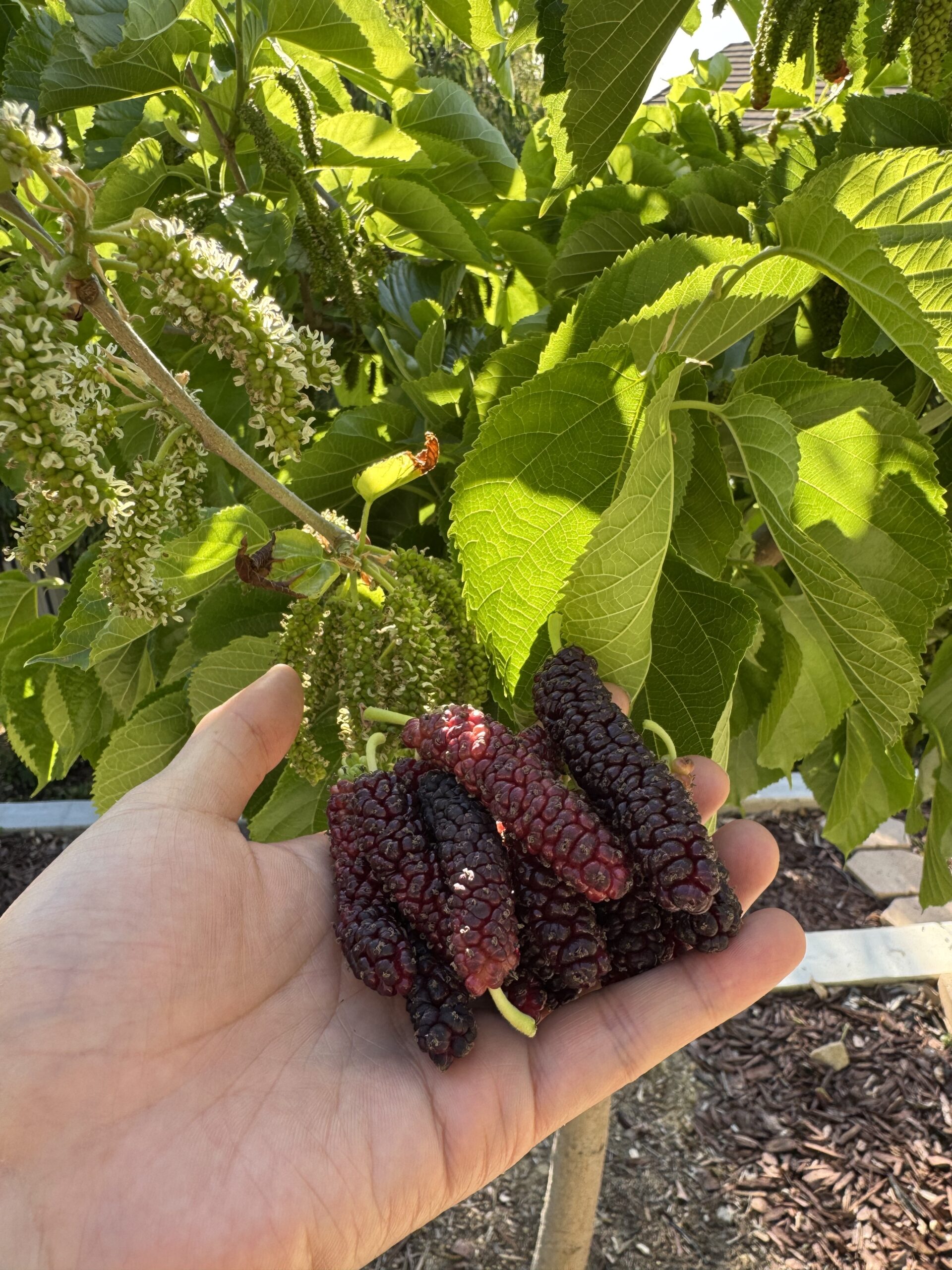
🌿 Plant Profile: Pakistan Mulberry
📋 Basic Info
- Variety Name: Pakistan Mulberry (Morus macroura)
- Date Planted: Spring 2023
- Yield: ⭐⭐⭐⭐⭐ (Extremely Prolific)
- Flavor Profile: Pure sweet with no acidity, firm texture, juicy
📖 Variety Introduction
The Pakistan Mulberry is often hailed as the “King of Mulberries” and is currently one of the most popular tropical/subtropical mulberry varieties on the market. Compared to other mulberries, it boasts unique and significant advantages:
- Extra Long Fruit: The fruits are elongated, reaching 3–4 inches (6–10 cm) in length when mature. Their massive size makes them visually stunning.
- Pure Sweetness: This is its biggest selling point. Unlike common mulberries which have a “sweet-tart” balance, the Pakistan Mulberry is purely honey-sweet upon maturity. It has a very high Brix (sugar content) and absolutely no acidity, making it perfect for those who dislike sour fruits.
- Edible at Various Stages: The fruit begins to develop sweetness as soon as it turns red, and the flavor deepens as it ripens to a dark purple-black.
- Firm Texture: Compared to wild mulberries which can be mushy and stain easily, this variety has relatively firmer flesh. It holds well on the branch and offers a much better harvesting experience.
🏡 My Planting Record
This tree was added to the orchard in Spring 2023. Although it hasn’t been established for long, it has shown explosive growth power.
- Growth Vigor: The tree is extremely robust and fast-growing. In just a few years, the canopy has already reached a significant scale.
- Yield Performance: Its productivity is astonishing. During the peak season, the branches are densely packed with long fruits. The yield is massive—I can harvest a full basket almost every day. It is undoubtedly one of the most rewarding trees in my garden.
🛠️ Care & Maintenance
To maintain its “massive yield” and healthy growth, I have summarized the following key points from my daily management:
- Pruning:
- Pakistan Mulberries grow extremely fast, so controlled pruning is a must.
- Summer Pruning (Post-Harvest): I recommend a heavy pruning right after the harvest season ends. This controls the tree height for easier picking and stimulates new growth, laying the foundation for next year’s yield.
- Winter Pruning: Remove dead, diseased, or overcrowded branches to ensure good airflow and light penetration.
- Watering & Fertilizing:
- Mulberries love water and fertilizer. Before bud break in spring and after summer pruning, I supplement with organic fertilizer (such as chicken manure or compost) or a balanced composite fertilizer to support the massive fruit load.
- During Fruit Swelling: Keep the soil consistently moist to prevent fruit drop or shriveling due to drought.
- Sun Exposure:
- Requires Full Sun. Ample sunlight is the necessary condition for high sugar content and high yield.
- Pest Control:
- This variety has strong disease resistance; the main challenge is birds and squirrels. Because the fruit is so sweet, I strongly recommend installing bird netting during the ripening season, otherwise, they will enjoy the harvest before you do.