Category: Fruite Trees

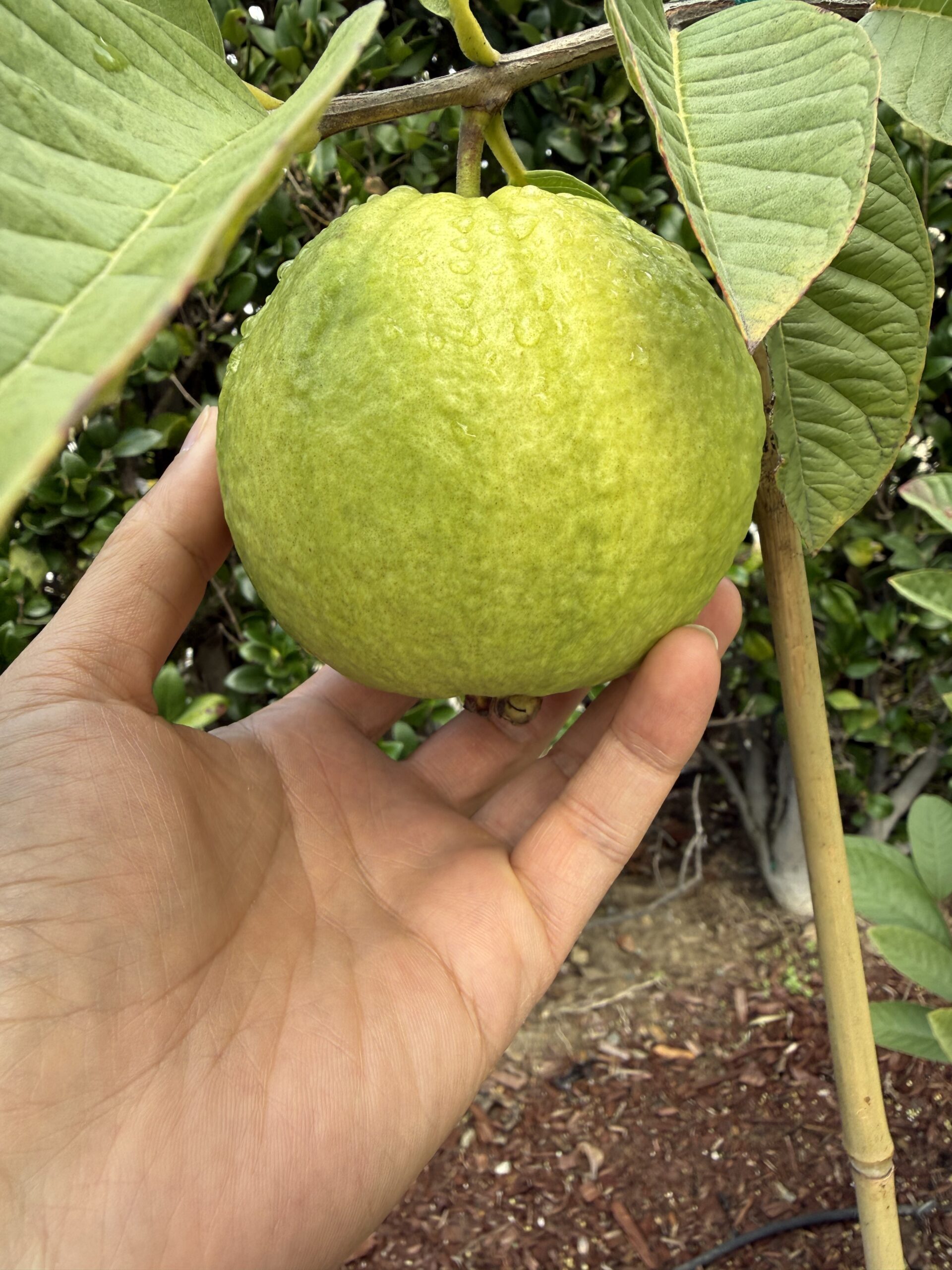
  • White Guava

    White Guava

    🍐 Plant Profile: White Guava

    📊 Basic Information

    • Variety Name: Common White Guava (Tropical White)
    • Planting Time: Late 2024
    • Yield Performance: ★☆☆☆☆ (First harvest in late 2025 with 2 fruits; currently in the young tree establishment phase)
    • Taste Characteristics: Crisp white flesh (becomes soft and creamy when fully ripe) with a fresh, intense tropical aroma and a balanced sweetness.

    📖 Variety Introduction I brought this guava home from Home Depot in late 2024. While it might be a “standard” variety, it is hardy, grows vigorously, and fruits quickly—making it a perfect addition to a Southern California backyard orchard.

    • Appearance: The fruits are beautifully spherical with thin, lime-green skin and a slightly bumpy texture.
    • Flavor Profile: It offers the classic tropical white guava flavor—refreshingly fragrant. This variety is excellent when eaten while still crisp (perhaps with a dash of plum powder) or left to fully ripen until soft for a sweeter, more mellow experience.
    • Growth Habit: Guavas thrive in the abundant sunshine of Rowland Heights. They are relatively drought-tolerant once established but respond very well to regular pruning to maintain a manageable shape.

    📝 My Planting Record

    • First Success: When I planted it in late 2024, it was just an inconspicuous little tree. I was pleasantly surprised to see it successfully produce my first 2 fruits by the end of 2025.
    • Future Expectations: While the current yield is small, these two fruits are a great signal that the tree has adapted well. I expect it to enter a much more rapid growth phase in 2026.

    🛠️ My Care Essentials

    • Strategic Pruning: Guava flowers and fruits on new seasonal growth. To double the yield next year, I will prune it in early spring to encourage the growth of more new shoots.
    • Fertilization: Guavas are responsive to feeding. I will regularly apply organic fertilizer, especially during the fruit development stage, to help the tree produce larger, high-quality fruit.
    • Water Management: Although it can handle some dry spells, I use my irrigation system to keep the soil consistently moist during the hot summer months to ensure the fruit stays juicy.
  • Frederick Passion Fruit

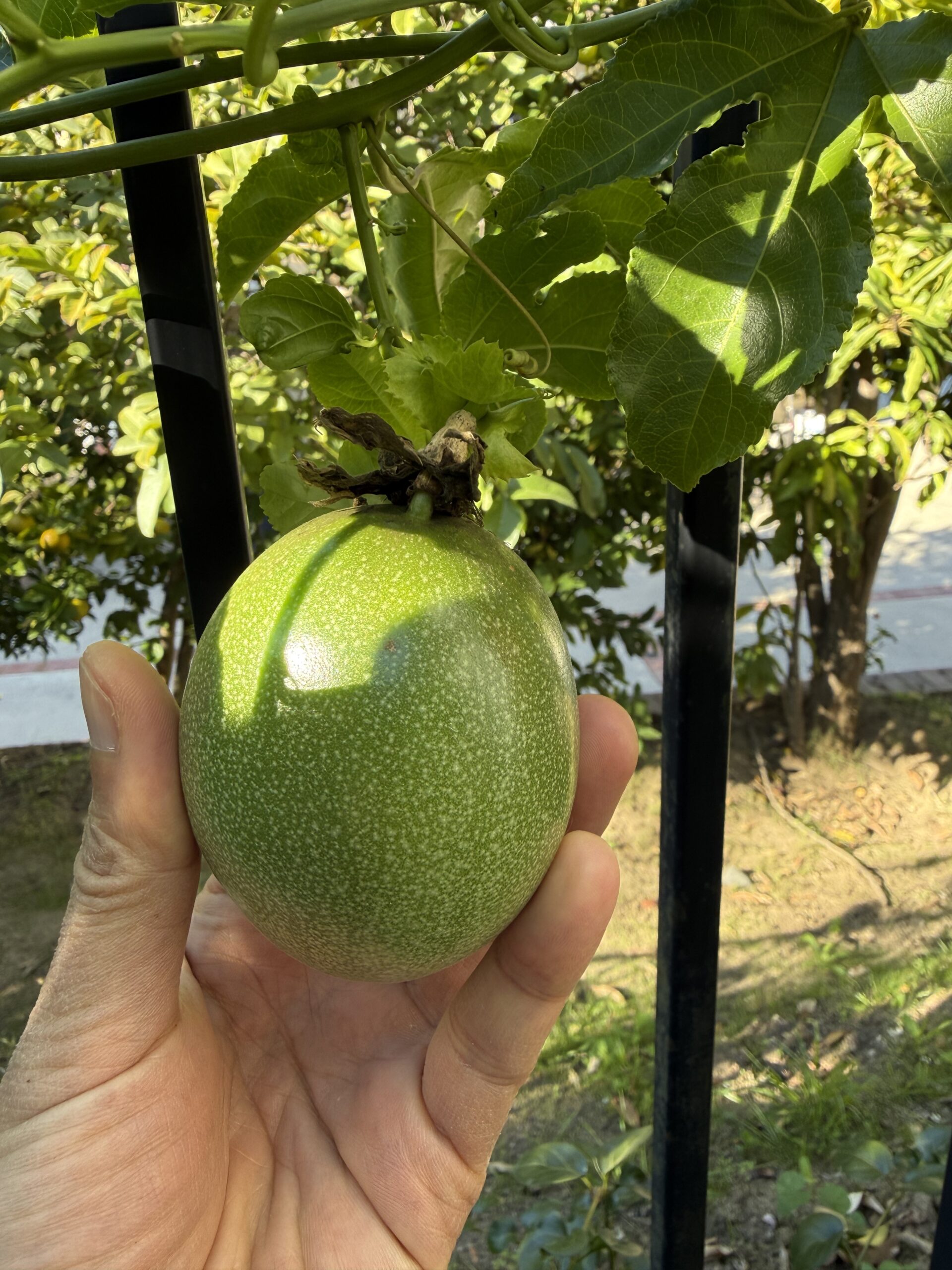
    Frederick Passion Fruit

    🌳 Plant Profile: Frederick Passion Fruit

    📊 Basic Information

    • Variety Name: Frederick Passion Fruit
    • Planting Time: Late 2024 (Replanted)
    • Yield Performance: ★☆☆☆☆ (Only 3 fruits in 2025; currently in the establishing and energy-storing phase)
    • Taste Characteristics: Classic purple-skinned passion fruit; extremely juicy with a sharp acidity and an intense, piercing tropical aroma.

    📖 Variety Introduction “Frederick” is a legendary cultivar selected in San Diego, making it perfectly suited for our Southern California climate. It is known for its frost hardiness and incredible vigor.

    • Appearance: The fruit turns deep purple when ripe. The flavor and sugar content actually peak when the skin starts to wrinkle slightly—that’s when they are at their best.
    • Flavor Profile: It has a very high juice content. That powerful punch of sweet and tart makes it a top-tier ingredient for passion fruit lemon tea, topping yogurt, or even enjoying straight if you love a citrus kick.
    • Growth Habit: This is an exceptionally “aggressive” vine. Under the Rowland Heights sun, it can grow several inches a day, making it perfect for covering fences or creating a green privacy screen.

    📝 My Planting Record

    • A New Start: I decided to replant this Frederick in late 2024 to give it a better environment. Although it only gave me 3 fruits in 2025, I’m not worried—I know it has been busy building a massive root system underground and preparing its canopy.
    • The 2026 Forecast: Looking at the strength of the current vines, I am highly confident that 2026 will be its breakout year for production. I expect this entire wall to be draped in purple fruit by then.

    🛠️ My Care Essentials

    • Heavy Trellising: Given its massive growth potential, I’ve provided a sturdy trellis. I make sure to guide the vines horizontally, as this encourages the growth of lateral shoots where the most flowers and fruit will form.
    • Water & Nutrients: Passion fruit vines are “heavy eaters.” I keep the soil consistently moist during the spring and summer and regularly supplement with organic fertilizer to fuel its rapid expansion.
    • Pruning Management: To prevent it from becoming a tangled mess, I will prune away thin or weak lateral branches in early spring, directing all the energy into the main fruiting vines.
  • Hass Avocado

    Hass Avocado

    🥑 Plant Profile: Hass Avocado

    📊 Basic Information

    • Variety Name: Hass Avocado
    • Planting Time: Spring 2022 (planted simultaneously with the Fuerte for cross-pollination)
    • Yield Performance: ★★★☆☆ (Still a young tree, steadily establishing its production)
    • Taste Characteristics: Extremely rich, creamy texture with a classic nutty aroma; the most popular variety in the world.

    📖 Variety Introduction The Hass is the “king” of the avocado world and serves as the perfect partner for the Fuerte in my orchard.

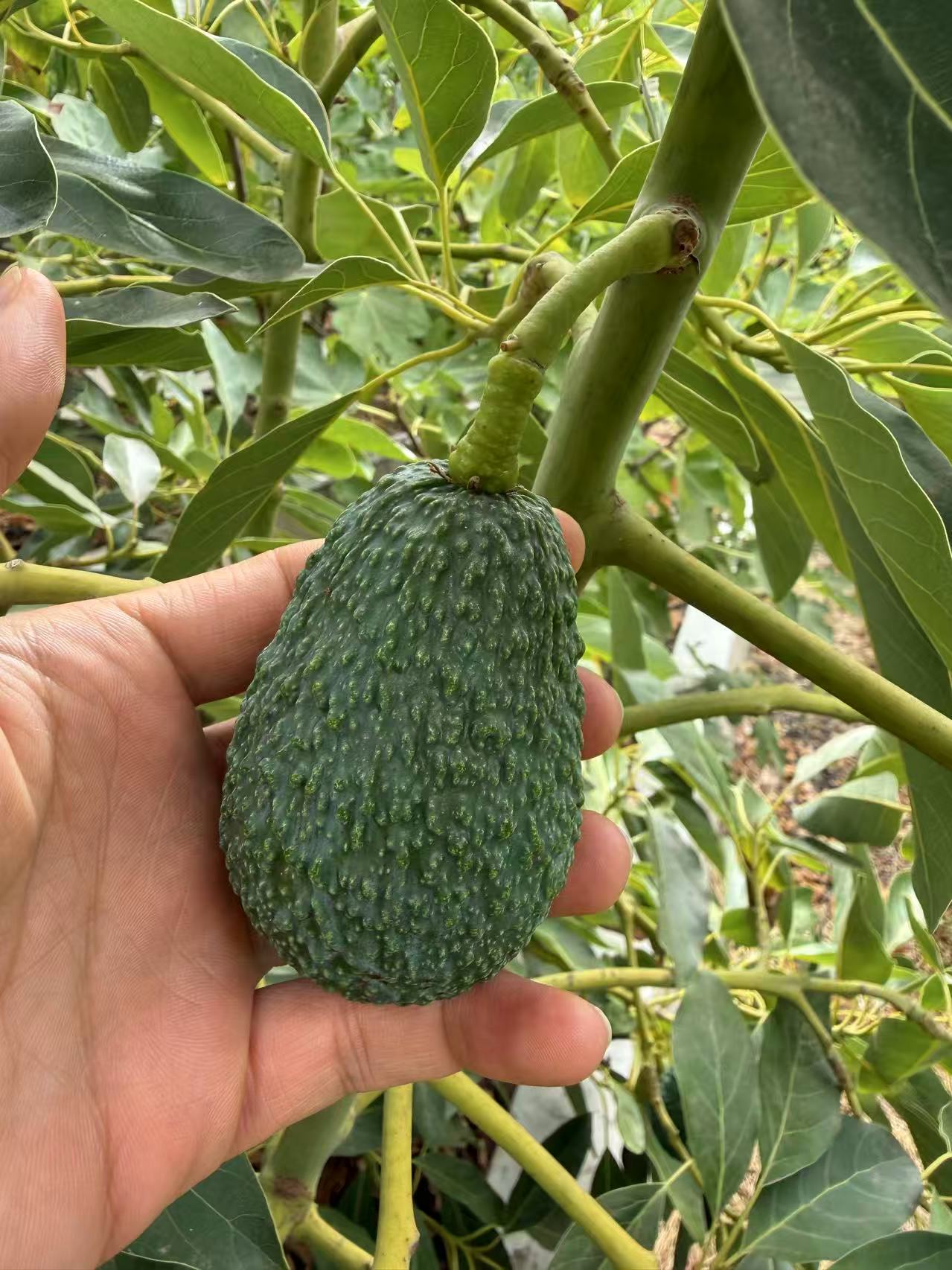
    • Appearance: Unlike the smooth green skin of the Fuerte, the Hass has a bumpy, pebbled texture similar to alligator skin. The skin transitions from green to deep purple or black as it matures, making it very easy to judge ripeness by color.
    • Flavor Profile: Its flesh is dense and oily when ripe, with a high fat content. Whether mashed into guacamole or sliced fresh, its rich, buttery flavor is top-tier.
    • Growth Habit: Hass is a Type A flowering variety. It grows vigorously in the Rowland Heights sunshine but is slightly more sensitive to frost than the Fuerte.

    📝 My Planting Record

    • The Perfect Neighbors: To solve the common issue of avocado pollination, I specifically planted this Hass near my Fuerte in the spring of 2022. This “A + B” combination ensures they cross-pollinate during their bloom cycles, making the yields for both trees much more reliable.
    • Growing in Sync: Watching these two trees take root, sprout, and fruit at the exact same time gives my orchard management a great sense of rhythm and order.

    🛠️ My Care Essentials

    • Height Control: Just like my strategy for the Fuerte, I keep this Hass pruned to under 2 meters (6.5 feet) for easy harvesting and to save space.
    • Precision Watering: Hass trees are very sensitive during the flowering and fruit-set stages. I use a careful irrigation schedule to ensure the roots are never too dry yet never waterlogged.
    • Nutrient Strategy: During the growing season, I regularly apply organic citrus and avocado fertilizer. Since the trees are close together, I ensure nutrients are balanced so they don’t have to “compete” for food.
    • Monitoring Ripeness: While I watch the Fuerte for texture, I rely on the color of this Hass; once it turns black and feels slightly soft to the touch, it’s time to enjoy the harvest.
  • Fuerte Avocado

    Fuerte Avocado

    🥑 Plant Profile: Fuerte Avocado

    📊 Basic Information

    • Variety Name: Fuerte Avocado
    • Planting Time: Spring 2022
    • Yield Performance: ★★★☆☆ (Currently in its “youth” stage, with a steady annual yield of about 20 fruits)
    • Taste Characteristics: Classic pear-shaped fruit with a thin, smooth skin; the flesh is as creamy as butter with a high oil content and a rich, nutty aroma.

    📖 Variety Introduction “Fuerte” means “strong” in Spanish, and it is one of the most cold-hardy and classic varieties in the avocado world.

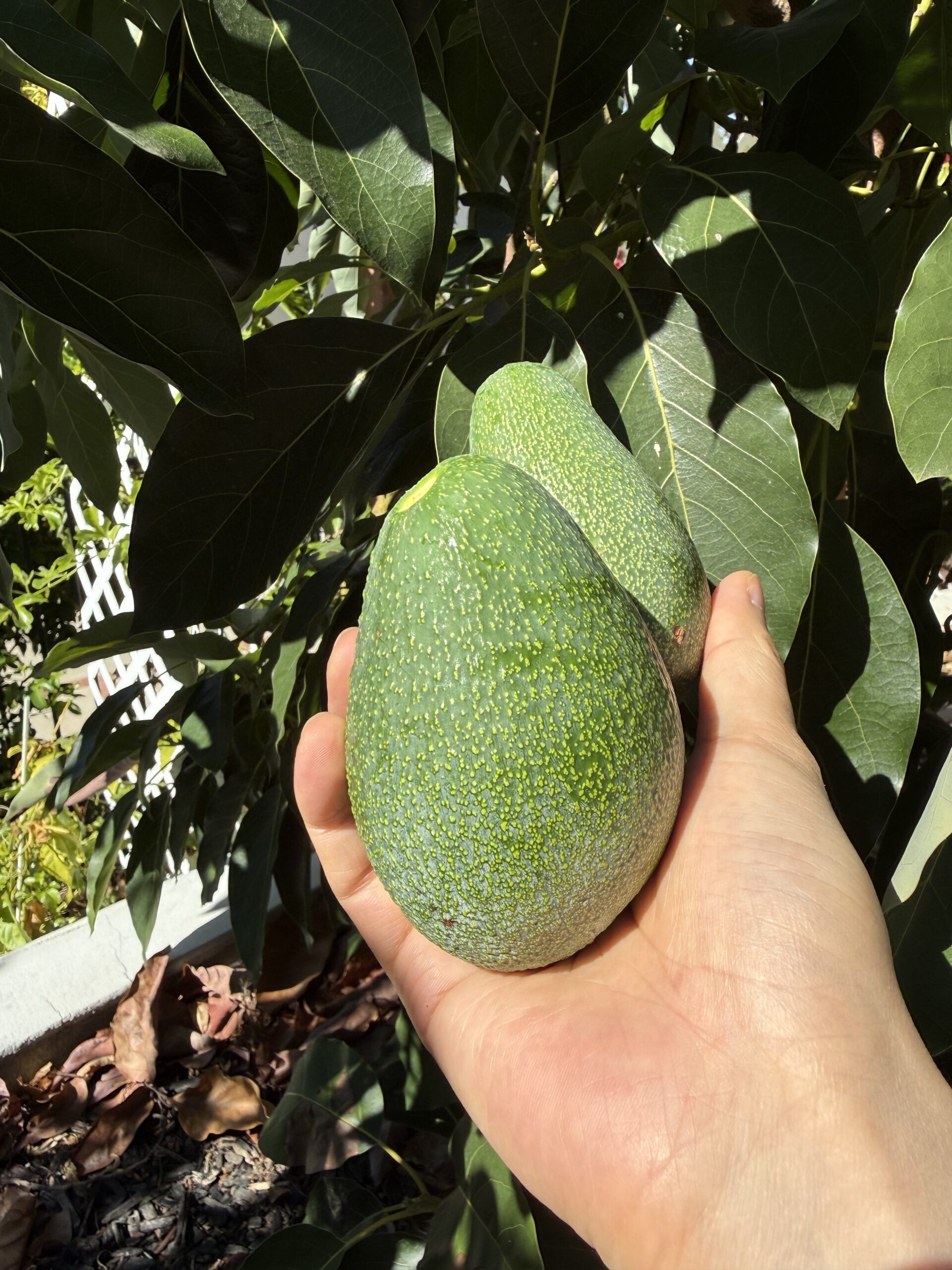
    • Appearance: Unlike the common Hass avocados found in supermarkets, the Fuerte’s skin remains a vibrant green even when ripe and does not turn black. Its skin is very thin and peels away effortlessly.
    • Flavor Profile: The texture of the flesh is incredibly smooth with no fiber. For me, it is the top choice for avocado toast or eating fresh with a dash of salt, as that rich, creamy flavor is hard to replace.
    • Growth Habit: The Fuerte is a Type B avocado and has a natural tendency to spread its branches wide. In the sunny environment of Rowland Heights, it requires consistent water management to ensure high-quality fruit.

    📝 My Planting Record

    • Three Years of Growth: I planted this tree in the spring of 2022 and have watched it closely ever since. Although it only gives me about 20 fruits a year right now, each one is a result of my hard work and is of excellent quality.
    • The Dwarf Experiment: I have a clear plan for this tree—I don’t want it to grow into a massive, 30-foot tree that makes harvesting a chore. I am currently using pruning to keep it controlled at under 2 meters (6.5 feet). This keeps it manageable for daily care and keeps the orchard looking tidy and proportional.

    🛠️ My Care Essentials

    • Height Control: This is the core of my maintenance. I regularly “top” the tree and prune lateral branches to suppress apical dominance and encourage outward growth. Two meters is my “red line”—as soon as it exceeds this height, I perform summer pruning to maintain its dwarfed state.
    • Scientific Watering: Avocado roots are very sensitive; they hate both drought and waterlogging. I ensure the soil has excellent drainage and keep the water supply even during the fruiting stage to prevent fruit drop.
    • Nutrient Support: To support the growth of these 20+ fruits, I apply a balanced organic NPK fertilizer. Supplementing with micronutrients just before the early spring bloom is very helpful for improving fruit set.
    • Trunk Protection: Avocado bark is thin and easily scorched by the intense California sun. Since my pruning allows more direct sunlight to hit the trunk, I plan to paint the trunk with a diluted white latex paint to protect it from sunburn.
  • Chinese Hawthorn

    Chinese Hawthorn

    🍎 Plant Profile: Chinese Hawthorn (Shanzha)

    📊 Basic Information

    • Variety Name: Chinese Hawthorn (Crataegus pinnatifida)
    • Planting Time: Summer 2022
    • Yield Performance: ★★★★☆ (Three years after planting, the branches are heavily laden with bright red fruit)
    • Taste Characteristics: The flesh becomes soft and mealy when fully ripe, with the classic signature tartness of Hawthorn; it is the perfect ingredient for traditional Chinese desserts.

    📖 Variety Introduction This Hawthorn tree is the most meaningful tree in my orchard. Growing such an authentic North Chinese flavor in the typical Southern California climate of Rowland Heights is truly special.

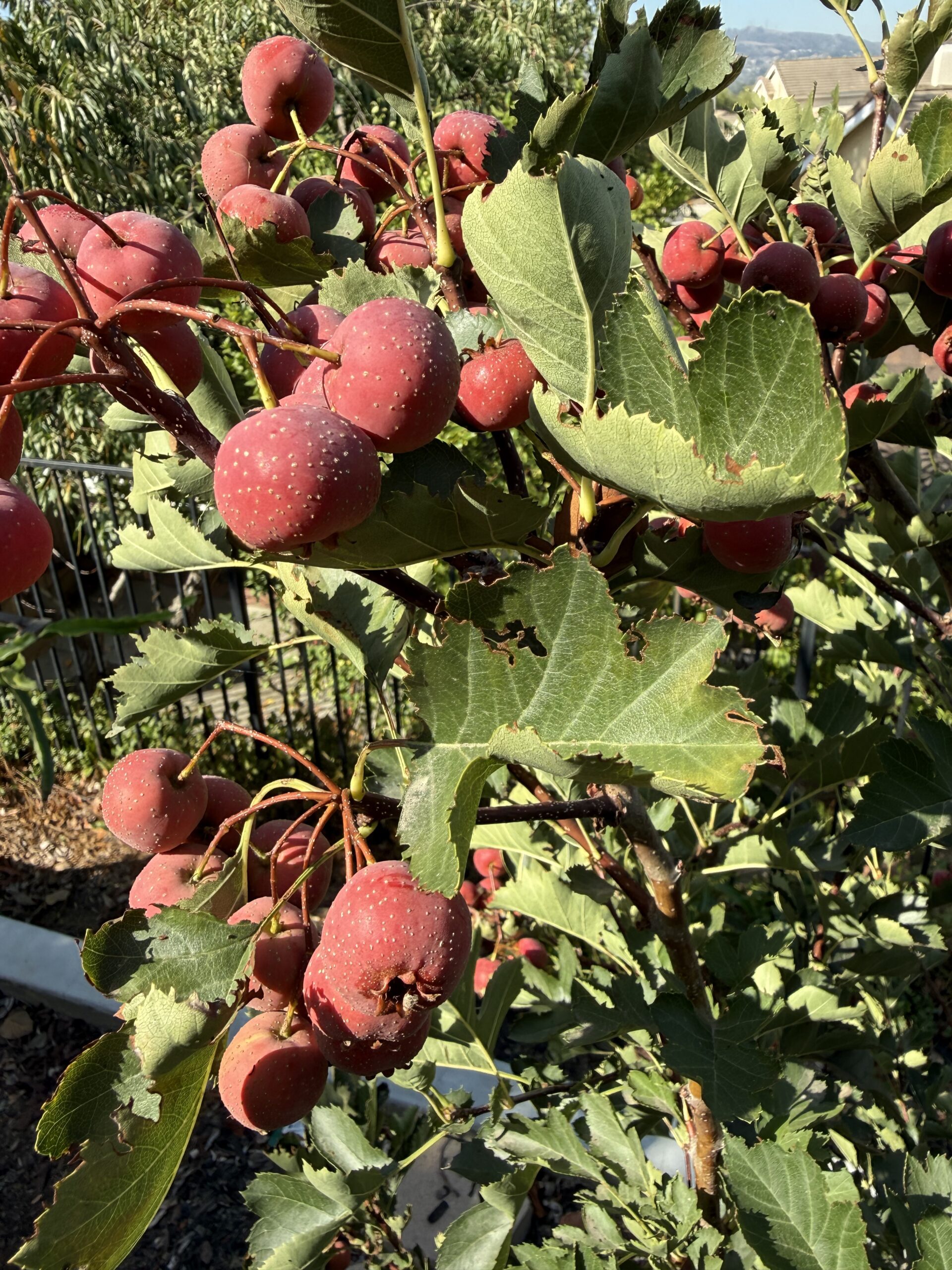
    • Appearance: The fruits are evenly sized with a deep, passionate red skin speckled with small lenticels, looking incredibly inviting.
    • Flavor Profile: The taste is very authentic. When eaten fresh, the soft texture and tart zing immediately bring back childhood memories. While it remains slightly tart on its own, that acidity is its charm—especially the mealy texture, which signals that the fruit is perfectly ripe.
    • Growth Habit: It thrives under the California sun with its characteristic serrated dark green leaves. While Hawthorns are generally cold-hardy, this tree has clearly adapted well to our local warmth and has delivered a bumper harvest in 2026.

    📝 My Planting Record

    • A Promise for Tanghulu: I planted this in the summer of 2022 for a very simple reason—Joy wanted to eat Tanghulu (candied hawthorn sticks). Since fresh Hawthorns are hard to find in California, I decided to grow my own. After a few years of waiting, it has finally rewarded my effort with a tree full of red fruit.
    • The Perfect Dessert Partner: When these soft, tart fruits are coated in crunchy, crystal-clear syrup to make Tanghulu, the balance of sweet and sour is perfection. This isn’t just fruit; it’s the signature sweet taste of our home.

    🛠️ My Care Essentials

    • Pruning and Shaping: To make harvesting easier for Joy, I regularly prune dense branches to maintain airflow and light penetration. This ensures every Hawthorn gets enough sun to develop that deep red color and higher sugar content.
    • Balanced Fertilization: During the flowering and fruiting stages, I supplement with organic fertilizers high in phosphorus and potassium to support such a heavy yield and maintain the quality of the flesh.
    • Watering Control: Especially during the fruit expansion stage, the Rowland Heights climate can be quite dry. I maintain steady irrigation to prevent the fruit from shriveling.
    • Thinning and Protection: Since the fruit clusters are so dense this year, I may selectively thin them out to ensure the remaining Hawthorns grow larger and maintain the best quality.
  • Triple Crown Blackberry

    Triple Crown Blackberry

    🫐 Plant Profile: Triple Crown Blackberry

    📊 Basic Information

    • Variety Name: Triple Crown Blackberry
    • Planting Time: Summer 2024
    • Yield Performance: ★★★★★ (Extremely vigorous growth; it quickly established itself and reached a very high yield by 2025)
    • Taste Characteristics: Large, glossy black fruits. They are tart when underripe but become incredibly sweet with a rich, complex flavor once they are fully ripe and soft.

    📖 Variety Introduction The “Triple Crown” is named for its three superior traits: high productivity, vigorous growth, and excellent flavor. It is a top-tier performer in my orchard.

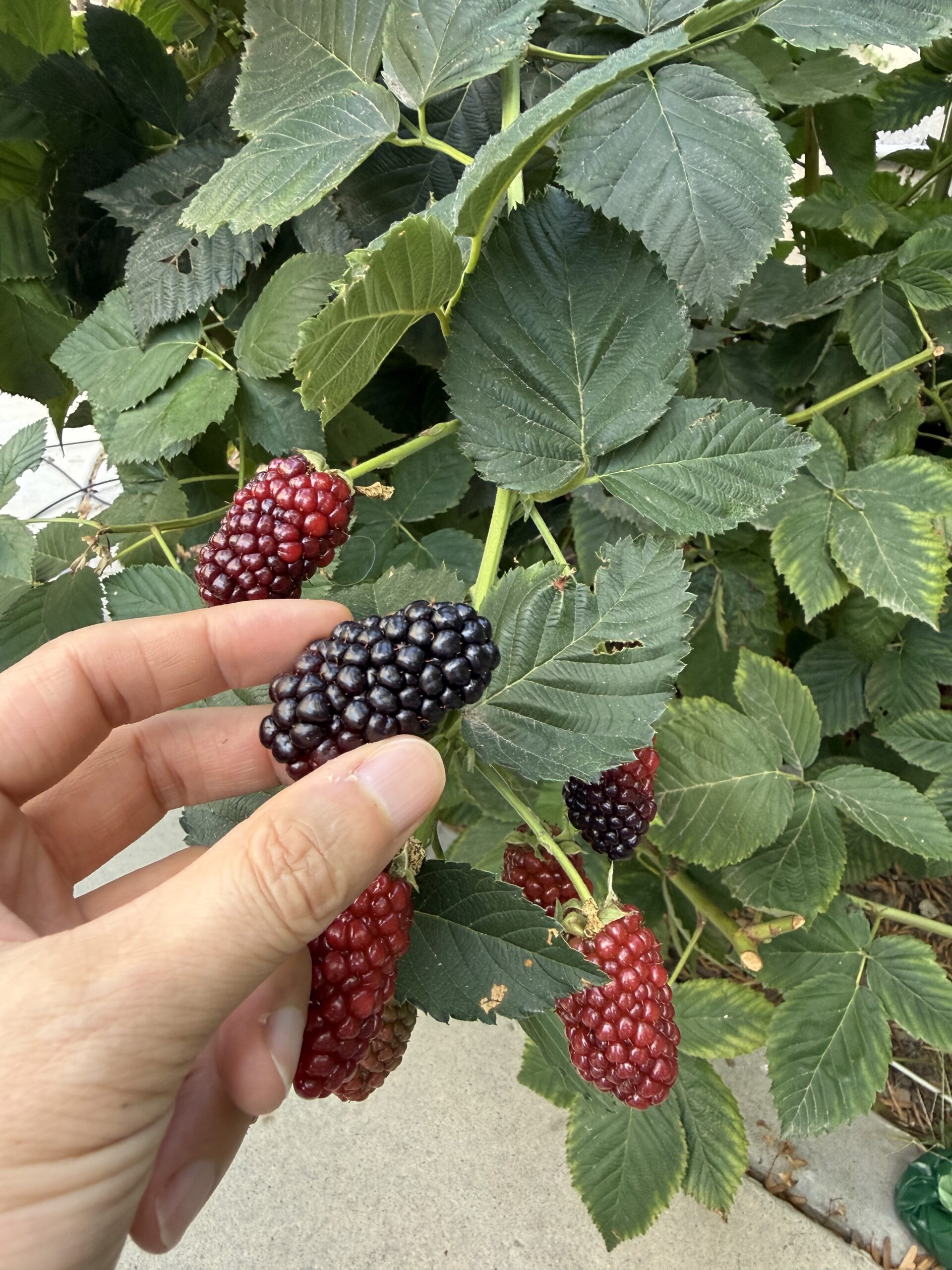
    • Appearance: The berries are significantly larger than wild blackberries, with a round, plump shape. Looking at the dark, shiny fruit in my hand, it’s clear this variety is a heavy hitter.
    • Flavor Profile: This variety has a distinct personality. If the fruit is still firm or showing reddish-purple hues, it can be quite tart. However, patience pays off—once they turn deep black and feel slightly soft to the touch, the intense sweetness and classic blackberry flavor explode.
    • Growth Habit: One of its best features is that it is thornless, making pruning and harvesting much more enjoyable. It is a semi-erect grower and has shown “ferocious” growth speed under the Rowland Heights sun.

    📝 My Planting Record

    • Mimosa Nursery Find: I specifically picked this variety up from Mimosa Nursery, and the quality has been outstanding. It adapted to my soil immediately without any transplant shock.
    • A Vigorous Grower: I planted this at the same time as my raspberries in the summer of 2024. Its growth has been nothing short of “ferocious,” quickly becoming a large, life-filled bush.
    • The Sweet Reward of Patience: I’ve learned its rhythm—don’t be tempted by the red ones! Waiting for that perfect soft, black stage is the secret to the most satisfying harvest.

    🛠️ My Care Essentials

    • Heavy Trellising: Given its vigorous growth and the weight of the fruit clusters, a sturdy trellis is a must. Keeping the canes organized prevents fruit from touching the ground and makes harvesting much easier.
    • Summer Tipping: To keep it from growing out of control, I “tip” the new primocanes in the summer. This encourages lateral branching, which is where next year’s flowers and fruit will develop.
    • Winter Pruning: Blackberries have a biennial life cycle. Every winter, I prune the spent “floricanes” (the ones that just fruited) down to the ground to make room for the strong, green “primocanes” that grew during the current season.
    • Water and Mulching: Blackberries are thirsty, especially when the fruit is sizing up. I ensure consistent moisture and use a thick layer of mulch to protect the roots from the heat and lock in water.
  • Red Raspberry

    Red Raspberry

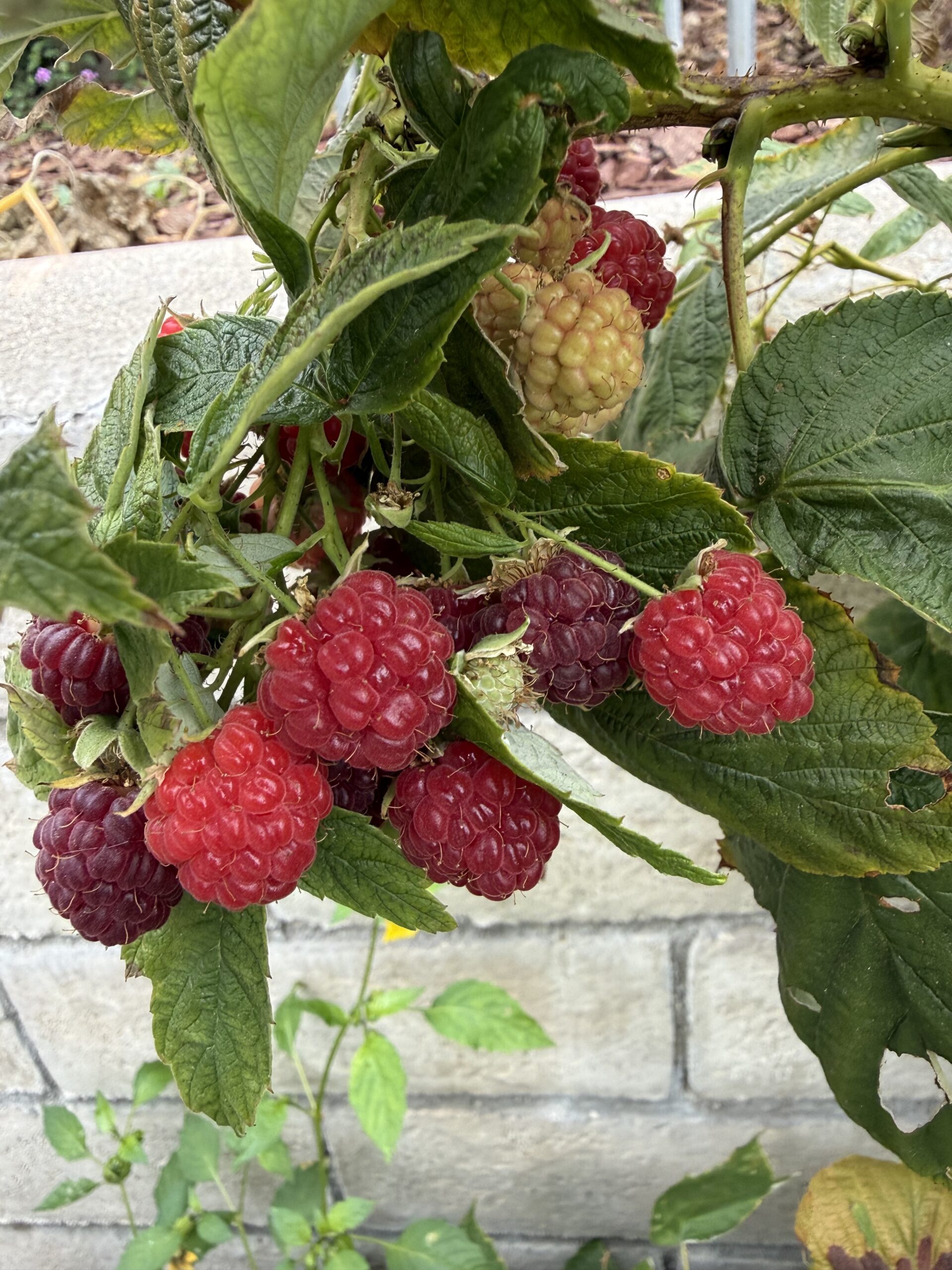
    🍓 Plant Profile: Heritage Red Raspberry

    📊 Basic Information

    • Variety Name: Heritage Red Raspberry
    • Planting Time: Summer 2024
    • Yield Performance: ★★★★★ (Extremely vigorous growth; achieved an incredibly high yield in just one year by 2025)
    • Taste Characteristics: Soft, juicy flesh with a perfect balance of sweet and tart; possesses a very rich and pure classic raspberry aroma.

    📖 Variety Introduction This raspberry, which I simply picked up from Home Depot, is definitely the underestimated “unsung hero” of my orchard. “Heritage” is the most classic evergreen variety in the raspberry world and an excellent everbearing type.

    • Appearance: The fruits are a brilliant ruby red, plump, and round. As seen in my photos, they hang in clusters among the green leaves, creating a beautiful pastoral scene.
    • Flavor Profile: Although it’s a common variety, the taste is top-notch. It has an intense red raspberry fragrance and is delightfully sweet and sour. Picking them fresh in the morning and eating them right away provides a succulent, bursting sensation that store-bought raspberries simply can’t match.
    • Growth Habit: It has incredibly resilient vitality and adapts well to various soils and climates. Under the abundant Rowland Heights sunshine, it grows wildly and is full of life.

    📝 My Planting Record

    • A Great Bargain Surprise: In the summer of 2024, I chose this ordinary raspberry at Home Depot on a whim, never expecting such a huge return. It isn’t finicky at all; with just some sun and water, it rewarded me with a wall full of red berries by 2025. The yield is truly astonishing.
    • The Joy of Self-Sufficiency: Now I can walk into the backyard, grab a handful of ripe raspberries to eat fresh, or add them to yogurt for breakfast. This experience of a self-sufficient pastoral life is wonderful, and the flavor of homegrown fruit is even better than I imagined.

    🛠️ My Care Essentials

    • Trellising and Training: Raspberry canes are long, soft, and covered in tiny thorns. To keep them from resting on the ground where they might get dirty or rot, I let them grow against the garden wall and use ties or supports to secure the canes. This looks neat and makes harvesting much easier.
    • Ruthless Pruning: Pruning is key for raspberries. Canes that have finished fruiting will die back in the fall. I must be firm during winter dormancy and prune these dead “old canes” right down to the ground, leaving only the strong new canes to ensure another explosive harvest next year.
    • Water and Mulching: They love the sun but have shallow roots, making them sensitive to drought. During the hot California summers, I must keep the soil moist. Applying a thick layer of wood mulch at the base is my secret weapon—it locks in moisture, protects against the sun, and prevents weeds from stealing nutrients.
    • Bird Protection: Such bright red fruits are bound to catch the eyes of birds. When a large portion starts to ripen, I need to stay vigilant and, if necessary, cover them with bird netting to protect my harvest.
  • Finger Lime

    Finger Lime

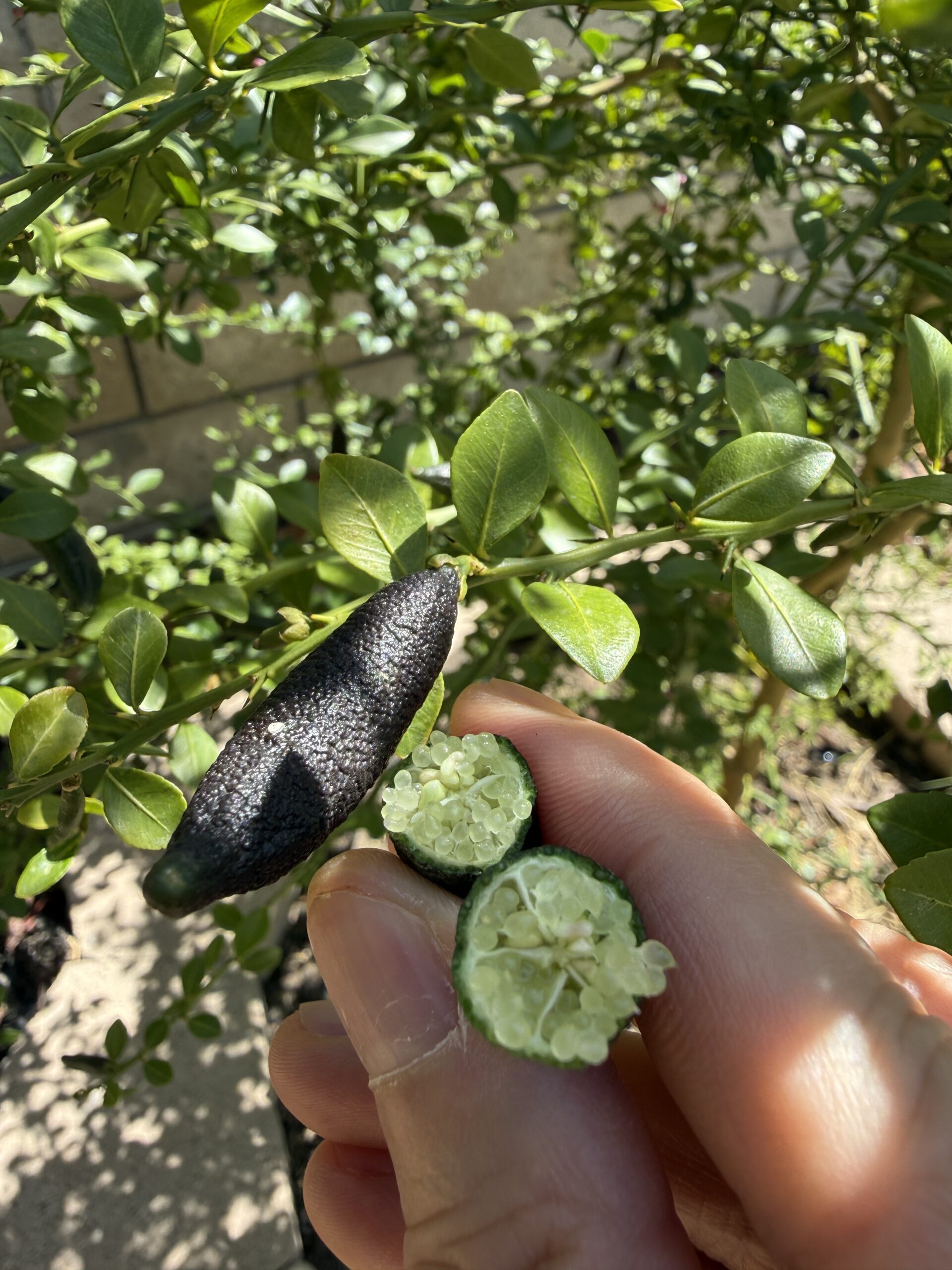
    🍋 Plant Profile: Australian Finger Lime

    📊 Basic Information

    • Variety Name: Australian Finger Lime
    • Planting Time: Summer 2024
    • Yield Performance: ★★★★★ (Extremely vigorous growth; reached an astonishingly high yield in just one year by 2025)
    • Taste Characteristics: The flesh consists of crystal-clear, pearl-like vesicles that burst on the tongue like caviar; the acidity is mild and palatable, not as sharp as regular lemons, with an incredibly fresh, exclusive citrus aroma.

    📖 Variety Introduction Known as the “caviar of citrus,” the finger lime originally grew in the subtropical rainforests of Australia. Now, it is absolutely one of the most prized and rare varieties I am proud to grow in my orchard.

    • Appearance: It has an elongated shape, much like a human thumb. The color transformation of the rind is magical. When it first grows and is unripe, it’s green. As it basks in the abundant sunlight and ripens, it gradually darkens, eventually turning into that highly premium dark green or purplish-black seen in the photo. Once cut open, it’s filled with fragrant “little pearls.”
    • Flavor Profile: This is what surprised me the most! It completely overturned my stereotype of lemons being “tooth-achingly sour.” Its tartness is very mild and smooth, making it incredibly delicious even when eaten straight. The sensation of countless juice-filled droplets bursting in the mouth provides a top-tier experience that ordinary citrus simply cannot offer.
    • Growth Habit: Although native to the rainforest, it has adapted perfectly to the warm, sunny climate of Rowland Heights. Its branches are covered in sharp little thorns, which act as its natural barrier for self-protection in the wild.

    📝 My Planting Record

    • An Unexpected High-Yield Champion: I only planted this tree in the summer of 2024. I originally thought this rare fruit would be delicate and slow-growing, but I never expected it to adapt so perfectly to the environment here. By 2025, it directly entered an explosive production phase, with the branches densely packed with dark “little torpedoes.” The yield has far exceeded my expectations.
    • A Premium Culinary Garnish: Because of its mild acidity and stunning popping texture, it has now become a regular on my dining table. Whether squeezed over fresh seafood to enhance the flavor, mixed into salads, or simply used to garnish sparkling water, it is an irreplaceable, divine ingredient.

    🛠️ My Care Essentials

    • Fully Armed Pruning: Because there are many sharp thorns hidden among its branches and leaves, I must wear thick gardening gloves every time I prune it or harvest the fruit. During the winter dormancy period, I prune away crowded, crossing, and weak inner branches to maintain excellent airflow and light penetration within the canopy.
    • Water Management: If I want the “caviar” inside to be plump and juicy, water is absolutely essential. During the hot California summers and its crazy fruiting stage, I keep the deep soil moist while also paying attention to drainage to prevent waterlogging and root rot.
    • Frequent Light Fertilization: Citrus plants are “heavy feeders,” especially with such a massive yield right now. During the vigorous growth periods in spring and summer, I regularly supplement it with specialized organic citrus fertilizer, especially plenty of potassium. This not only promotes fruit expansion but also helps that green rind perfectly transition to a mature dark color.
    • Pest Inspection: Citrus leafminers or aphids occasionally visit citrus plants in Southern California. I frequently inspect its tiny, emerald-green leaves. If I spot any signs of pests, I promptly spray natural Neem Oil to protect it.
  • Ruby Wax Apple

    Ruby Wax Apple

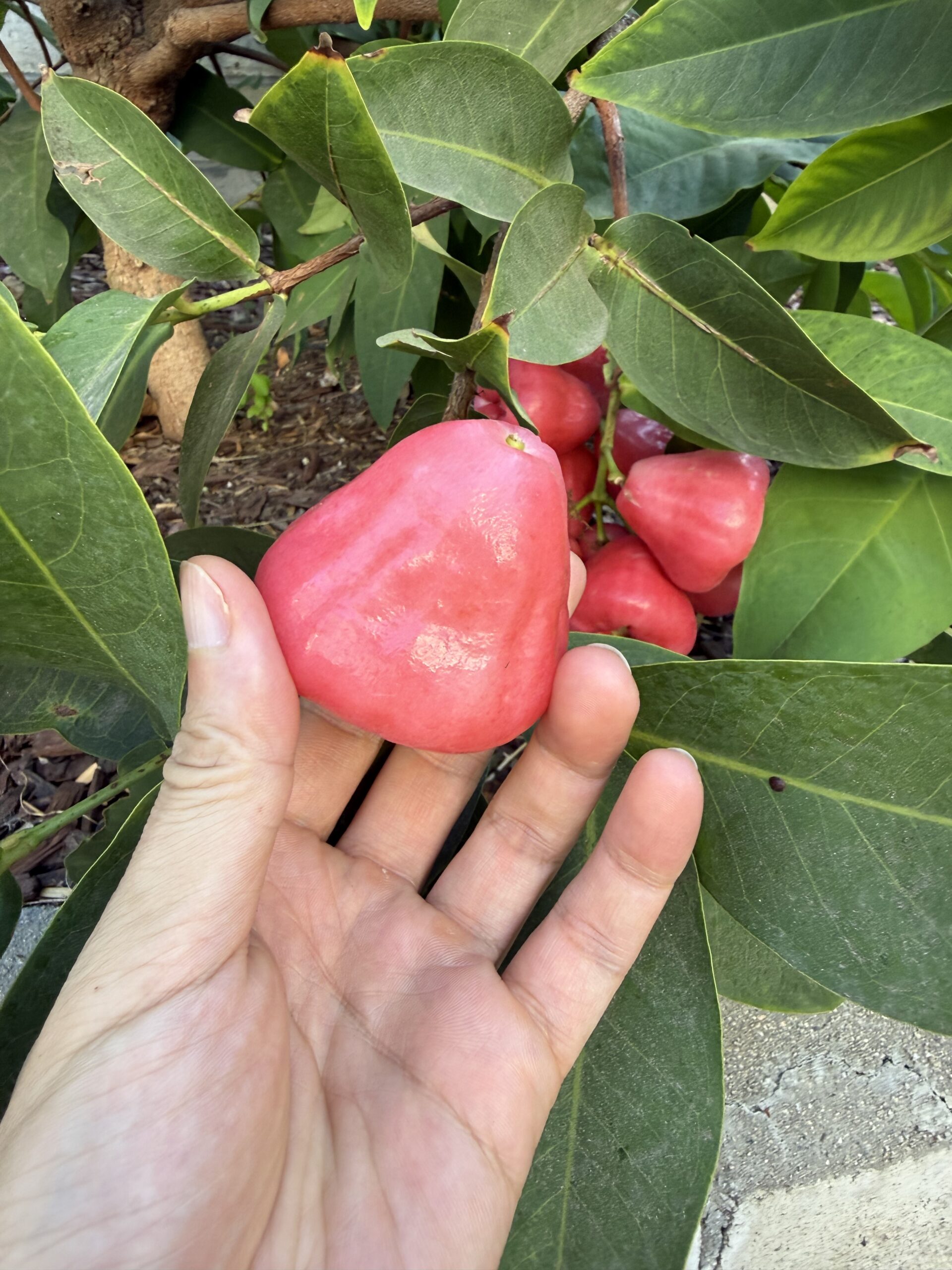
    🍎 Plant Profile: Ruby Wax Apple

    📊 Basic Information

    • Variety Name: Ruby Wax Apple (Thub Thim Chan)
    • Planting Time: 2023 (brought into the orchard as a small sapling)
    • Yield Performance: ★★★★☆ (Grew rapidly; already successfully yielded about 30 fruits in 2025, showing immense future potential)
    • Taste Characteristics: Extremely crisp flesh, almost no spongy core, bursts with juice when bitten, highly sweet with a refreshing floral and fruity aroma, incredibly thirst-quenching.

    📖 Variety Introduction The “Ruby” is definitely one of the most tropical and premium “star fruits” in my orchard.

    • Appearance: It’s shaped like a delicate little bell, and the skin carries a natural waxy gloss. Looking at the plump, translucent, bright red fruit I grew myself in the photo, its brilliant color truly resembles a real ruby. It is absolutely one of the most beautiful sights in my garden.
    • Flavor Profile: This variety perfectly corrects the common flaws of traditional wax apples, which often have a large, tasteless spongy center. Its flesh is dense, full, and magically crisp and juicy. It’s not a cloying, heavy sweetness, but rather a very premium, fresh, and high-level sweet crispness. Chilling it in the fridge before eating makes it the ultimate refreshing treat during the scorching California summers.
    • Growth Habit: Being a tropical plant, it is terrified of the cold but incredibly thirsty for water. The fact that I’ve been able to grow it so successfully here in Rowland Heights, allowing its skin to develop such a stunning ruby-red hue, proves that the microclimate and abundant sunshine here perfectly bring out the best in this variety.

    📝 My Planting Record

    • Rapid Three-Year Growth: I brought this home as a small sapling back in 2023. Watching it grow from an inconspicuous little plant into a tree that successfully bore over 30 beautiful fruits in just two short years by 2025 gives me an indescribable sense of accomplishment.
    • Flavor Evolution: This year’s harvest gave me a massive surprise! I could clearly taste that the 2025 fruits were significantly sweeter and much crisper than the initial ones it produced in 2024. This tells me that the tree’s root system is now firmly established, its nutrient absorption is getting better and better, and its “peak fruiting stage” is just around the corner.

    🛠️ My Care Essentials

    • Generous Watering: The wax apple is a literal “water” fruit. During its blooming and fruit expansion stages, I absolutely cannot let it go thirsty. I must keep the soil consistently moist; the more adequate the water supply, the crisper the fruits will be, preventing them from becoming dry or shriveled.
    • Potassium for Sweetness: Since I’ve already tasted the sweet reward of increased sugar levels this year, I will definitely continue to supplement it with high-potassium fertilizer after it blooms in future seasons. This not only makes the skin color even more stunningly red but is also the ultimate secret to boosting the overall sugar content and crisp texture.
    • Frost Protection: Even though it has grown quite a bit, I cannot let my guard down. Low winter temperatures and occasional frosts are fatal to this delicate tropical tree. When cold snaps hit on winter nights, I must remember to drape it in frost cloth to keep it warm.
    • Sun Protection and Bagging: Just like the perfectly red wax apple in the photo, as my yields get even larger in the future, I need to wrap the fruits in specialized paper or mesh bags before they start changing color. This not only stops birds and bugs from stealing a sweet bite but also protects the delicate skin from getting scorched by the intense sun.
  • Longan

    Longan

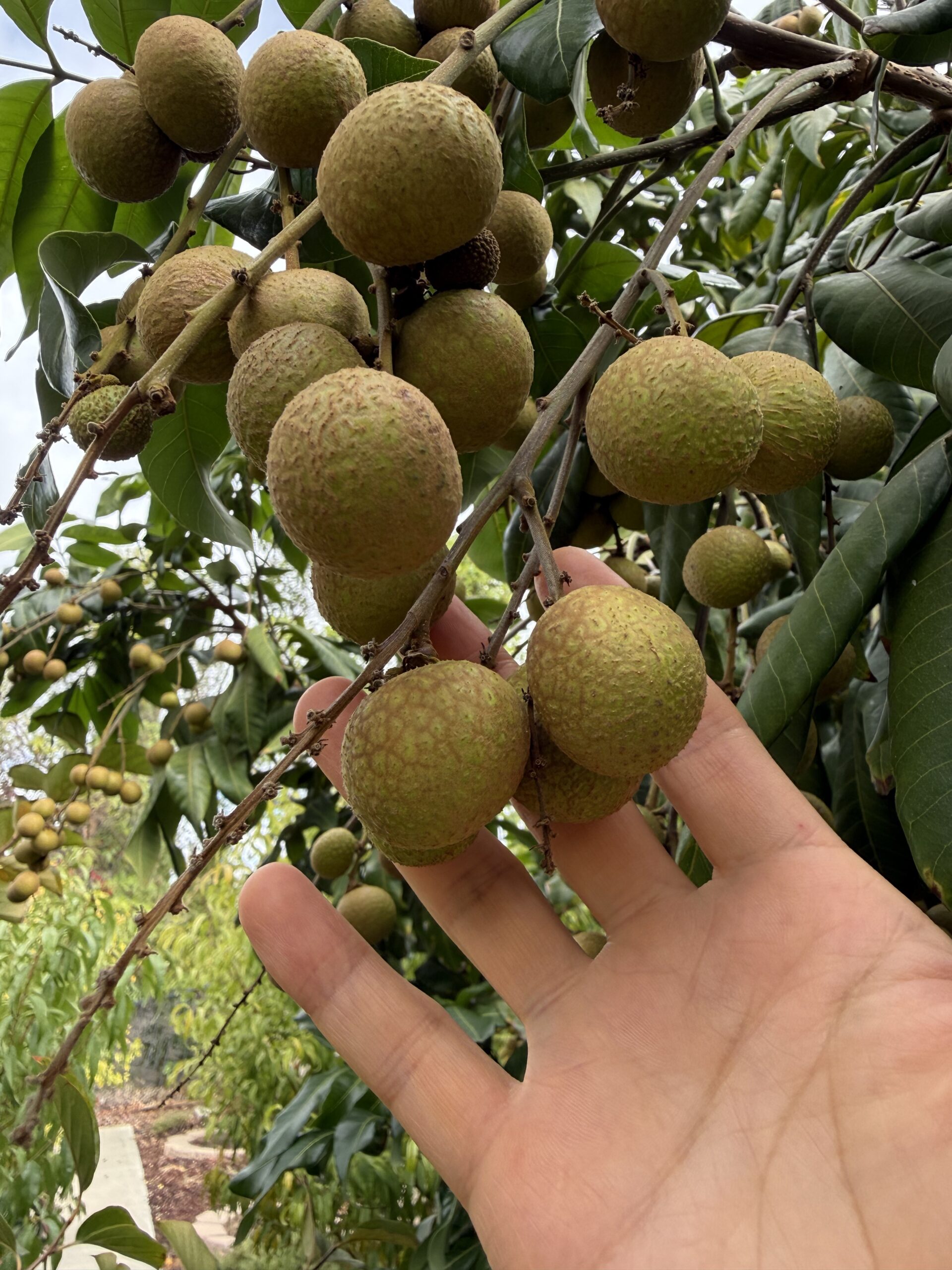
    🍈 Plant Profile: Longan

    📊 Basic Information

    • Variety Name: Highly likely Kohala Longan
    • Planting Time: Original old tree in the orchard, many years old
    • Yield Performance: ★★★☆☆ (Yield is highly unstable with a pronounced “alternate bearing” pattern, but explosive during a “big year”)
    • Taste Characteristics: Crystal clear and translucent flesh, abundantly juicy, extremely sweet like honey, with a rich, classic longan aroma.

    📖 Variety Introduction This longan tree is a “senior veteran” in my orchard. If it truly is the Kohala variety, it is definitely one of the most popular and excellent varieties in California, famous for its large fruit, small seeds, thick flesh, and extreme sweetness.

    • Appearance: Its shell is yellowish-brown with a slightly rough, netted texture. Every harvest season, looking at this heavy, plump cluster of fruit I’m holding in my hand fills me with the joy of a great harvest.
    • Flavor Profile: Peeling back the thin shell reveals pearl-like, translucent flesh. One bite and the juice overflows; the sweetness rushes to the taste buds. It completely rivals the top-tier longans sold in markets and is incredibly addictive to eat.
    • Growth Habit: As a typical subtropical evergreen fruit tree, it thoroughly enjoys the warm sunshine of Rowland Heights. However, these types of fruit trees share a frustrating common trait—if left without human intervention, they easily fall into a cycle of “alternate bearing” (biennial bearing).

    📝 My Planting Record

    • Planted by Predecessors: This tree is a precious asset left behind by the previous homeowner. After years of weathering, it has taken deep root in my orchard and has become my family’s most anticipated source of sweetness every autumn.
    • A Crazy “Big Year”: Its temper is somewhat unpredictable, and its yield fluctuates wildly. But in 2025, it ushered in a super “big year”! The entire tree was laden with heavy fruit clusters, the yield was astonishing, and every single one was sweet to the core. It felt like it was making up for all the missing yields from previous years at once.
    • A Sweet Trouble: Although a bumper harvest in a big year makes me incredibly happy, I know this means the tree has consumed a massive amount of nutrients. If I don’t quickly give it some heavy post-harvest care to replenish its nutrition, next year will definitely be a barren “small year.”

    🛠️ My Care Essentials

    • Breaking the Alternate Bearing Curse (Fruit Thinning): To make its future yield more stable, I have to learn to be ruthless. In the spring of future “big years,” when the flower panicles have just formed or young fruits have just set, I need to prune away about 1/3 to 1/2 of them. This not only allows the remaining fruits to grow larger but also preserves the tree’s nutrients so it can bloom and fruit normally the following year.
    • Post-harvest Fertilization: It produced so much fruit in 2025 that it practically exhausted all its energy. Immediately after the harvest, I must give it a comprehensive organic fertilizer rich in nitrogen, phosphorus, and potassium, and apply a thick layer of mulch. This helps it quickly recover its vitality and store energy for the coming year.
    • Water Management: Longans desperately need water during the flowering and fruit expansion stages. During the long, dry California summers, I will give it deep watering to ensure the fruits can absorb enough moisture to become plump and juicy, while also ensuring good drainage to prevent root rot.
    • Winter Pruning: After harvest and in late winter to early spring, I will give it a proper pruning. I’ll primarily cut off the leftover fruit stalks, dead branches inside the canopy, and overly dense crossing branches to maintain good airflow and light penetration, which greatly reduces the occurrence of pests and diseases.