

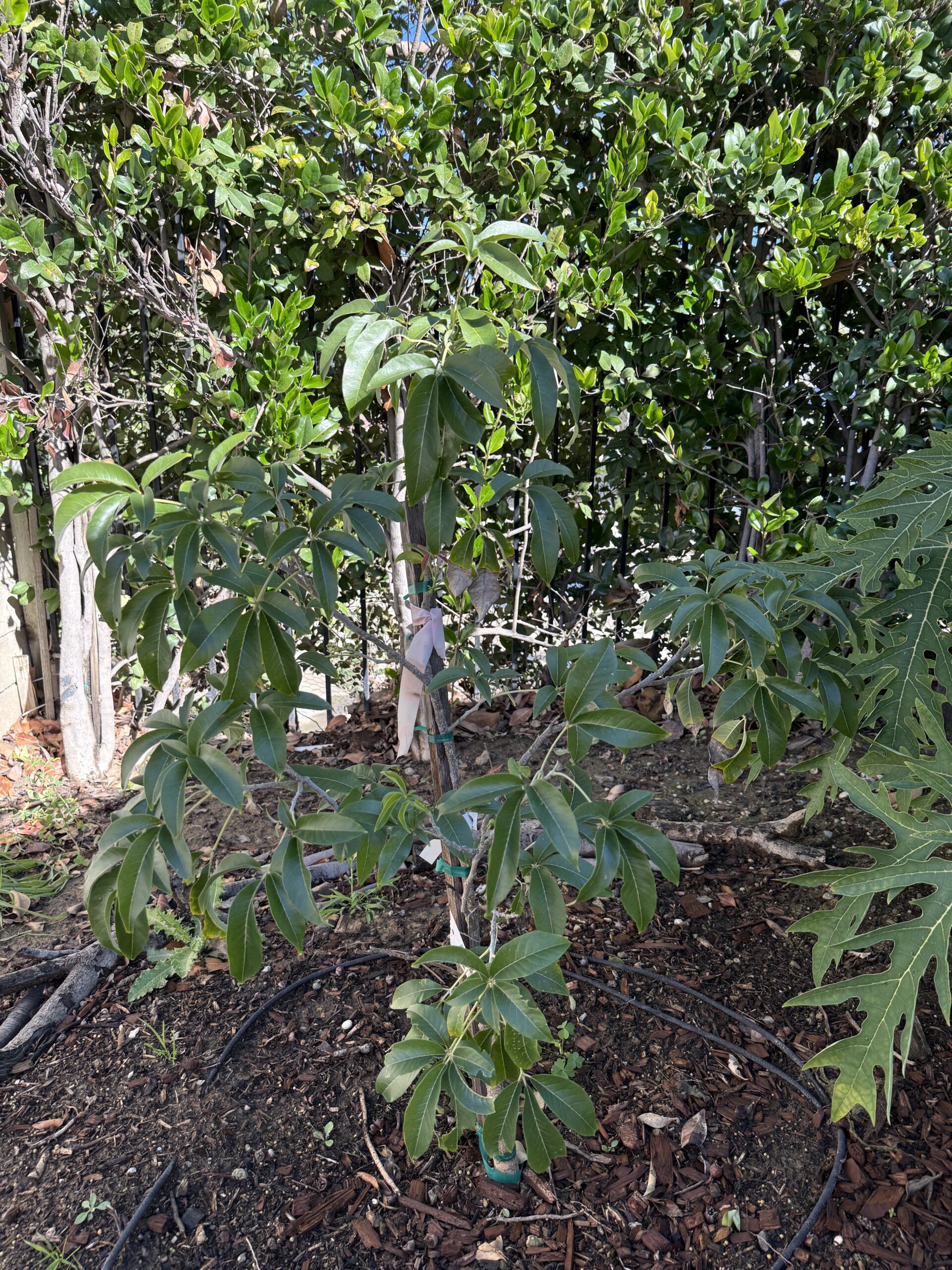
🍦 Plant Profile: Ice Cream Fruit (White Sapote)
📊 Basic Info
- Variety: Suebelle
- Common Name: Ice Cream Fruit, White Sapote
- Planting Date: Spring 2025
- Yield Performance: ★★★★☆ (Suebelle is famous for its multiple flowering cycles and year-round fruiting)
- Flavor Profile: Custard-like texture with zero fiber. A sweet melody of banana, pear, and vanilla—tastes just like natural premium ice cream when chilled.
📖 Variety Overview
Native to the highlands of Central and South America, the White Sapote is actually a distant relative of the citrus family.
- Variety Advantage: Suebelle is a premier grafted variety. It is semi-dwarf and easy to manage, showing much better cold tolerance in the Rowland Heights winter than many typical tropicals.
- Appearance: Features elegant, glossy, palmate compound leaves that stay lush and green throughout the year.
- The Taste: Boasts exceptionally high sugar content. Its melt-in-your-mouth texture is unparalleled among subtropical fruits.
📅 Maturity & Harvest
- Year-Round Production: Much like the papayas in my orchard, Suebelle produces fruit in small batches throughout the year.
- Peak Season: The heaviest harvests typically occur from October through February.
- Growth Cycle: Fruits usually take 6 to 9 months to develop from flower to maturity.
💡 Harvesting & Ripening
- Color Break: Look for the skin to shift from dark green to a pale green or golden yellow.
- Picking Window: Do not wait for the fruit to soften on the tree. Harvest when it feels slightly springy to the touch to prevent bird damage or bruising from falling.
- Ripening: Store at room temperature for 2–5 days. It is ready to eat when it feels as soft as a “ripe avocado.”
📝 Garden Logs
- Origin: Purchased from Mimosa Nursery in Spring 2025.
- The Tag Error: The nursery tag mistakenly listed the scientific name for Black Sapote (Diospyros Nigra). Based on the foliage and variety name, it is confirmed to be a true Suebelle White Sapote.
🛠️ Care Tips
- Height Control: Even as a semi-dwarf variety, I will keep it pruned to a “reachable height” (around 7 feet) for easy harvest and better airflow.
- Nutrient Strategy: Being a citrus relative, it benefits from regular potassium-rich fertilizer and micronutrients to enhance fruit sweetness and tree health.