

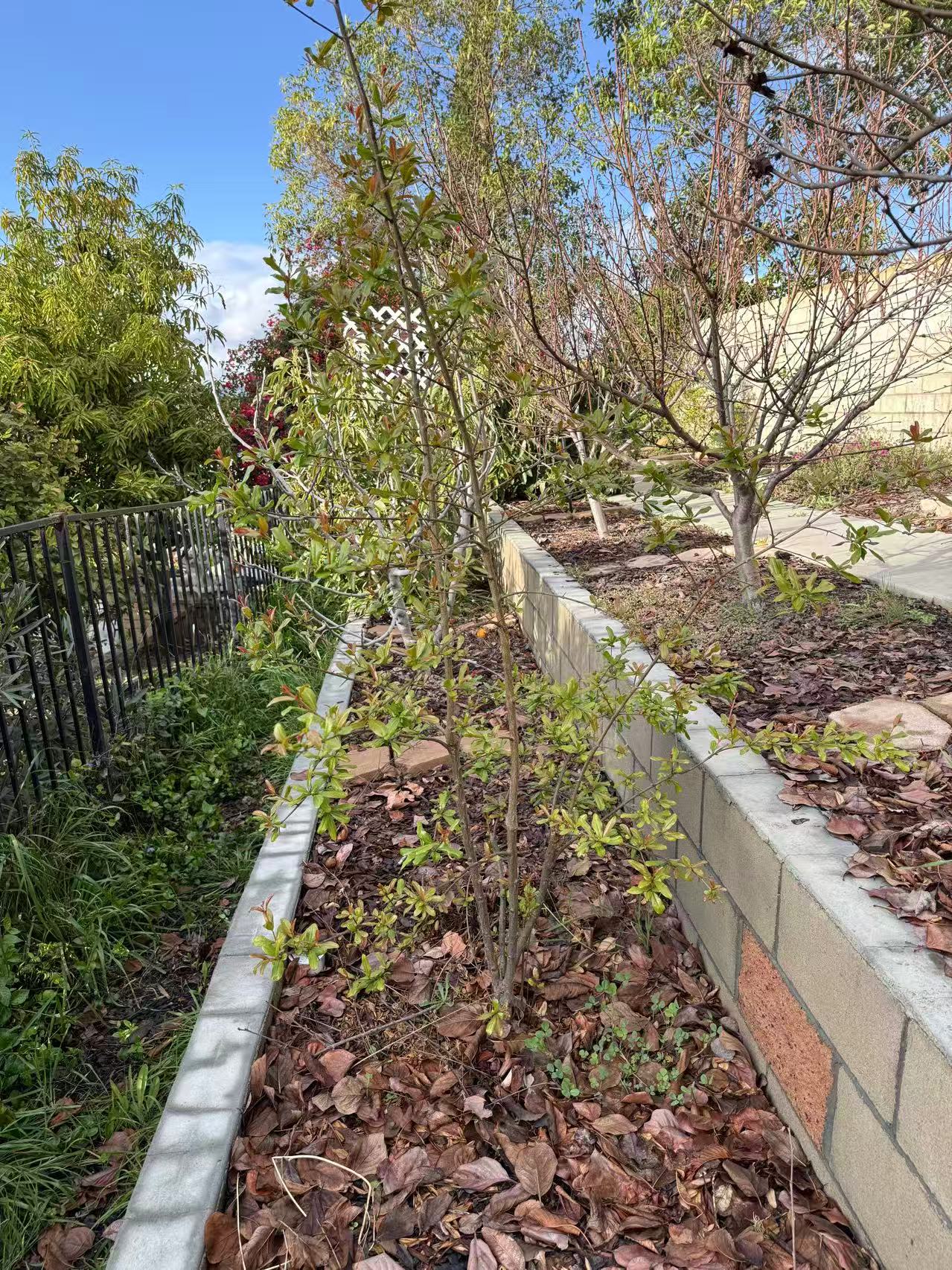
🍎 Plant Profile: Pomegranate (Likely Tunisian Soft-Seed)
📊 Basic Info
- Guessed Variety: Tunisian Soft-Seed Pomegranate (突尼斯软籽石榴)
- Planting Date: Summer 2022
- Source: A gift from a Chinese nursery
- Yield Performance: ★☆☆☆☆ (Currently all foliage, zero fruit; reaching maturity now)
- Flavor Profile: If it’s the “premium/tasty” variety championed by Chinese nurseries, it is likely a soft-seeded type. Expect incredibly sweet, ruby-red arils with seeds so soft they can be chewed and swallowed effortlessly.
📖 Variety Speculation & Diagnosis
The “Tunisian Soft-Seed” has absolutely dominated the premium pomegranate market in China. If a nursery is sending a high-quality freebie, this is the prime suspect.
- Why the Delay in Fruiting? 1. Age: Pomegranates are not instant producers. They typically require 3 to 5 years to establish before setting fruit. Planted in mid-2022, 2026 marks its 4th year—the exact window when it should start flowering. 2. Overcrowded Canopy: The photo shows a very dense, multi-stemmed shrub. When a pomegranate is too congested, it spends all its energy pushing vegetative growth to compete for sunlight, rather than producing fruiting buds.
📅 Precise Ripening Months
In the long, hot summers of Southern California, these pomegranates ripen beautifully in early autumn:
- Flowering: May to June (Expect stunning, vibrant orange-red blossoms).
- Expected Harvest: Late September to October.
- Ripeness Cues: It is ready when the skin turns a deep red and the fruit takes on a slightly “squared-off” or blocky shape, indicating the arils inside are swollen with juice.
📝 My Gardening Notes
- The “Mystery Box”: Arrived as an unexpected bonus and has shown incredible vigor.
- The Turnaround Year: It has been allowed to grow wild into a thick bush. To unlock its fruiting potential in 2026, I need to shift its energy from making leaves to making flowers.
🛠️ Care & Maintenance (The 2026 Bloom Strategy)
- Aggressive Thinning (Crucial): I will remove the basal suckers and completely clear out the crossing, twiggy growth in the center of the bush. Selecting 3 to 5 strong main trunks and opening the center to sunlight is mandatory for flower production.
- Phosphorus Push: As the spring foliage emerges, I will switch to a high-phosphorus/high-potassium “bloom booster” fertilizer and strictly avoid heavy nitrogen.
- Strategic Stress: Allowing the soil to dry out slightly just before the expected late-spring bloom can “stress” the tree into prioritizing flower production over more leaf growth.