

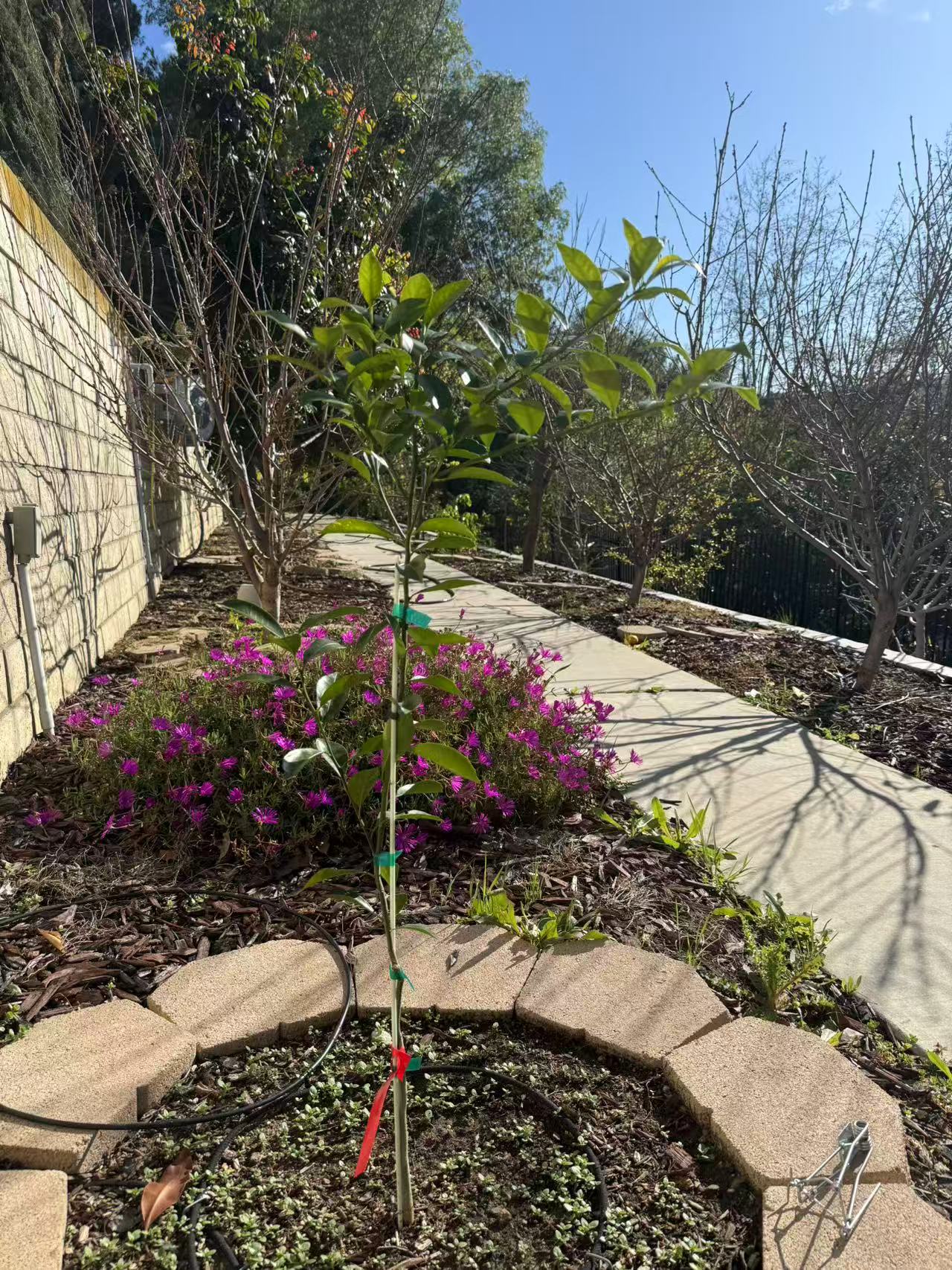
🍊 Plant Profile: Seedless Kishu Mandarin
📊 Basic Info
- Variety: Seedless Kishu Mandarin (Semi-Dwarf)
- Planting Date: January 2026
- Source: Four Winds Growers
- Yield Performance: ★☆☆☆☆ (Currently in the establishment phase; known for prolific fruiting once mature)
- Flavor Profile: Golf-ball-sized fruits that are 100% seedless and incredibly easy to peel. Explodes with a candy-like sweetness and rich citrus flavor.
📖 Variety Overview
The Kishu is often considered the “holy grail” of backyard mandarins. Don’t let the tiny fruit size fool you—it packs the most intense and pleasing mandarin flavor available.
- The Perfect Fit: Grafted onto a semi-dwarf rootstock, this tree will maintain a manageable, compact size, making it ideal for suburban orchards without sacrificing yield.
- The Seedless Magic: Unlike some mandarins that develop seeds if cross-pollinated by nearby citrus, the Kishu remains reliably and delightfully seedless.
- Growth Habit: It thrives under the intense Southern California sun. The compact canopy makes it aesthetically pleasing and easy to protect during unexpected cold snaps.
📅 Precise Ripening Months
The Kishu is an early-season variety, which is fantastic because the fruit ripens before the highest risks of deep winter frosts:
- Expected Harvest: November to January.
- Peak Harvest Month: December (Perfectly timed for the holiday season. The fruit is ready when the rind turns a deep, vibrant orange).
📝 My Gardening Notes
- Premium Sourcing: Acquired from the highly reputable Four Winds Growers in January 2026. Starting with top-tier nursery stock is the best investment for a citrus tree.
- Settling In: Currently going through its acclimatization period. Planting in January allows the root system to settle and expand into the native soil before the stressful heat of summer arrives.
🛠️ Care & Maintenance
- No Fertilizer Yet: During this delicate rooting phase, I am strictly withholding all nitrogen fertilizers to prevent root burn. Feeding will begin only after the first flush of spring growth hardens off.
- Pest Alert (Leafminers): As soon as the weather warms and the tree pushes out tender new leaves, I will deploy Neem Oil to protect against Citrus Leafminer damage, a common local pest.
- Watering Discipline: Citrus trees hate “wet feet.” I will allow the top few inches of soil to dry out completely between waterings to encourage deep, resilient root growth and prevent yellowing leaves.