

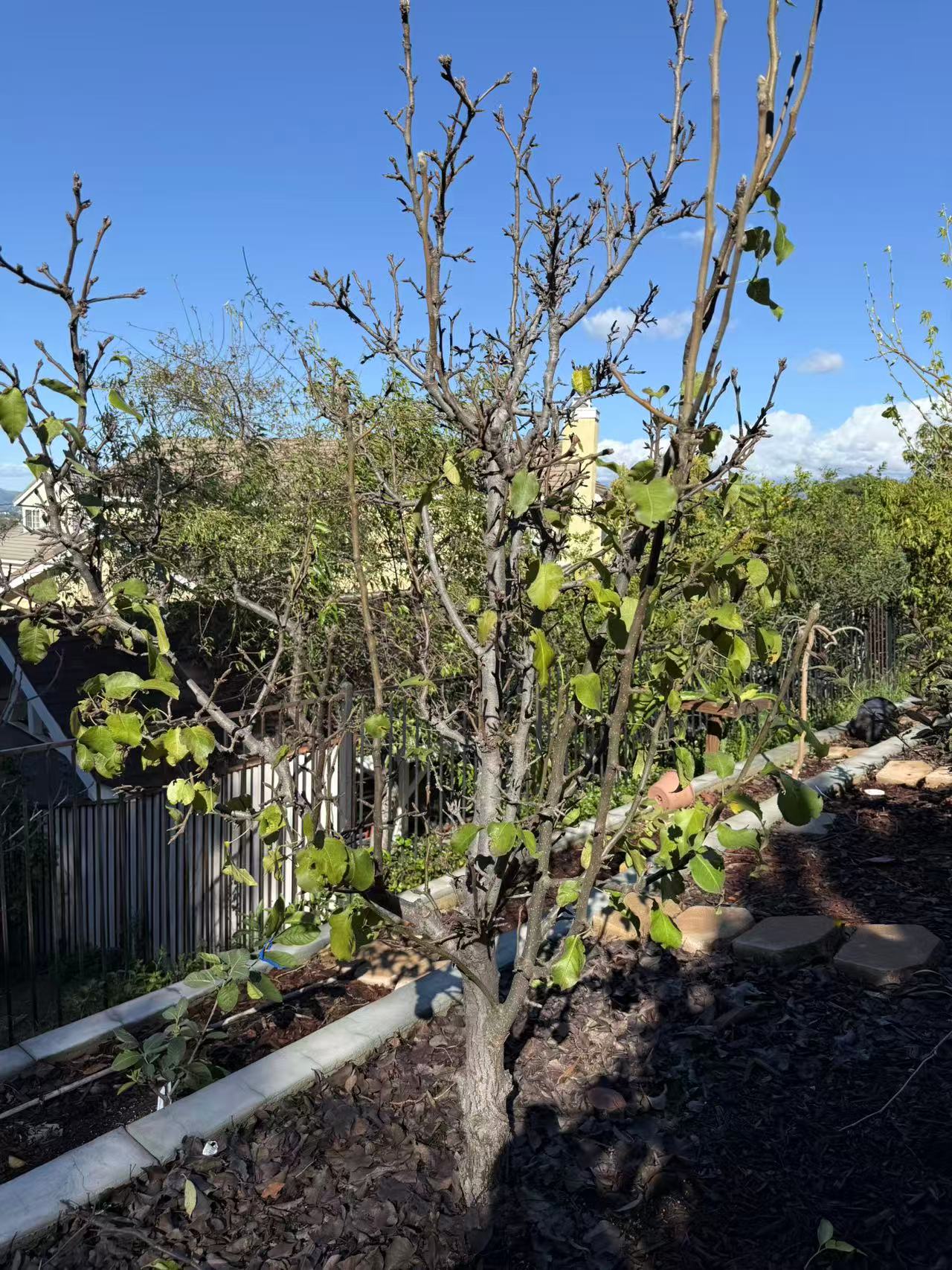
🍐 Plant Profile: Asian Pear
📊 Basic Info
- Variety: Asian Pear (Pyrus pyrifolia)
- Planting Date: Pre-2022 (Original tree; relocated in 2022 due to retaining wall construction)
- Yield Performance: ★☆☆☆☆ (Recovering from root damage; no fruit since relocation, but highly promising for this year)
- Flavor Profile: Distinctively crisp and incredibly juicy; offers a refreshing, sweet, apple-like crunch.
📖 Variety Overview
Asian pears are prized for their firm, grainy texture and high water content, making them a staple in local Southern California orchards.
- The Relocation Challenge: This tree underwent significant stress in 2022 when its roots were damaged during a landscape overhaul. It has spent the last two years in a “recovery and rebuilding” phase.
- Signs of Vigor: The tree’s condition has improved year over year. The current structure looks robust, with buds ready to push, indicating that the root system has successfully re-established itself.
- Local Adaptation: They thrive in the Rowland Heights sun and generally receive enough “chill hours” during the winter to trigger a healthy bloom.
📅 Precise Ripening Months
While specific ripening varies by cultivar (e.g., Hosui, Shinseiki), the general timeline for our region is:
- Expected Harvest: August to September.
- Peak Quality Month: Late August (The ideal balance of sugar and firm texture).
📝 My Gardening Notes
- A Resilient Veteran: As one of the original trees in the yard, its steady recovery from major transplant shock is a testament to its hardiness.
- 2026 Comeback: After three years of patience, 2026 looks to be the year this survivor returns to full production.
🛠️ Care & Maintenance
- Fruit Thinning: If it blooms heavily this spring, I will thin the fruit to ensure the tree doesn’t overextend itself while still finalizing its recovery.
- Hydration: Consistent watering is critical during the heat of July and August to support fruit development and prevent drought stress.
- Pruning Reflection: Now is the time to remove any minor rubbing branches to maintain an open canopy for better air circulation and sunlight.