

🍒 Plant Profile: Mauritius Lychee
📋 Basic Info
- Variety Name: Mauritius Lychee (Also known as “Tai So”)
- Planted Date: Fall 2024 (Purchased from Mimosa Nursery)
- Yield Performance: ★☆☆☆☆ (Currently in the post-transplant establishment phase, no yield yet)
- Taste Profile: (Expected) Classic sweet-tart lychee flavor, juicy and aromatic. While the seed is larger than the “Sweet Heart” variety, it makes up for it with reliable production.
📖 Variety Overview If growing lychee in Southern California is a test, Mauritius is the easiest question on the exam. It is the most adaptable and reliable bearing commercial variety for the local climate.
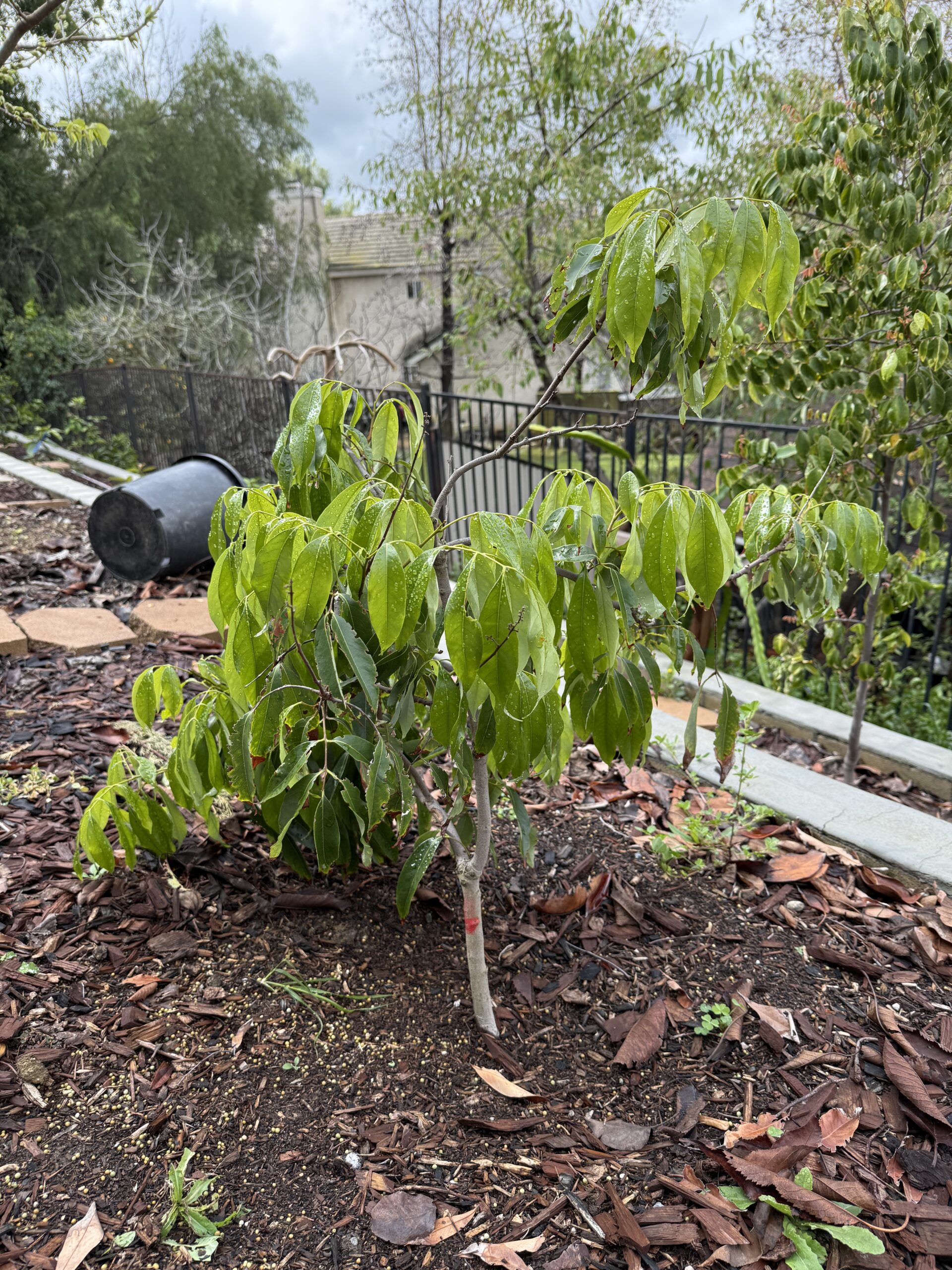
- Appearance: As seen in the photo, its leaves are typically narrower and pointier than other varieties. The mature fruit has dark red skin, often ready to harvest even with a hint of green on the “shoulders.”
- Growth Habits: It has relatively good tolerance for SoCal’s cool winters and dry summers. It doesn’t require as strict of a winter chill to induce flowering as other varieties, making it highly likely to fruit year after year.
📅 My Planting Log
- New Arrival: In the fall of 2024, this small sapling carrying dreams of tropical fruit arrived in the orchard. The photo clearly shows the graft union at the base, indicating it is a grafted tree with superior genetics.
- Adaptation Period: It is currently navigating its first winter and early spring after planting. The slightly drooping leaves in the photo suggest it is working hard to adapt to the new soil and climate, a normal reaction after transplanting. Its primary goal right now is to establish its root system, not to grow tall.
🛠️ My Care Guide (For First-Year Sapling)
- Winter Protection: Lychee is a quintessential tropical plant and is very sensitive to cold. Although Rowland Heights is mild, during its first winter/early spring, if temperatures approach 32°F (0°C) during a cold snap, I must cover it with frost cloth. Its tender branches also need protection from strong winds.
- Careful Watering: The root system of a newly planted sapling is underdeveloped. I need to keep the soil moist but never waterlogged. I will check the soil moisture frequently rather than sticking to a fixed schedule to prevent root rot.
- Hold Off on Fertilizer: Until it pushes out significant new growth, its roots cannot absorb many nutrients. Applying fertilizer now could easily burn the roots. I will patiently wait until the weather warms up completely in spring and new leaves emerge before applying a very diluted liquid acid fertilizer.