

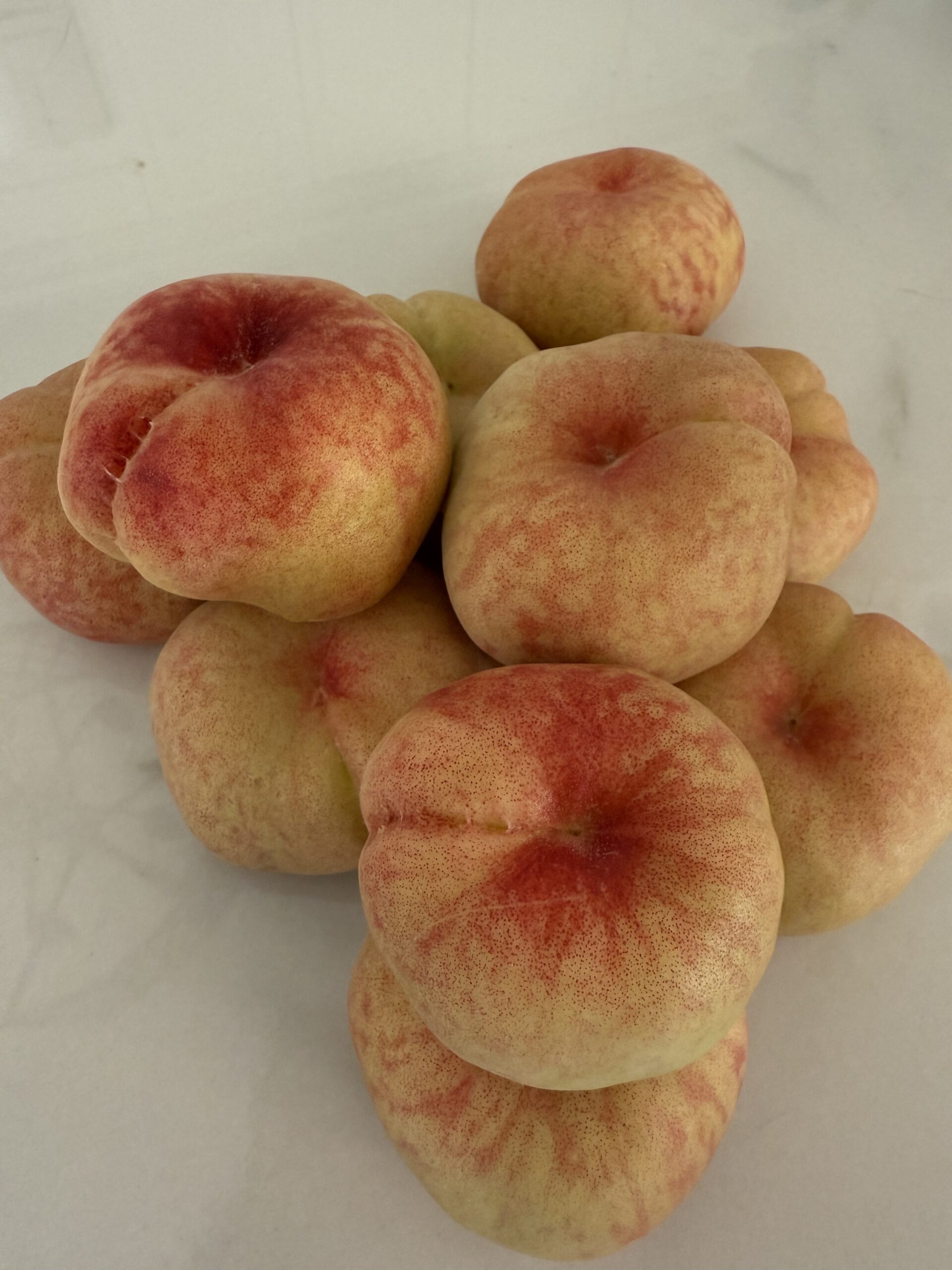
🍩 Plant Profile: Donut Peach (Saturn Peach)
📊 Basic Information
- Variety Name: Donut Peach / Saturn Peach (Prunus persica var. platycarpa)
- Planting Date: Early 2022
- Yield Performance: ★★★★☆ (Consistent high yield in 2025; fruits are large and well-formed)
- Flavor Profile: Refreshingly sweet, fine-textured flesh, exceptionally small pit, with a rich floral aroma.
📖 Variety Introduction
The Donut Peach, also known as the Saturn Peach, is a unique flat-shaped heirloom variety prized for its ease of eating and superior sweetness compared to traditional round peaches.
- Physical Characteristics: Unlike standard peaches, it features a distinct flattened, disc-like shape with a sunken center. When ripe, the skin displays a beautiful blush of crimson over a creamy yellow background, with very fine fuzz.
- Flavor Experience: Renowned for its low acidity and high sugar content. The flesh is typically white or pale yellow, offering a succulent, melt-in-your-mouth texture. Its small, freestone pit makes it a perfect “snack fruit.”
- Garden Value: Beyond the fruit, the tree provides a stunning floral display in spring. It thrives in the sunny, Mediterranean climate of Rowland Heights, which is ideal for maximizing fruit brix (sugar levels).
📝 My Planting Record
Planted in early 2022, this peach tree has evolved from a young sapling into a cornerstone of the orchard over the past four seasons.
- Growth Progress: After two years of establishing a strong root system, the tree hit its stride in its third and fourth years. The intense California sun has been instrumental in developing the vibrant red blush seen in the latest harvest.
- Harvest Performance: By the 2025-2026 seasons, the tree reached a mature production phase. As shown in the recent photos, the harvest is bountiful, with uniform fruit size and excellent symmetry.
- Environmental Adaptation: The tree has adapted perfectly to our local climate. The dry heat helps minimize fungal issues common in stone fruits, resulting in cleaner skin and more concentrated sugars.
🛠️ Care & Maintenance
- Fruit Bagging: This is the most critical step for a successful harvest. Bagging must be done during the early fruiting stage. This creates a physical barrier against borers (fruit worms) and prevents birds and local wildlife from pecking at the fruit as it ripens.
- Strategic Pruning: Regular canopy management is essential. I perform structural pruning during the winter dormancy to maintain height and summer thinning to remove water sprouts, ensuring sunlight reaches the interior fruiting wood.
- Nutrient & Water Management: A consistent fertilization schedule is followed: nitrogen-rich fertilizer in early spring for growth, phosphorus/potassium during fruit swell, and a “post-harvest” feeding to prep for next year. Consistent deep watering is maintained while avoiding waterlogging to prevent fruit drop.