

🍐 Plant Profile: Pink Guava
📋 Basic Info
- Variety Name: Pink Guava (A premium tropical guava variety commonly stocked by Mimosa Nursery)
- Planted Date: January 2026 (Purchased from Mimosa Nursery)
- Yield Performance: ★☆☆☆☆ (A “newborn” just planted a month ago; currently at zero yield, focusing entirely on survival and rooting)
- Taste Profile: (Expected) A classic tropical flavor bomb! When ripe, the flesh is an inviting soft pink, with a creamy, sweet, and incredibly aromatic profile. It’s top-tier for eating fresh or juicing.
📖 Variety Overview Unlike the Strawberry Guava mentioned earlier, this is a true, large tropical “Guava.”
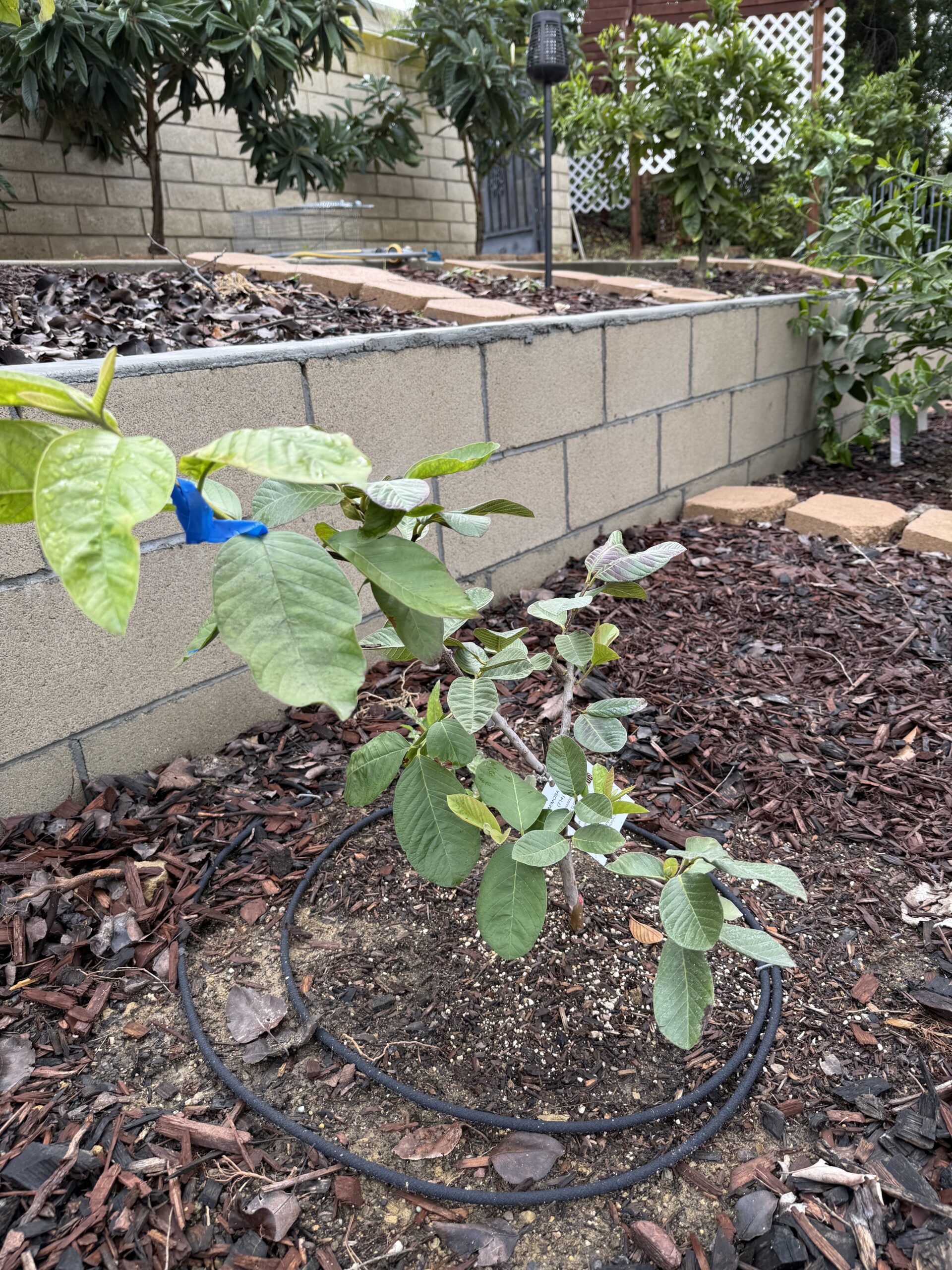
- Appearance: As clearly seen in the photo, it has large, slightly corrugated leaves with very prominent veins. When mature, its trunk will also peel to reveal smooth, bronze-colored bark.
- Growth Habits: It is an absolute heat-lover, thriving in the blazing Southern California summer sun. The trade-off is that it is extremely cold-sensitive as a young sapling. Once it fully establishes its roots in the Rowland Heights soil and survives the first couple of risky years, its growth rate will be astonishing.
📅 My Planting Log
- The Baby of the Orchard: It officially joined the orchard in the dead of winter, January 2026. You can still see the blue nursery tape holding a branch and the white plant tag at the bottom, proving just how “new” it is.
- A Brave Winter Survivor: Looking closely at the photo, some leaves have a slight purplish or dark bronze tint. This is a completely normal stress response for tropical guavas experiencing cold winter temperatures (increased anthocyanin production to protect the leaves). For a sapling planted just last month, it looks very perky, upright, and without severe wilting, indicating it is holding its ground well.
🛠️ My Care Guide (For Newly Planted Saplings)
- Strict Winter Protection: This is a matter of life and death right now. Because it was just planted in January, its root system hasn’t expanded at all. If it encounters frost below 32°F (0°C), it will take a massive hit. I will closely monitor the weather forecast until spring truly arrives.
- The Perfect Drip Ring: The circular drip irrigation line I set up around it in the photo is textbook perfect! This ensures water soaks evenly around the root zone. Since it’s a fresh transplant, I will keep the soil within this drip ring consistently slightly moist, but never waterlogged.
- Remove Ties: Once it settles in a bit more, I will remember to untie or cut that blue plastic tape. This prevents the tape from girdling or cutting into the bark as the tree grows rapidly in the spring. The only job right now is to wait patiently for spring—strictly no fertilizer at this stage.