

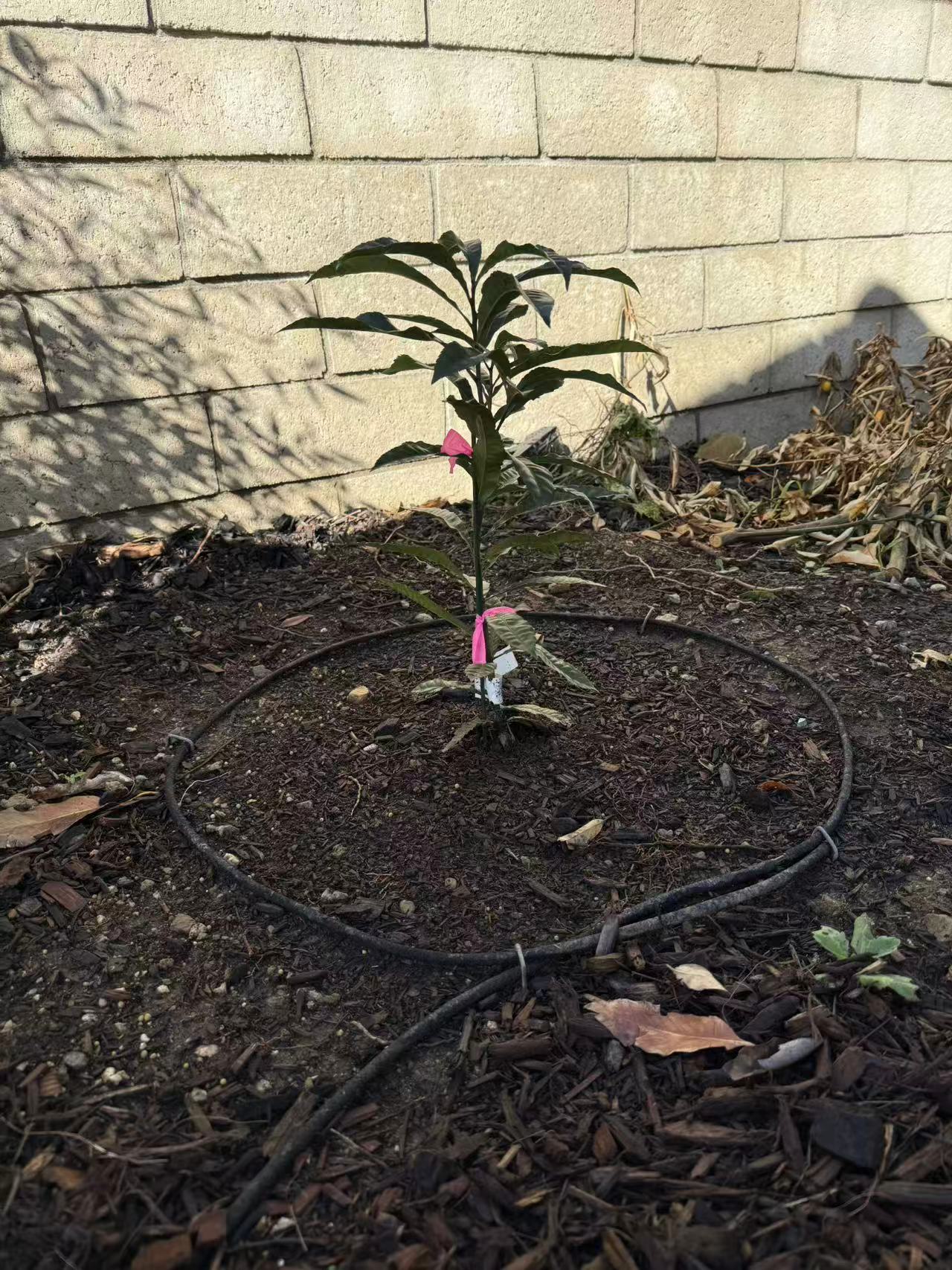
🍒 Plant Profile: American-Grown Yangmei (Waxberry)
📊 Basic Info
- Variety: Yangmei / Red Bayberry
- Scientific Name: Myrica rubra
- Planting Date: February 2026
- Source: Woodlanders.com
- Yield Performance: ★☆☆☆☆ (Juvenile stage; expected to fruit in 3–5 years)
- Flavor Profile: A refreshing balance of sweet and tart with a unique forest aroma; flesh is rich in anthocyanins.
📖 Variety Overview
This specimen is sourced from a domestic U.S. nursery (Woodlanders), which typically offers better acclimatization compared to imported seedlings.
- Appearance: A very young seedling with smaller, more compact leaves than the Dongkui variety. The terminal buds show active growth potential.
- Growth Habit: Prefers acidic soil. Being nursery-grown in the U.S., it is theoretically more resilient to local water salinity and the dry air of Southern California.
📅 Precise Ripening Months
In the Rowland Heights climate, the fruit development cycle is relatively short:
- Expected Harvest: May to June.
- Harvest Window: Typically a very short 2–3 week window. Quality is peak when the fruit transitions from bright red to deep purple-black.
📝 My Gardening Notes
- New Addition: Planted in February 2026. Learning from the previous challenges with the Dongkui variety, I opted for this domestically-grown Myrica rubra to ensure a smoother transition to the local environment.
- The “Dual-Track” Strategy: By having both the authentic Chinese Dongkui and this domestic variety, I am doubling my chances of successfully harvesting Yangmei in my backyard.
🛠️ Care & Maintenance
- Establishment Phase: As a fresh planting, I have applied a thick layer of mulch to keep the roots cool and will monitor sun exposure to prevent leaf scorch.
- Micronutrient Focus: I am maintaining a strict low-pH soil environment and avoiding heavy synthetic nitrogen to protect the beneficial nitrogen-fixing root nodules.