Tag: tm-05

  • Taiwan Mulberry

    Taiwan Mulberry

    🍇 Plant Profile: Taiwan Mulberry

    📊 Basic Info

    • Variety: Taiwan Mulberry (Appears to be a Weeping variety)
    • Transplant Date: January 2026 (Relocated within the orchard)
    • Yield Performance: ★☆☆☆☆ (Currently in intensive care/recovery after transplant root shock)
    • Flavor Profile: Produces small, plump berries. Unlike the purely sweet Pakistan Mulberry, this variety offers a complex, slightly tart, and deeply rich berry flavor.

    📖 Variety Overview

    Adding a Taiwan Mulberry to complement your existing Pakistan Mulberry is a brilliant move that diversifies both the aesthetic and the flavor profile of your spring harvests.

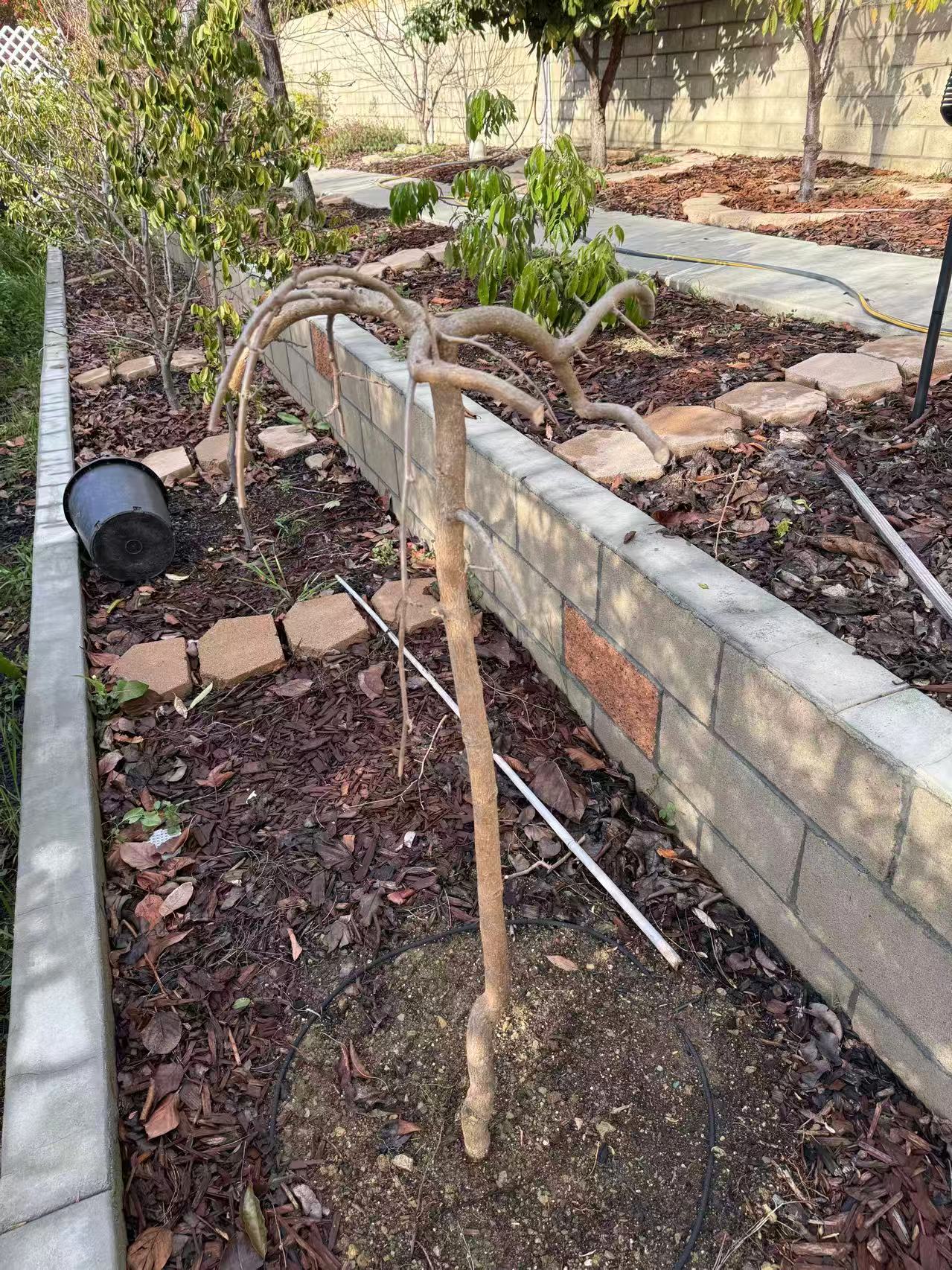
    • Appearance: The photo reveals a beautiful, serpentine trunk with cascading, umbrella-like branches. Even while dormant, its “weeping” architectural form looks like a deliberate bonsai piece.
    • Flavor Contrast: While the Pakistan variety provides straightforward sweetness, the Taiwan mulberry’s sweet-tart balance makes it far superior for snacking if you enjoy complexity, and it’s absolutely perfect for jams.
    • Resilience: Mulberries are renowned for their bulletproof nature. With the proper dormant-season care you’ve provided, it has an incredibly high chance of bouncing back.

    📅 Precise Ripening Months

    Mulberries are among the very first fruits to herald the arrival of spring in Southern California:

    • Bud Break: Expected around early March.
    • Expected Harvest: April to May.
    • Ripeness Cues: The berries ripen quickly. Wait until they turn from red to a deep, dark purple-black and practically fall off into your hand when touched.

    📝 My Gardening Notes

    • Orchard Rearrangement: Relocated in January 2026 while deep in dormancy to better fit the garden’s layout.
    • Proactive Pruning: Acknowledging the inevitable root damage from the move, I heavily pruned the canopy. This classic horticultural technique prevents the damaged roots from being overworked when spring arrives, setting the stage for a strong recovery.

    🛠️ Care & Maintenance (Post-Transplant Recovery)

    • Strict Moisture Control: Without leaves to transpire water, the tree’s water needs are currently near zero. Keep the mulched soil just barely moist to encourage root healing without causing rot.
    • Zero Fertilizer: The injured roots cannot process nutrients right now. Absolutely no fertilizer should be applied until the tree has pushed out a robust canopy of new green leaves later in the spring.
    • Watch for the Wake-Up: Around March, I’ll be closely inspecting the nodes along those weeping branches for tiny green swelling buds—the ultimate sign of a successful transplant.
  • Royal Lee Cherry

    Royal Lee Cherry

    🍒 Plant Profile: Royal Lee Cherry

    📋 Basic Info

    • Variety Name: Royal Lee Cherry
    • Planted Date: Early 2022 (Purchased as a sapling alongside Minnie Royal)
    • Yield Performance: ★★★☆☆ (Gathering strength, ready for a peak production phase with its partner)
    • Taste Profile: Exceptionally sweet California red cherry with firm flesh and rich flavor, the perfect complement to Minnie Royal.

    📖 Variety Overview The Royal Lee is the other half of Southern California’s famous low-chill cherry duo. If Minnie Royal is the early bird, Royal Lee is the steady anchor.

    • Appearance: It has an upright growth habit. Its chill hour requirement is slightly higher than its partner’s (around 250-350 hours), so it wakes up a bit later in the spring. The ripe fruits are deep red and beautifully heart-shaped.
    • Flavor: Its sugar content ranks among the highest in the cherry family. It has a satisfying crunch, making it absolutely perfect for eating fresh.
    • Growth Habits: It thoroughly enjoys the warm sunshine of Rowland Heights. It is strictly not self-fertile and relies entirely on pollen from the Minnie Royal to produce a bountiful harvest.

    📅 My Planting Log

    • Witness to Four Years of Growth: Taking root in the orchard alongside Minnie Royal in early 2022, this former frail sapling has grown robust over the past four years and is now steadily stepping into its prime fruit-bearing years.
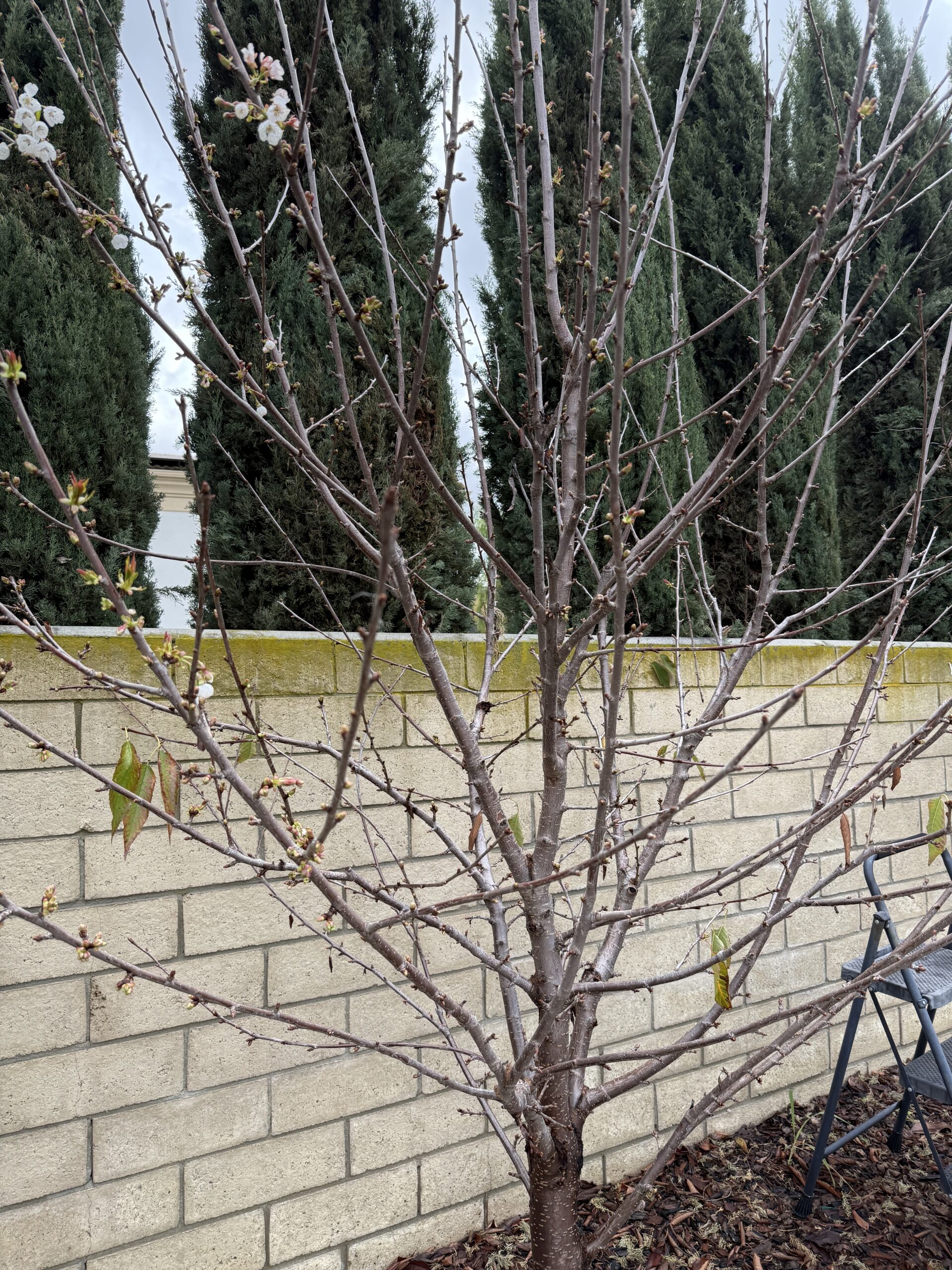
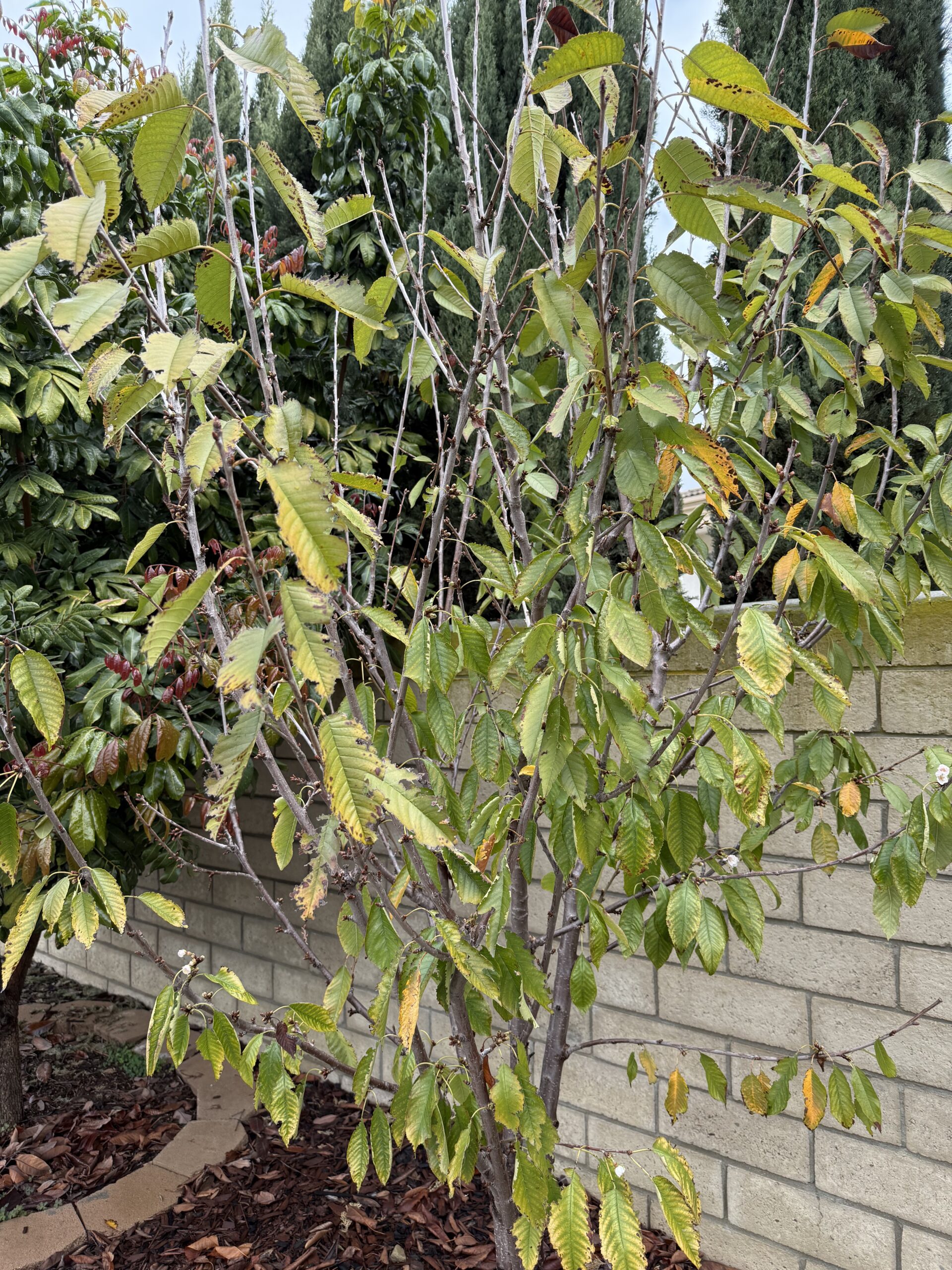
    • The Lingering Old Leaves: Its growth rhythm is half a beat slower than its partner. In mid-February of this year, while the neighboring Minnie Royal was already covered in blossoms, this tree was like a sleepy child, still holding onto some withered old leaves from last year. This “marcescence” is common in Southern California’s mild winters, indicating it’s still gathering strength.
    • A Late Bloom: Its bloom period is usually 10 to 14 days later than Minnie Royal (typically late February to early March). Although it starts late, it perfectly catches the tail end of its partner’s bloom to complete that crucial pollination handover.

    🛠️ My Care Guide

    • Manual Leaf Removal: To prepare for the upcoming bloom, I will manually pick off those stubborn old leaves lingering on the branches. This not only eliminates hiding spots for spider mites and powdery mildew spores but also allows direct sunlight to reach the branches, stimulating flower bud emergence.
    • Precision Pollination: Once it finally blossoms, I will seize the critical window to manually transfer pollen from the late-stage Minnie Royal flowers onto this tree with a small brush, ensuring this “low-chill duo” produces the maximum yield.
    • Synchronized Water & Fertilizer: Even though it wakes up later, the drip irrigation system underneath will stay synchronized with its partner. Once it blooms and pushes new growth, I will follow the principle of “light but frequent” organic feeding to build up abundant energy for the fruit expansion phase.
  • Minnie Royal Cherry

    Minnie Royal Cherry

    🍒 Plant Profile: Minnie Royal Cherry

    📋 Basic Info

    • Variety Name: Minnie Royal Cherry
    • Planted Date: Early 2022 (Purchased as a sapling alongside Royal Lee)
    • Yield Performance: ★★★☆☆ (Entering its peak production phase after four years of root establishment)
    • Taste Profile: Classic California sweet cherry flavor. Features bright red skin, firm and plump flesh, and exceptional sweetness.

    📖 Variety Overview The Minnie Royal is a star variety specifically bred for warm, low-chill environments like Southern California. It is the missing piece to achieving “cherry freedom” right in our local backyard.

    • Appearance: It boasts a graceful canopy and has the distinct trait of “blooming before leafing out.” In early spring, the bare branches are covered in pure white cherry blossoms, which later give way to medium-sized, bright red fruits.
    • Flavor: It has a very high sugar accumulation with almost no tartness. Crisp and juicy, it is the family’s most anticipated fresh fruit of the early summer.
    • Growth Habits: It requires very low chill hours (only 200-300 hours) and thrives in the abundant sunlight of Rowland Heights. However, it cannot stand alone; it strictly requires a nearby cross-pollinator to bear fruit.

    📅 My Planting Log

    • Witness to Four Years of Growth: Back in early 2022, it was just an unassuming little sapling. After four years of soaking up the California sun and receiving careful attention, it has shed its immaturity and now shows massive yield potential.
    • The Early Spring Frontrunner: It is the most sensitive plant to spring in the entire orchard. Right now, in mid-February, while other fruit trees are still dormant, it has already burst into full bloom, officially kicking off spring in the garden.
    • A Decisive Character: Its growth rhythm is incredibly clear-cut. When winter arrives, it decisively drops all its old leaves to allow nutrients to fully return to the roots. Currently, the tree is completely bare of leaves but full of blossoms, showing a perfectly healthy reproductive state.
    • An Inseparable Pair: I bought this sapling specifically to pair it with the Royal Lee. Although Minnie Royal is impatient and typically blooms 10 to 14 days earlier, its bloom period is long enough to patiently wait for the Royal Lee to wake up and complete the pollination mission.

    🛠️ My Care Guide

    • Pollination Assist: Since it blooms so early in mid-February, temperature fluctuations mean there might not be enough active bees around, and the Royal Lee isn’t fully open yet. To guarantee a good harvest, I will gently sweep a small brush between the flowers, or intervene once the other tree blooms to ensure proper fruit set.
    • Water Management During Bloom: Blooming consumes a massive amount of water and energy. I will carefully check the drip irrigation system during this period to keep the soil slightly moist—preventing massive flower drop from drought, while also avoiding root rot from waterlogging.
    • Post-Bloom Care & Pest Control: Once the flowers fade and new leaves and tiny fruits emerge, it will be hungry for nutrients. I will apply a specialized organic fruit tree fertilizer. I will also ensure good ventilation around the canopy to prevent common spring aphid infestations.
  • Hass Avocado

    Hass Avocado

    🥑 Plant Profile: Hass Avocado

    📊 Basic Information

    • Variety Name: Hass Avocado
    • Planting Time: Spring 2022 (planted simultaneously with the Fuerte for cross-pollination)
    • Yield Performance: ★★★☆☆ (Still a young tree, steadily establishing its production)
    • Taste Characteristics: Extremely rich, creamy texture with a classic nutty aroma; the most popular variety in the world.

    📖 Variety Introduction The Hass is the “king” of the avocado world and serves as the perfect partner for the Fuerte in my orchard.

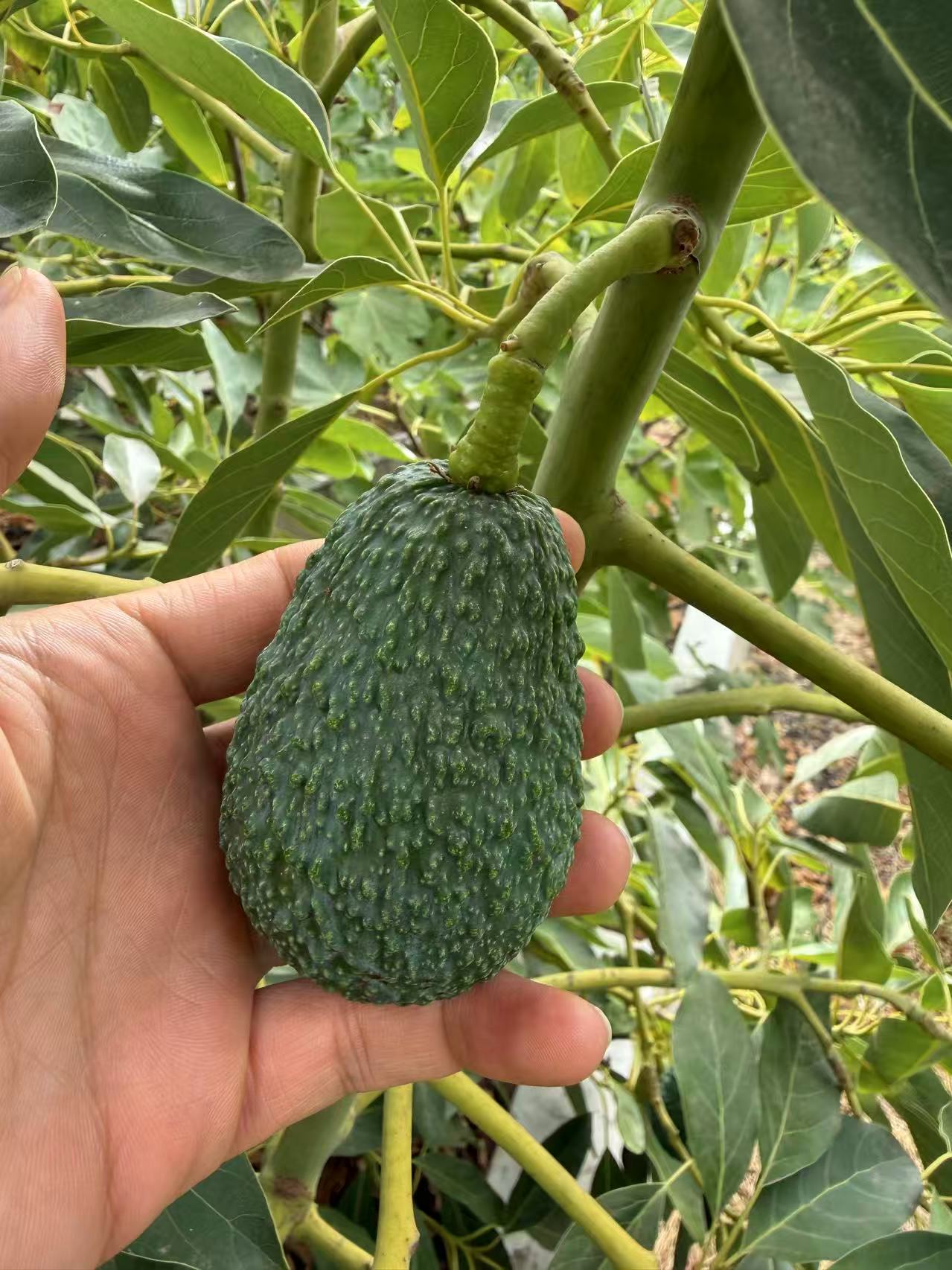
    • Appearance: Unlike the smooth green skin of the Fuerte, the Hass has a bumpy, pebbled texture similar to alligator skin. The skin transitions from green to deep purple or black as it matures, making it very easy to judge ripeness by color.
    • Flavor Profile: Its flesh is dense and oily when ripe, with a high fat content. Whether mashed into guacamole or sliced fresh, its rich, buttery flavor is top-tier.
    • Growth Habit: Hass is a Type A flowering variety. It grows vigorously in the Rowland Heights sunshine but is slightly more sensitive to frost than the Fuerte.

    📝 My Planting Record

    • The Perfect Neighbors: To solve the common issue of avocado pollination, I specifically planted this Hass near my Fuerte in the spring of 2022. This “A + B” combination ensures they cross-pollinate during their bloom cycles, making the yields for both trees much more reliable.
    • Growing in Sync: Watching these two trees take root, sprout, and fruit at the exact same time gives my orchard management a great sense of rhythm and order.

    🛠️ My Care Essentials

    • Height Control: Just like my strategy for the Fuerte, I keep this Hass pruned to under 2 meters (6.5 feet) for easy harvesting and to save space.
    • Precision Watering: Hass trees are very sensitive during the flowering and fruit-set stages. I use a careful irrigation schedule to ensure the roots are never too dry yet never waterlogged.
    • Nutrient Strategy: During the growing season, I regularly apply organic citrus and avocado fertilizer. Since the trees are close together, I ensure nutrients are balanced so they don’t have to “compete” for food.
    • Monitoring Ripeness: While I watch the Fuerte for texture, I rely on the color of this Hass; once it turns black and feels slightly soft to the touch, it’s time to enjoy the harvest.
  • O’Neal Blueberry

    O’Neal Blueberry

    🫐 Plant Profile: O’Neal Blueberry

    📊 Basic Information

    • Variety Name: O’Neal Blueberry
    • Planting Time: Spring 2024
    • Yield Performance: ★★★★☆ (A classic Southern Highbush variety, very early ripening, excellent productivity)
    • Taste Characteristics: Firm, crisp, and sweet flesh, extremely low acidity, with a pure and rich traditional blueberry aroma.

    📖 Variety Introduction O’Neal is widely recognized as one of the best-tasting Southern Highbush blueberry varieties, making it an absolute must-have classic for any home orchard.

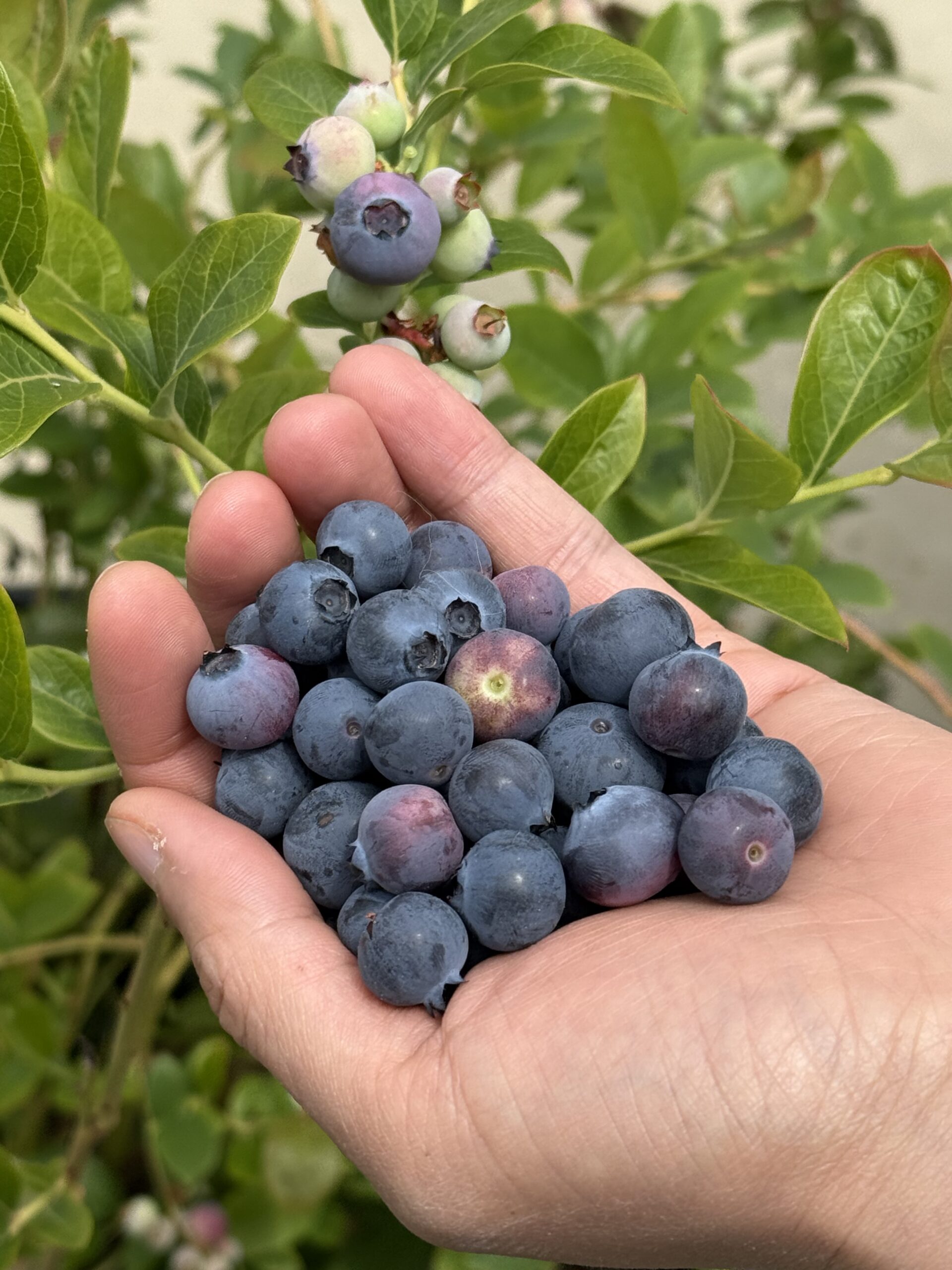
    • Appearance: The berries are a beautiful deep blue to purplish-black, covered with a thin layer of natural white bloom. They are medium-to-large in size, round, and plump. Judging from the photo in your hand, this batch has a perfectly deep color and excellent quality.
    • Flavor Profile: It is often considered the benchmark for blueberry sweetness. The flesh is crisp, sweet, and juicy with almost no sourness, radiating a rich blueberry fragrance. It’s perfect for grabbing a handful to eat fresh.
    • Growth Habit: This is a very early-season variety. As a Southern Highbush, it has a very low chilling hours requirement, making it perfectly tailored for the warm Southern California climate, like Rowland Heights.

    📝 My Planting Record Documenting the outstanding performance of this O’Neal in the orchard.

    • Early Spring Gift: Being a very early-ripening variety, it always wakes up the orchard early in the spring, bringing the first joy of harvest. It’s usually one of the first fruit trees to offer a fresh taste each year.
    • Management Experience: While blueberries are somewhat strict about soil pH, once they get past the initial rooting and adaptation phase, they have very few pest and disease issues. It’s a “put in effort early, enjoy ease later” kind of crop.
    • Environmental Feedback: Basking in the abundant California sunshine, its sugar accumulation is absolutely perfect. That heavy, deep blue handful of berries in the photo is the best reward for good sunlight and careful water management.

    🛠️ Care Essentials

    • Strict Acidic Soil Control: Blueberries are typical “acid lovers,” requiring a strict soil pH between 4.5 and 5.5. In California’s more alkaline soil, regularly applying a soil acidifier or specialized acidic fertilizer is a lifeline for ensuring it can properly absorb nutrients.
    • Shallow Roots & Mulching: Blueberry roots are very fine and shallow, making them highly sensitive to drought and high surface temperatures. Applying a thick layer of wood mulch around the base is crucial—it locks in moisture, keeps the roots cool, and provides natural acidic organic matter as it slowly breaks down.
    • Water Quality & Watering: They love moist but well-draining soil and absolutely cannot tolerate standing water. Since Southern California tap water tends to be hard (alkaline), it’s important to maintain consistent soil moisture. If possible, collecting and using rainwater yields the best results.
    • Moderate Pruning: Winter dormancy is the best time for pruning. Remove weak, crossing, and overly dense inner branches to maintain good airflow and light penetration within the canopy. This stimulates the plant to produce more flower buds and yield larger, sweeter berries the following year.
  • Pakistan Mulberry

    Pakistan Mulberry

    🌿 Plant Profile: Pakistan Mulberry

    📋 Basic Info

    • Variety Name: Pakistan Mulberry (Morus macroura)
    • Date Planted: Spring 2023
    • Yield: ⭐⭐⭐⭐⭐ (Extremely Prolific)
    • Flavor Profile: Pure sweet with no acidity, firm texture, juicy

    📖 Variety Introduction

    The Pakistan Mulberry is often hailed as the “King of Mulberries” and is currently one of the most popular tropical/subtropical mulberry varieties on the market. Compared to other mulberries, it boasts unique and significant advantages:

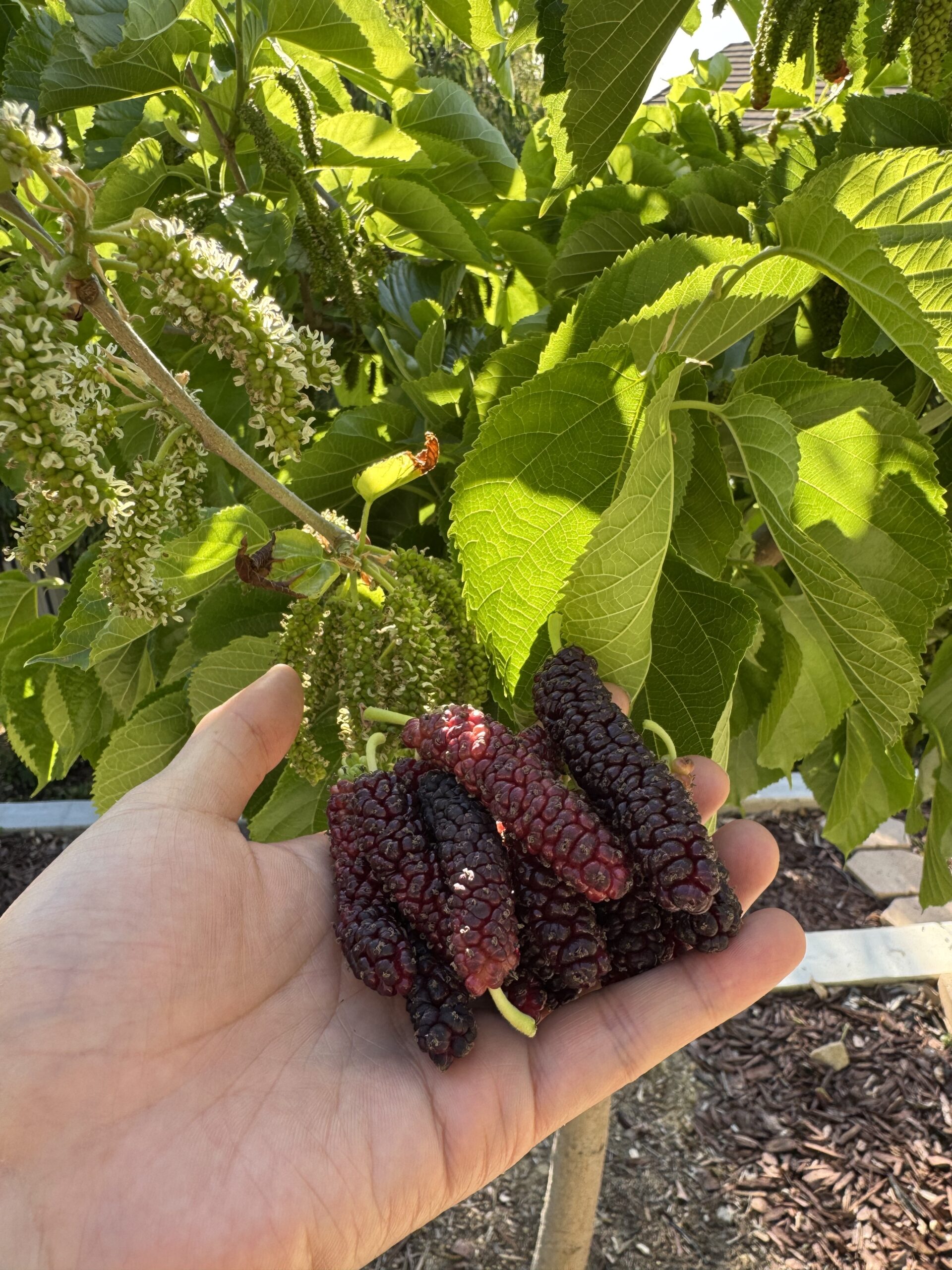
    • Extra Long Fruit: The fruits are elongated, reaching 3–4 inches (6–10 cm) in length when mature. Their massive size makes them visually stunning.
    • Pure Sweetness: This is its biggest selling point. Unlike common mulberries which have a “sweet-tart” balance, the Pakistan Mulberry is purely honey-sweet upon maturity. It has a very high Brix (sugar content) and absolutely no acidity, making it perfect for those who dislike sour fruits.
    • Edible at Various Stages: The fruit begins to develop sweetness as soon as it turns red, and the flavor deepens as it ripens to a dark purple-black.
    • Firm Texture: Compared to wild mulberries which can be mushy and stain easily, this variety has relatively firmer flesh. It holds well on the branch and offers a much better harvesting experience.

    🏡 My Planting Record

    This tree was added to the orchard in Spring 2023. Although it hasn’t been established for long, it has shown explosive growth power.

    • Growth Vigor: The tree is extremely robust and fast-growing. In just a few years, the canopy has already reached a significant scale.
    • Yield Performance: Its productivity is astonishing. During the peak season, the branches are densely packed with long fruits. The yield is massive—I can harvest a full basket almost every day. It is undoubtedly one of the most rewarding trees in my garden.

    🛠️ Care & Maintenance

    To maintain its “massive yield” and healthy growth, I have summarized the following key points from my daily management:

    • Pruning:
      • Pakistan Mulberries grow extremely fast, so controlled pruning is a must.
      • Summer Pruning (Post-Harvest): I recommend a heavy pruning right after the harvest season ends. This controls the tree height for easier picking and stimulates new growth, laying the foundation for next year’s yield.
      • Winter Pruning: Remove dead, diseased, or overcrowded branches to ensure good airflow and light penetration.
    • Watering & Fertilizing:
      • Mulberries love water and fertilizer. Before bud break in spring and after summer pruning, I supplement with organic fertilizer (such as chicken manure or compost) or a balanced composite fertilizer to support the massive fruit load.
      • During Fruit Swelling: Keep the soil consistently moist to prevent fruit drop or shriveling due to drought.
    • Sun Exposure:
      • Requires Full Sun. Ample sunlight is the necessary condition for high sugar content and high yield.
    • Pest Control:
      • This variety has strong disease resistance; the main challenge is birds and squirrels. Because the fruit is so sweet, I strongly recommend installing bird netting during the ripening season, otherwise, they will enjoy the harvest before you do.