Tag: tm-06

  • Standard Plum Tree

    🍑 Plant Profile: Standard Plum Tree (Likely Santa Rosa)

    📊 Basic Info

    • Guessed Variety: Santa Rosa Plum or Burgundy Plum
    • Planting Date: Late 2021
    • Source: Home Depot
    • Yield Performance: ★☆☆☆☆ (Currently yielding single digits; suffering from excessive vegetative vigor)
    • Flavor Profile: If Santa Rosa, expect a tart, purplish-red skin with sweet amber/red flesh. If Burgundy, expect a sweet, dark-red skin and flesh.

    📖 Variety Speculation & Diagnosis

    Home Depot overwhelmingly stocks the Santa Rosa plum in Southern California because it is the state’s gold standard for reliability and flavor.

    • The “All Leaves, No Fruit” Syndrome: 1. Age Factor: Plums typically need 3 to 5 years in the ground to transition from growing a structural frame to producing heavy crops. It is just now reaching full maturity. 2. Nitrogen Overload: The massive branch and leaf growth indicates it has taken up plenty of Nitrogen. When a tree has too much Nitrogen, it stays in a “vegetative state” (making leaves) and refuses to enter a “generative state” (making flowers and fruit). 3. Pruning Habits: Plums fruit on specialized short, stubby branches called “spurs.” If the vigorous, long, whip-like branches are aggressively pruned every winter, the tree simply reacts by growing more whips the next spring, at the expense of developing fruiting spurs.

    📅 Precise Ripening Months

    For standard early-to-mid season plums in Rowland Heights:

    • Expected Harvest: June to July.
    • Ripeness Cues: The fruit will slightly soften at the tip, and the skin will develop a dusky, natural “bloom” (a powdery white coating).

    📝 My Gardening Notes

    • The Veteran: Planted in late 2021, this tree is one of the foundational members of the orchard. It has proven its sheer vigor and adaptability to the local soil.
    • The Turning Point: While the single-digit yields have been frustrating, the massive structural growth means the engine is built. 2026 marks its 5th year, the typical breakout year for stone fruit production.
    • The Secret Weapon: The 4-in-1 multi-grafted tree you planted in 2022 features a dominant plum branch. This is a game-changer. These two trees will act as cross-pollinators for each other, which drastically increases the fruit set for both trees!

    🛠️ Care & Maintenance (The 2026 Fruiting Strategy)

    • Zero Nitrogen: Suspend all nitrogen-heavy fertilizers immediately. Switch entirely to Phosphorus and Potassium (like bone meal or a bloom-booster) to shock the tree into flowering.
    • Switch to Summer Pruning: Since winter pruning encourages wild vegetative growth, do the bulk of your pruning in mid-summer (after harvest time). Cut out the vigorous vertical “water sprouts” to let sunlight penetrate the inner canopy, which triggers the formation of fruiting spurs.
    • Branch Bending: Tie down the vigorous, vertically growing branches to a more horizontal angle (45-60 degrees). Bending the branches changes the flow of auxins (plant hormones), naturally slowing down leaf growth and forcing the branch to produce fruit buds for the next year.
  • American-Grown Yangmei

    American-Grown Yangmei

    🍒 Plant Profile: American-Grown Yangmei (Waxberry)

    📊 Basic Info

    • Variety: Yangmei / Red Bayberry
    • Scientific Name: Myrica rubra
    • Planting Date: February 2026
    • Source: Woodlanders.com
    • Yield Performance: ★☆☆☆☆ (Juvenile stage; expected to fruit in 3–5 years)
    • Flavor Profile: A refreshing balance of sweet and tart with a unique forest aroma; flesh is rich in anthocyanins.

    📖 Variety Overview

    This specimen is sourced from a domestic U.S. nursery (Woodlanders), which typically offers better acclimatization compared to imported seedlings.

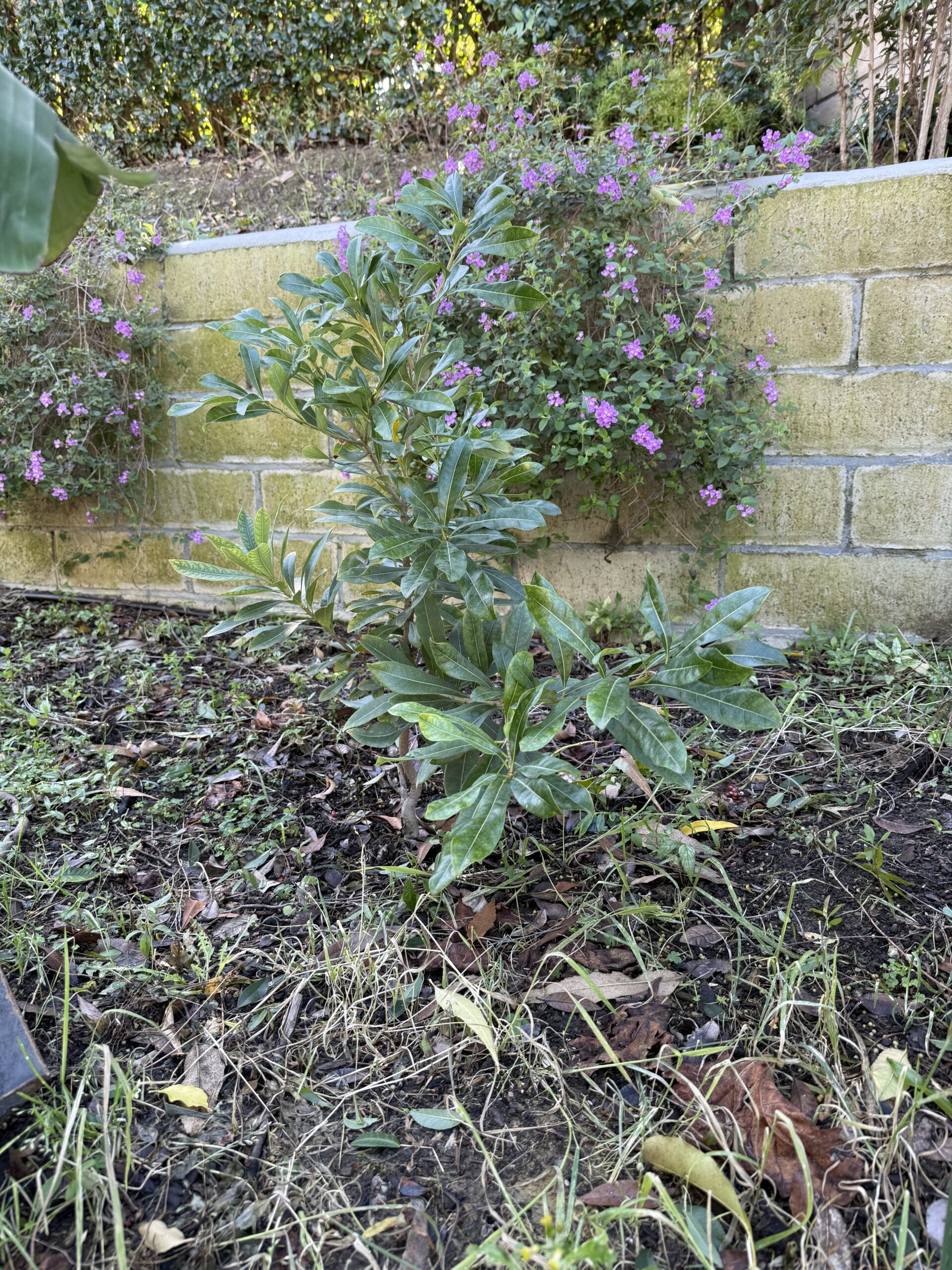
    • Appearance: A very young seedling with smaller, more compact leaves than the Dongkui variety. The terminal buds show active growth potential.
    • Growth Habit: Prefers acidic soil. Being nursery-grown in the U.S., it is theoretically more resilient to local water salinity and the dry air of Southern California.

    📅 Precise Ripening Months

    In the Rowland Heights climate, the fruit development cycle is relatively short:

    • Expected Harvest: May to June.
    • Harvest Window: Typically a very short 2–3 week window. Quality is peak when the fruit transitions from bright red to deep purple-black.

    📝 My Gardening Notes

    • New Addition: Planted in February 2026. Learning from the previous challenges with the Dongkui variety, I opted for this domestically-grown Myrica rubra to ensure a smoother transition to the local environment.
    • The “Dual-Track” Strategy: By having both the authentic Chinese Dongkui and this domestic variety, I am doubling my chances of successfully harvesting Yangmei in my backyard.

    🛠️ Care & Maintenance

    • Establishment Phase: As a fresh planting, I have applied a thick layer of mulch to keep the roots cool and will monitor sun exposure to prevent leaf scorch.
    • Micronutrient Focus: I am maintaining a strict low-pH soil environment and avoiding heavy synthetic nitrogen to protect the beneficial nitrogen-fixing root nodules.
  • Dongkui Yangmei

    Dongkui Yangmei

    🍒 Plant Profile: Dongkui Yangmei (Waxberry)

    📊 Basic Info

    • Variety: Dongkui Yangmei (The “Giant” Waxberry)
    • Planting Date: Early 2023
    • Origin: Imported from China (The sole survivor of 4 seedlings)
    • Yield Performance: ★☆☆☆☆ (Currently in a long-term acclimatization phase)
    • Flavor Profile: Known for its massive size (comparable to a ping-pong ball), deep purple-black skin, and a perfect balance of sweet and tart juices.

    📖 Variety Overview

    Native to Zhejiang, China, the Dongkui variety is the crown jewel of waxberries.

    • Appearance: Features leathery, oblanceolate leaves with serrated margins.
    • Growth Habit: It strictly requires acidic soil (pH 4.5–5.5). The alkaline soil and dry air of Rowland Heights represent a significant environmental hurdle.

    📅 Precise Ripening Months

    While it ripens in June in China, the harvest window in Southern California is expected to be:

    • Expected Harvest: June to July.
    • Note: The fruit is extremely delicate and has a very short shelf life. Protection from birds and heatwaves is essential during these months.

    🛠️ Care & Maintenance

    • Acidification: This is non-negotiable. Use ferrous sulfate or fertilizers formulated for acid-loving plants (like Azaleas) to keep the soil pH low.
    • Water Quality: It is sensitive to the salts in tap water. Using filtered water or collected rainwater can help prevent leaf burn and nutrient lockout.
    • Humidity Control: During the dry Santa Ana winds, consider providing extra misting or temporary shade to mimic its humid native habitat.
  • Star Ruby Grapefruit

    Star Ruby Grapefruit

    🍊 Plant Profile: Star Ruby Grapefruit

    📋 Basic Info

    • Variety Name: Star Ruby Grapefruit (Inferred from its red blush, red flesh, and thin skin)
    • Planted Date: Early 2024
    • Yield Performance: ★☆☆☆☆ (Just catching its breath after severe pest damage last year, currently in recovery mode)
    • Taste Profile: The pinnacle of looks and flavor in the grapefruit family. It features incredibly thin skin with a gorgeous red blush and deep, ruby-red flesh. It’s overwhelmingly juicy with a perfect sweet-tart balance, lacking the strong bitter aftertaste of standard white grapefruits.

    📖 Variety Overview If you want to grow a grapefruit that is both delicious and beautiful in a backyard, Star Ruby is the ultimate choice for California growers.

    • Appearance: It has classic, vibrant green citrus foliage. Its biggest highlight is the fruit: under the intense summer sun of Rowland Heights, the rind develops a beautiful red blush, and slicing it open reveals an incredibly tempting dark red interior.
    • Growth Habits: It is a high-heat variety that thrives in the climate of Southern California’s inland valleys. The more heat it gets, the redder and sweeter the flesh becomes.

    📅 My Planting Log

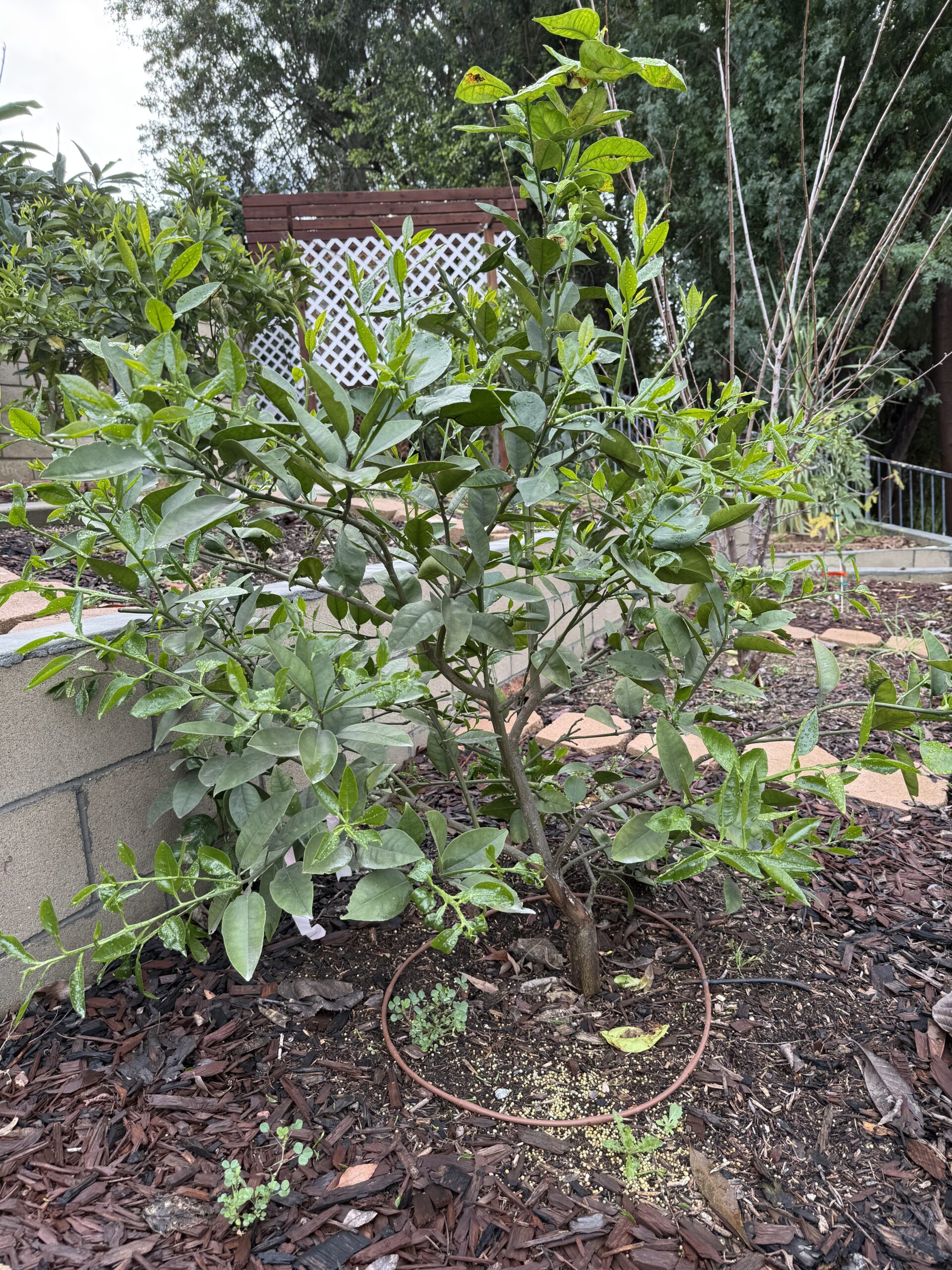
    • A Tough 2025: Planted with high hopes in early 2024, it was unfortunately heavily hit by the dual assassins of citrus trees in 2025: leafminers and aphids. The tender new leaves were chewed up and curled, severely stunting its growth progress.
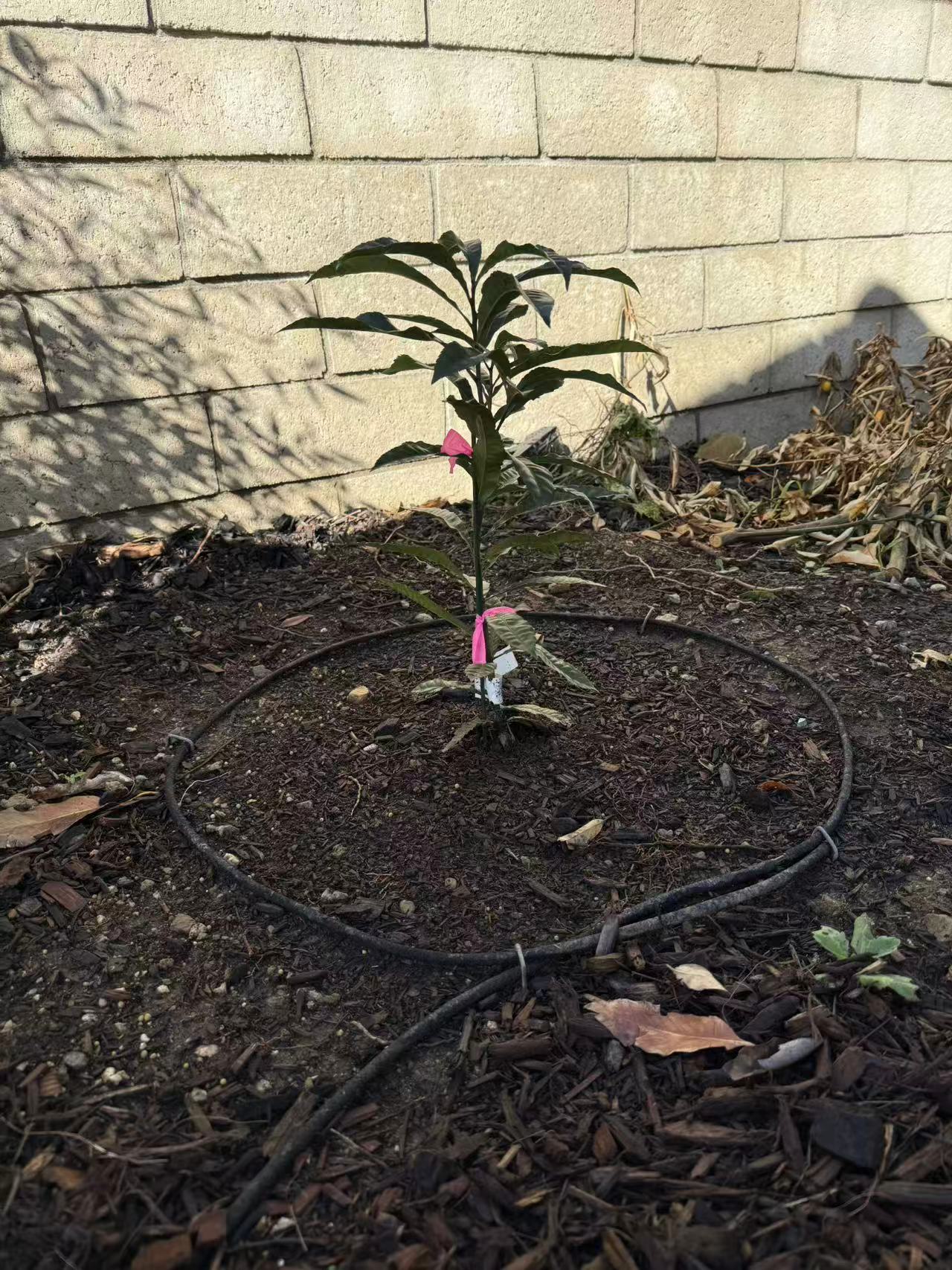
    • The Spring Comeback: After a year of laying low, it has finally pushed out a full canopy of vigorous new shoots this early spring (2026). Although the annoying aphids tried to make a comeback, I took preemptive action and sprayed pesticide. Looking at these lush, lively new flushes in the photo, I am confident it will make a full recovery this year.

    🛠️ My Care Guide

    • Strict Pest Control: This is the make-or-break factor for its comeback this year. Fresh citrus flushes are an absolute feast for aphids and leafminers. During this spring growth spurt, I will maintain a spraying schedule of Neem oil or gentle pesticides every 1-2 weeks, focusing on the undersides of the new leaves, giving the bugs zero chance to return.
    • Precision Water & Fertilizer: The circular drip line in the photo is set up perfectly. Because it is recovering and rapidly pushing new leaves, I will keep the soil moisture consistent. I will soon supplement it with organic citrus fertilizer rich in micronutrients (especially iron and zinc), following a “light but frequent” approach to avoid excessive nitrogen, which can attract more aphids.
    • Pruning Damaged Leaves: Once this new flush hardens off, I’ll pick a sunny day to prune away some of the old, severely deformed leaves ruined by leafminers last year. This will reduce hiding spots for pests and improve airflow and sunlight penetration through the canopy.
  • Mauritius Lychee

    Mauritius Lychee

    🍒 Plant Profile: Mauritius Lychee

    📋 Basic Info

    • Variety Name: Mauritius Lychee (Also known as “Tai So”)
    • Planted Date: Fall 2024 (Purchased from Mimosa Nursery)
    • Yield Performance: ★☆☆☆☆ (Currently in the post-transplant establishment phase, no yield yet)
    • Taste Profile: (Expected) Classic sweet-tart lychee flavor, juicy and aromatic. While the seed is larger than the “Sweet Heart” variety, it makes up for it with reliable production.

    📖 Variety Overview If growing lychee in Southern California is a test, Mauritius is the easiest question on the exam. It is the most adaptable and reliable bearing commercial variety for the local climate.

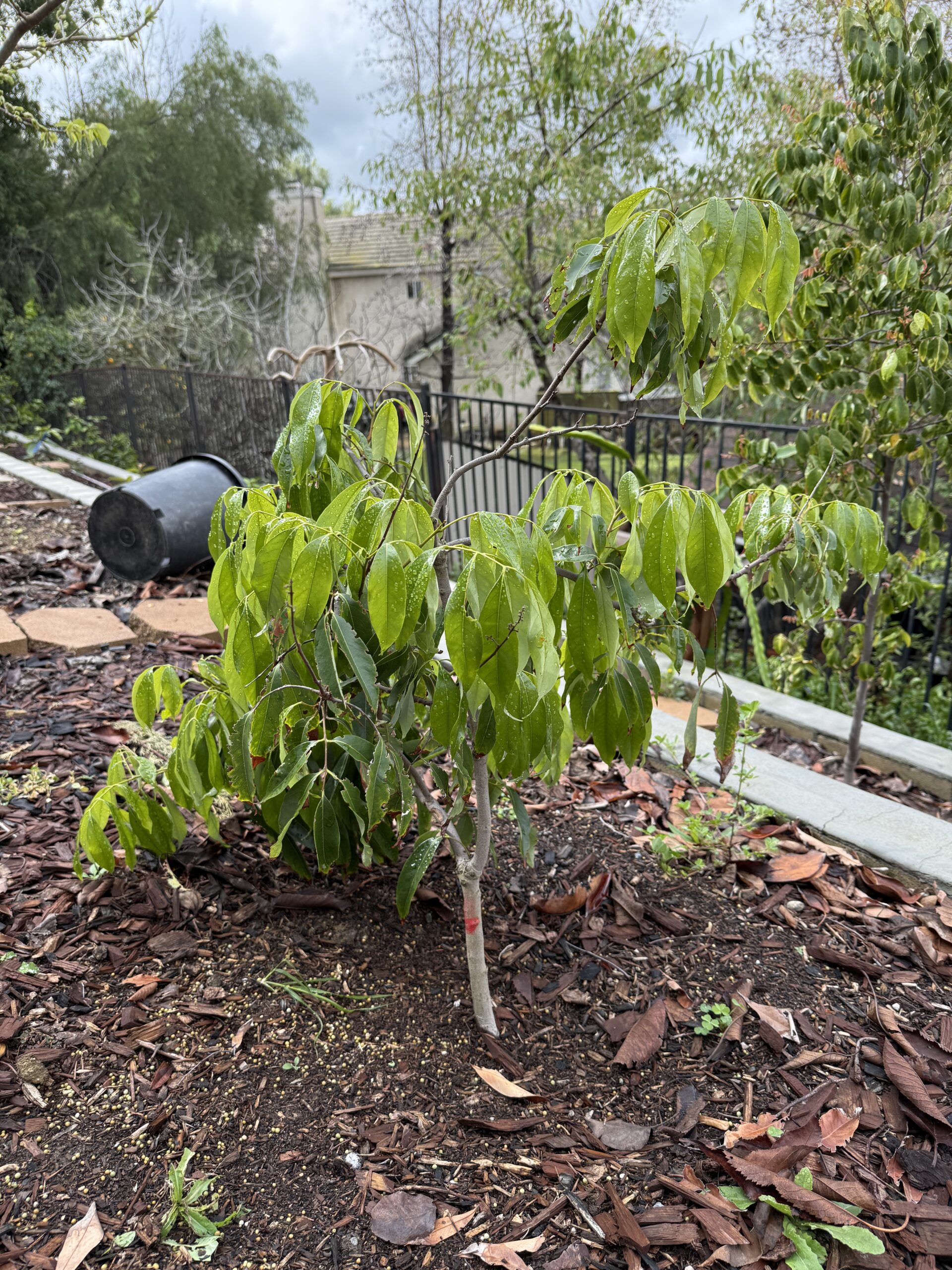
    • Appearance: As seen in the photo, its leaves are typically narrower and pointier than other varieties. The mature fruit has dark red skin, often ready to harvest even with a hint of green on the “shoulders.”
    • Growth Habits: It has relatively good tolerance for SoCal’s cool winters and dry summers. It doesn’t require as strict of a winter chill to induce flowering as other varieties, making it highly likely to fruit year after year.

    📅 My Planting Log

    • New Arrival: In the fall of 2024, this small sapling carrying dreams of tropical fruit arrived in the orchard. The photo clearly shows the graft union at the base, indicating it is a grafted tree with superior genetics.
    • Adaptation Period: It is currently navigating its first winter and early spring after planting. The slightly drooping leaves in the photo suggest it is working hard to adapt to the new soil and climate, a normal reaction after transplanting. Its primary goal right now is to establish its root system, not to grow tall.

    🛠️ My Care Guide (For First-Year Sapling)

    • Winter Protection: Lychee is a quintessential tropical plant and is very sensitive to cold. Although Rowland Heights is mild, during its first winter/early spring, if temperatures approach 32°F (0°C) during a cold snap, I must cover it with frost cloth. Its tender branches also need protection from strong winds.
    • Careful Watering: The root system of a newly planted sapling is underdeveloped. I need to keep the soil moist but never waterlogged. I will check the soil moisture frequently rather than sticking to a fixed schedule to prevent root rot.
    • Hold Off on Fertilizer: Until it pushes out significant new growth, its roots cannot absorb many nutrients. Applying fertilizer now could easily burn the roots. I will patiently wait until the weather warms up completely in spring and new leaves emerge before applying a very diluted liquid acid fertilizer.
  • Donut Peach

    Donut Peach

    🍩 Plant Profile: Donut Peach (Saturn Peach)

    📊 Basic Information

    • Variety Name: Donut Peach / Saturn Peach (Prunus persica var. platycarpa)
    • Planting Date: Early 2022
    • Yield Performance: ★★★★☆ (Consistent high yield in 2025; fruits are large and well-formed)
    • Flavor Profile: Refreshingly sweet, fine-textured flesh, exceptionally small pit, with a rich floral aroma.

    📖 Variety Introduction

    The Donut Peach, also known as the Saturn Peach, is a unique flat-shaped heirloom variety prized for its ease of eating and superior sweetness compared to traditional round peaches.

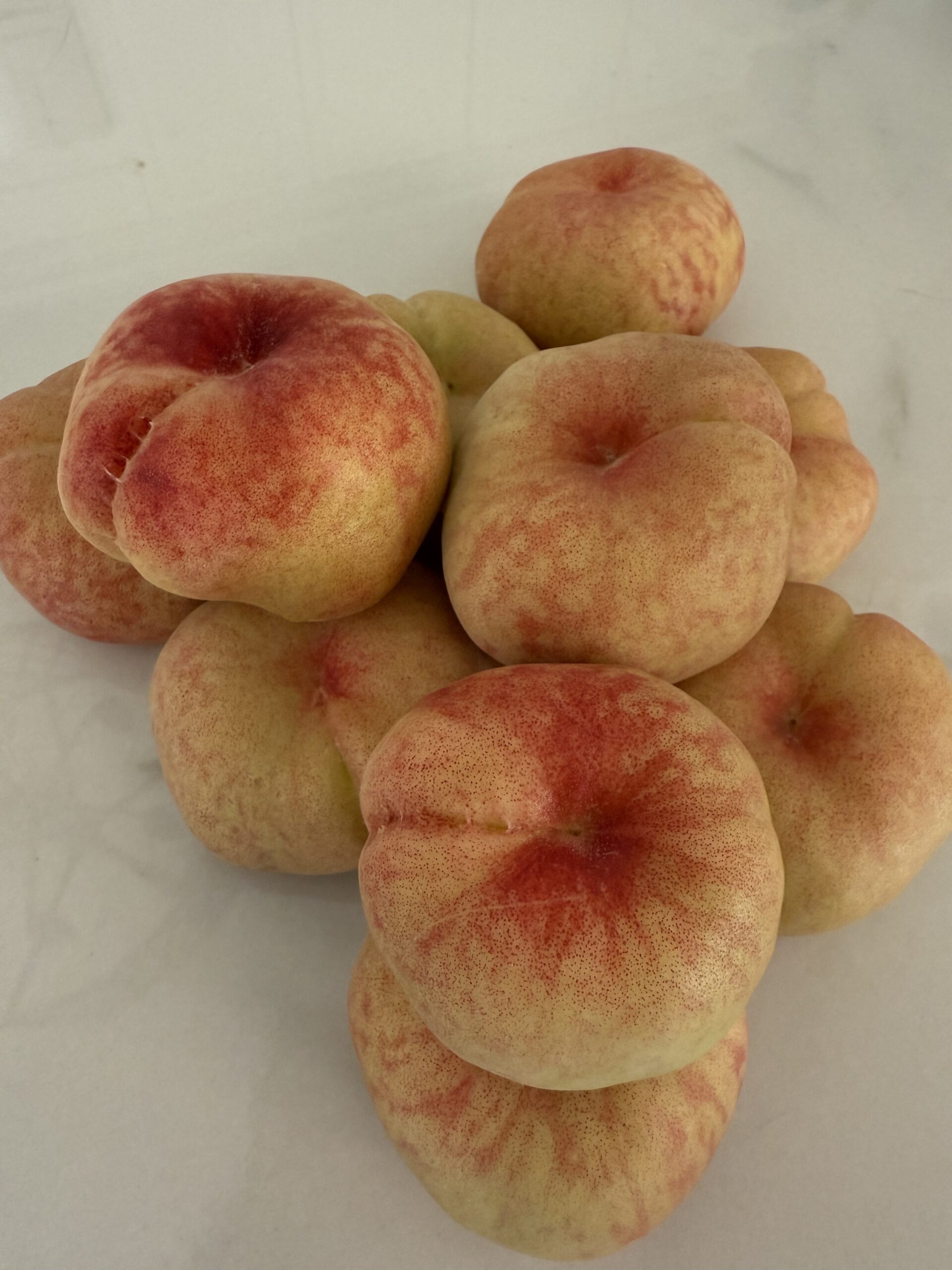
    • Physical Characteristics: Unlike standard peaches, it features a distinct flattened, disc-like shape with a sunken center. When ripe, the skin displays a beautiful blush of crimson over a creamy yellow background, with very fine fuzz.
    • Flavor Experience: Renowned for its low acidity and high sugar content. The flesh is typically white or pale yellow, offering a succulent, melt-in-your-mouth texture. Its small, freestone pit makes it a perfect “snack fruit.”
    • Garden Value: Beyond the fruit, the tree provides a stunning floral display in spring. It thrives in the sunny, Mediterranean climate of Rowland Heights, which is ideal for maximizing fruit brix (sugar levels).

    📝 My Planting Record

    Planted in early 2022, this peach tree has evolved from a young sapling into a cornerstone of the orchard over the past four seasons.

    • Growth Progress: After two years of establishing a strong root system, the tree hit its stride in its third and fourth years. The intense California sun has been instrumental in developing the vibrant red blush seen in the latest harvest.
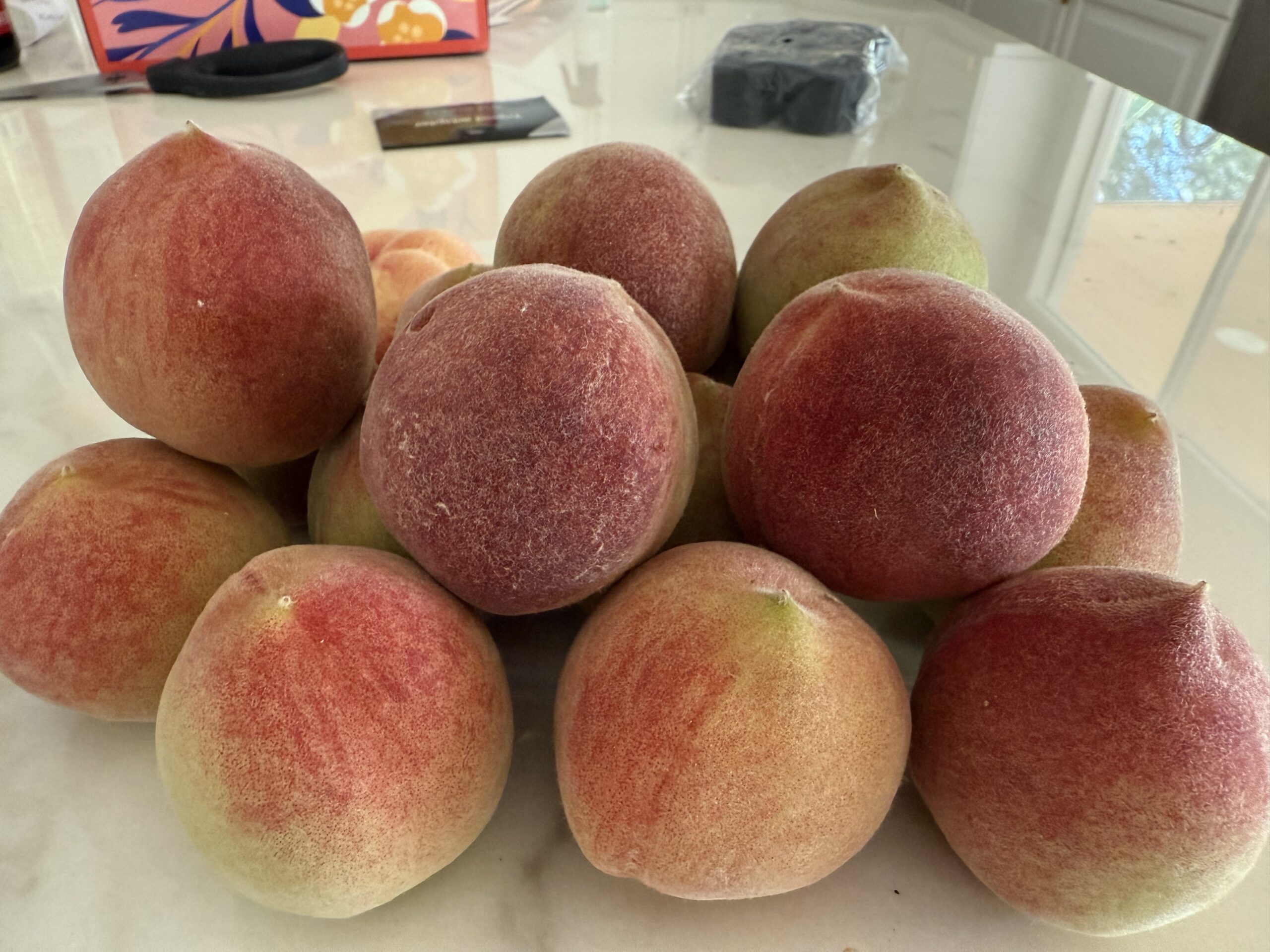
    • Harvest Performance: By the 2025-2026 seasons, the tree reached a mature production phase. As shown in the recent photos, the harvest is bountiful, with uniform fruit size and excellent symmetry.
    • Environmental Adaptation: The tree has adapted perfectly to our local climate. The dry heat helps minimize fungal issues common in stone fruits, resulting in cleaner skin and more concentrated sugars.

    🛠️ Care & Maintenance

    • Fruit Bagging: This is the most critical step for a successful harvest. Bagging must be done during the early fruiting stage. This creates a physical barrier against borers (fruit worms) and prevents birds and local wildlife from pecking at the fruit as it ripens.
    • Strategic Pruning: Regular canopy management is essential. I perform structural pruning during the winter dormancy to maintain height and summer thinning to remove water sprouts, ensuring sunlight reaches the interior fruiting wood.
    • Nutrient & Water Management: A consistent fertilization schedule is followed: nitrogen-rich fertilizer in early spring for growth, phosphorus/potassium during fruit swell, and a “post-harvest” feeding to prep for next year. Consistent deep watering is maintained while avoiding waterlogging to prevent fruit drop.
  • White Peach

    White Peach

    🍑 Orchard Profile: The Prolific White Peach

    1. Basic Information

    • Variety: White Peach
    • Planting Date: Early 2022
    • Tree Age: Approx. 4 years (Entering its prime production years)
    • Fruit Characteristics: Known for its delicate, pale skin with a rosy blush, exceptionally juicy flesh, and a floral sweetness that is less acidic than yellow varieties.

    2. Growth & Performance

    This tree has proven to be a high-yield powerhouse within the orchard. Having reached maximum productivity just a few years after its 2022 planting, it stands as a testament to excellent soil quality and meticulous care.

    • Productivity: Consistently delivers a heavy crop, showing remarkable vigor for a relatively young tree.
    • Appearance: The fruit features a classic “peach tip” and fine fuzz, indicating healthy physiological development.

    3. Key Cultivation Insights

    The success of this harvest is credited to a rigorous “Protect & Preserve” management strategy:

    • Strategic Bagging:
      • Pest Barrier: Early-stage bagging is essential to defend the high-sugar fruit against the oriental fruit moth (borers) and other larvae.
      • Wildlife Deterrent: It serves as a physical deterrent against squirrels and birds, who are often drawn to the fruit’s scent as it ripens.
    • Quality Control: Beyond protection, bagging helps maintain the pristine, unblemished complexion of the white peach skin, preventing “wind scar” and sunburn.

    4. Grower’s Note

    “While this variety demands high maintenance during the bagging season to outsmart the local wildlife and insects, the reward is a bountiful harvest of flawless, honey-sweet peaches that are well worth the extra labor.”

  • Black Mission Fig

    Black Mission Fig

    Here is the formal English version for your Black Mission Fig profile:


    🪴 Plant Profile: Black Mission Fig

    📍 Basic Information

    • Variety Name: Black Mission (Ficus carica ‘Mission’)
    • Planting Date: Early 2023
    • Yield Performance: ★★★★★ (Entered peak production in 2025 with exceptional yields)
    • Flavor Profile: Intensely sweet, jam-like texture, rich flavor with a natural syrupy finish

    📖 Variety Introduction

    The Black Mission fig is a classic and highly esteemed California variety, renowned for its deep coloration and superior sweetness.

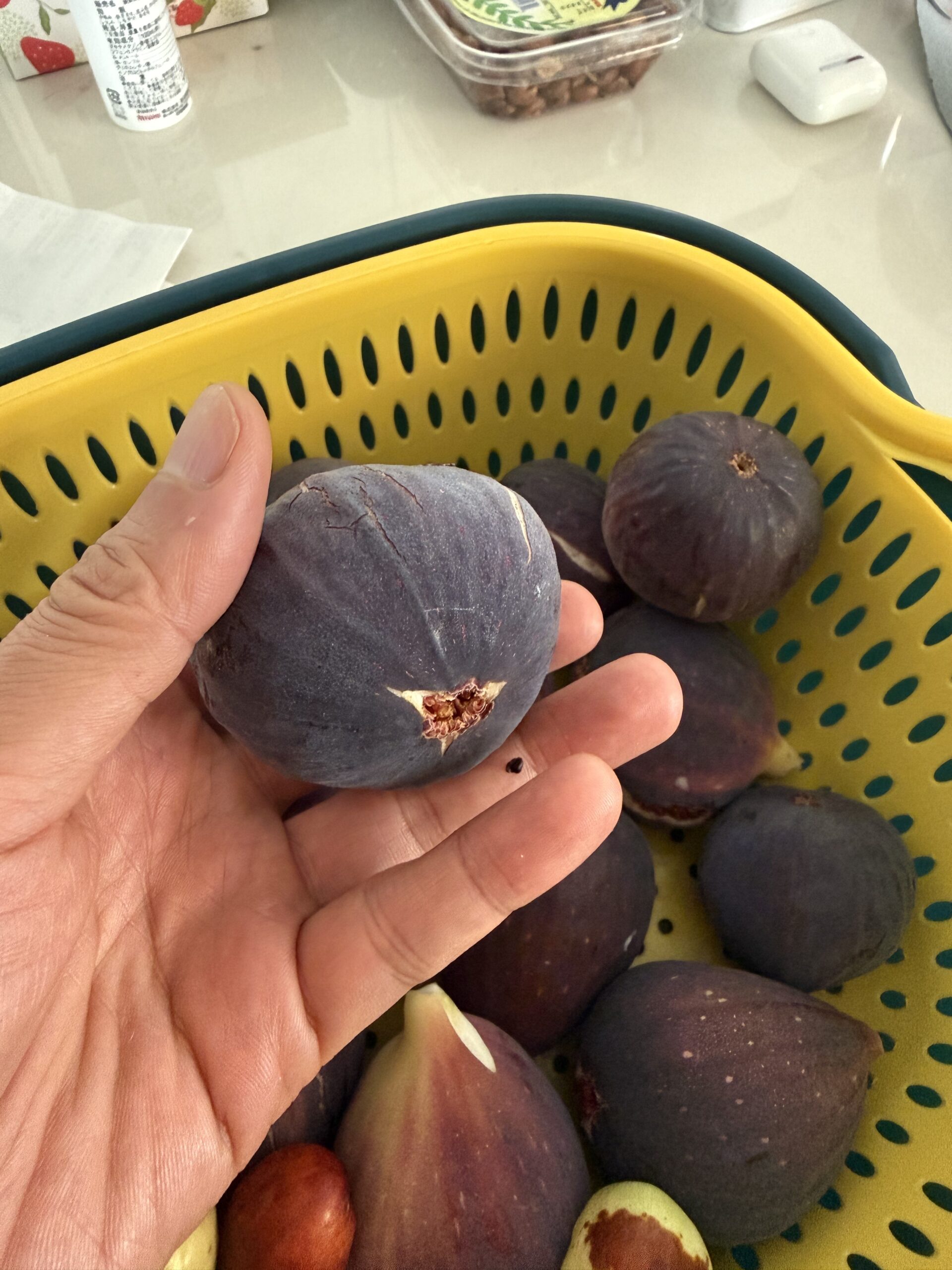
    • Appearance: The fruit is a plump, pear-shaped fig that transitions to a deep purple or nearly black skin upon maturity. The interior reveals an inviting strawberry-red flesh with a fine, delicate texture.
    • Flavor Profile: As a representative of high-sugar varieties, it offers a soft, honey-like consistency. Once fully ripe, the skin becomes thin, and the flesh provides a gourmet eating experience, making it a top choice for fresh consumption.
    • High Productivity: This variety is highly adaptable and has the potential to produce two crops per year (Breba and Main crops), making it ideal for home orchards.

    📓 My Planting Records

    This tree joined the orchard in early 2023 and has become the garden’s “productivity champion” in just two years.

    • Growth Vigor: Since planting, it has shown incredible vitality. Under the abundant sunlight of Rowland Heights, the canopy has expanded rapidly with well-balanced branching.
    • Harvest Milestone: Following two years of establishment, the tree saw an explosive harvest in 2025. The branches were heavily laden with deep purple fruits, providing more than enough for fresh eating and sharing with neighbors.
    • Climate Adaptation: It thrives in the dry California climate. During the 2025 harvest season, the sugar accumulation was excellent, as evidenced by the fine “sugar cracks” appearing on the skin—a hallmark of high quality.

    🛠️ Maintenance Essentials

    • Structural Pruning: Due to its vigorous growth, I perform structural pruning during the winter dormancy period. This maintains a manageable height for harvesting and stimulates new shoot growth for the following year’s crop.
    • Wildlife & Harvesting: Because of its high sugar content, ripe Black Mission figs are a favorite for birds and squirrels. It is best to harvest as soon as the fruit turns color or use bird netting to protect the crop.
    • Water Balance: While figs are drought-tolerant, providing consistent moisture during the fruiting stage prevents the fruit from undersizing. However, I avoid overwatering during the final ripening phase to prevent excessive splitting or diluted sweetness.
    • Soil Health: I supplement with organic fertilizer every early spring to ensure the tree has the nutrient reserves needed for a heavy production year.