Tag: tm-07

  • 4-in-1 Apple Tree

    4-in-1 Apple Tree

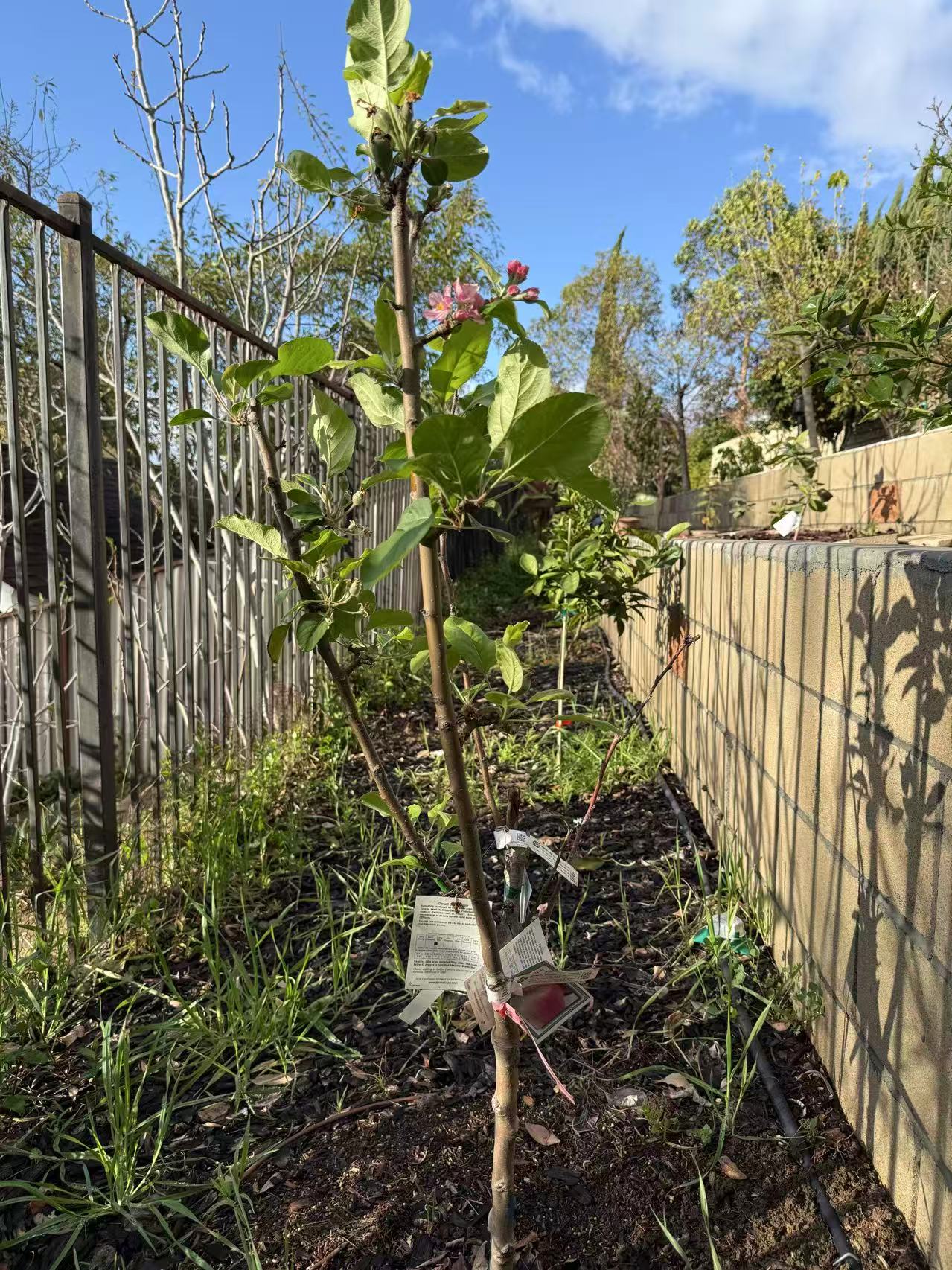
    🍎 Plant Profile: 4-in-1 Apple Tree (Featuring Anna & Dorsett Golden)

    📊 Basic Info

    • Active Varieties: Anna Apple & Dorsett Golden Apple
    • Planting Date: Early 2024
    • Source: Dave Wilson Nursery (Multi-grafted)
    • Yield Performance: ★★☆☆☆ (Showing beautiful pink/white blooms in early Spring 2026; set for its first real harvest)
    • Flavor Profile:
      • Anna: A crisp, sweet-tart apple with a red blush, reminiscent of a cross between a Gala and a Granny Smith.
      • Dorsett Golden: A purely sweet, crisp, yellow apple that tastes similar to a Golden Delicious.

    📖 Variety Overview

    This tree is an absolute masterclass in selecting the right fruit for the Southern California climate.

    • The Perfect Match: Anna and Dorsett Golden are “ultra-low chill” varieties (requiring only 100-300 chill hours). They bloom simultaneously, acting as the perfect cross-pollinators for one another to guarantee a heavy fruit set.
    • The “Slow” Growth: Your observation of its mediocre vigor is actually completely normal. Apple trees on dwarfing/semi-dwarfing rootstocks grow much slower and woodier than vigorous stone fruits like plums. Steady, moderate growth is exactly what you want.
    • The “Dead” Branch Mystery: Do not cut off the two dormant grafts yet! Because Anna and Dorsett Golden are ultra-low chill, they wake up very early (February). The other two grafts likely have higher chill requirements and simply won’t wake up until late March or April.

    📅 Precise Ripening Months

    Because these varieties bloom so early in the year, they are among the first apples to ripen anywhere in the country:

    • Expected Harvest: Late June to July (A rare mid-summer apple harvest).
    • Ripeness Cues: Pick Dorsett when the skin turns a clear, golden yellow. Pick Anna when it develops a robust red blush. Both varieties should be harvested promptly upon ripening, as they do not store well on the tree and can become mealy in the summer heat.

    📝 My Gardening Notes

    • The Low-Chill Miracle: Planted in early 2024. Growing crisp apples in Rowland Heights is challenging, but this specific grafted combo makes it effortless.
    • Patience with the Multi-Graft: By February 2026, half the tree is covered in blossoms while the other half looks bare. This is a great lesson in chill-hour differences—the remaining grafts are simply sleeping in and waiting for warmer spring weather.

    🛠️ Care & Maintenance

    • Aggressive Thinning (Crucial): Apples bloom in clusters of five. If all five set fruit, the weight will easily snap these young branches. Once the fruit reaches the size of a cherry, I must thin each cluster down to just 1 or 2 apples.
    • Sunscald Prevention: Young apple bark is susceptible to sunburn in the harsh SoCal summer. Since the canopy is still developing, I will monitor the exposed trunk and apply diluted white latex tree paint if necessary.
    • Spring Feeding: With the tree actively blooming and setting fruit right now, a moderate application of an organic, balanced fruit tree fertilizer will provide the necessary energy for fruit development.
  • 4-in-1 Stone Fruit Tree

    4-in-1 Stone Fruit Tree

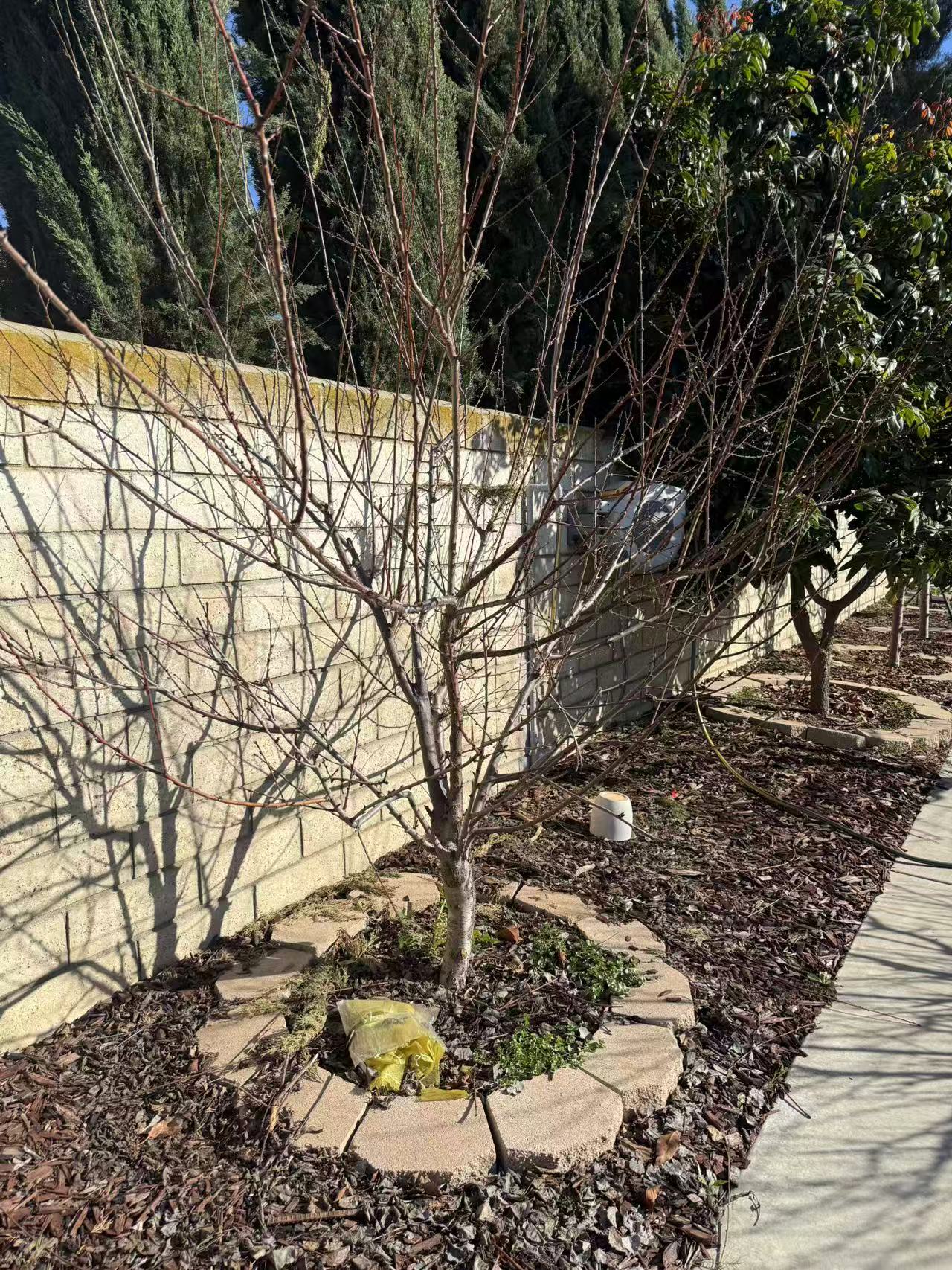
    🍑 Plant Profile: 4-in-1 Stone Fruit Tree (Multi-Graft)

    📊 Basic Info

    • Varieties Included: Plum, Nectarine, Apricot, White Peach
    • Planting Date: 2022
    • Source: New Oriental Nursery
    • Yield Performance: ★★★☆☆ (Plum and Apricot are dominating and fruiting well; Nectarine and Peach are currently struggling to compete)
    • The Magic: The ultimate space-saver. It provides a “fruit salad” on a single trunk and extends the harvest season across the entire summer.

    📖 Variety Overview

    Multi-grafted trees are a marvel of horticulture, but they require a vigilant gardener to maintain the harmony between the different grafts.

    • The Battle for the Canopy: In the plant kingdom, the most vigorous shoots win. Plums and Apricots naturally grow faster and more aggressively than Peaches and Nectarines. Without intervention, they will shade out and eventually kill the weaker grafts.
    • The Balancing Act: Your intuition is spot-on. The key to successfully growing a multi-graft tree is not about feeding it more, but strictly managing the vigor of the dominant branches so the weaker ones can catch up.

    📅 Precise Ripening Months (The Summer Relay)

    In Southern California, these four varieties will ripen in a staggered sequence, providing fresh fruit for months:

    • Leg 1: ApricotLate May to June (The herald of summer).
    • Leg 2: PlumJune to July (Typically the most prolific and juiciest).
    • Leg 3: NectarineJuly to August (Requires intense mid-summer sun for peak sweetness).
    • Leg 4: White PeachLate July to Late August (The sweet, delicate finale to the stone fruit season).

    📝 My Gardening Notes

    • The 2022 Investment: Sourced from New Oriental. It was a strategic choice to maximize fruit diversity in a limited footprint.
    • The Hierarchy Observation: Over the years, the Plum and Apricot branches have clearly established dominance, yielding early fruit and outgrowing the rest. The focus for 2026 is an aggressive pruning strategy to rescue and promote the Nectarine and White Peach.

    🛠️ Care & Maintenance (Crucial: Balance Pruning)

    • Suppress the Strong (Plum/Apricot): Utilize Summer Pruning heavily on these two branches immediately after they fruit. Cut them back aggressively and keep them lower than the peach branches to suppress their vigor.
    • Promote the Weak (Peach/Nectarine): Prune these branches very lightly (or not at all) during winter dormancy to leave as many growth points as possible. Ensure they have the premier spot for sunlight exposure.
    • Directional Care: Spread the dominant branches outward/downward to open up the center, ensuring the sun directly hits the struggling peach and nectarine branches.
  • Triple Crown Blackberry

    Triple Crown Blackberry

    🫐 Plant Profile: Triple Crown Blackberry

    📊 Basic Information

    • Variety Name: Triple Crown Blackberry
    • Planting Time: Summer 2024
    • Yield Performance: ★★★★★ (Extremely vigorous growth; it quickly established itself and reached a very high yield by 2025)
    • Taste Characteristics: Large, glossy black fruits. They are tart when underripe but become incredibly sweet with a rich, complex flavor once they are fully ripe and soft.

    📖 Variety Introduction The “Triple Crown” is named for its three superior traits: high productivity, vigorous growth, and excellent flavor. It is a top-tier performer in my orchard.

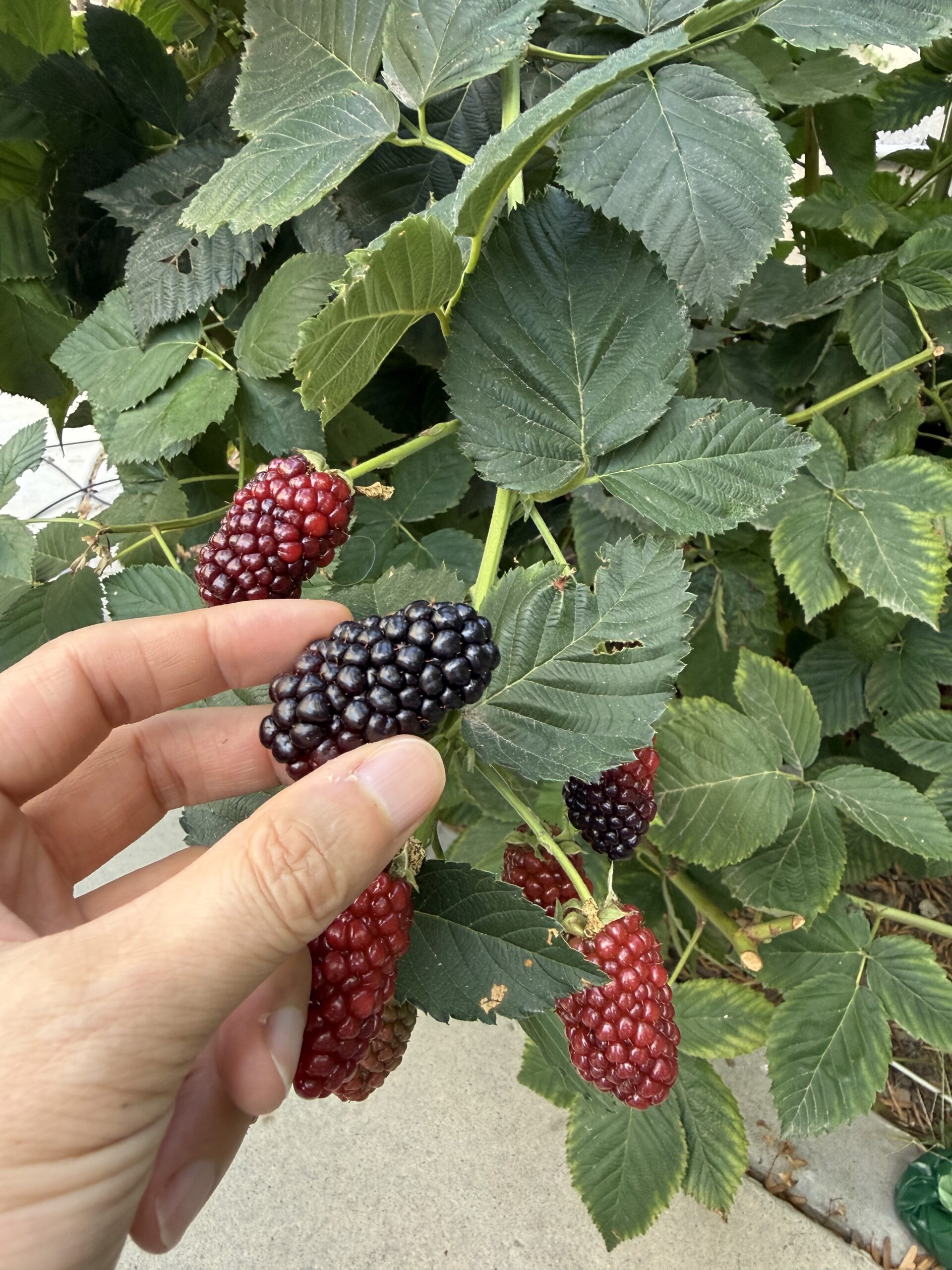
    • Appearance: The berries are significantly larger than wild blackberries, with a round, plump shape. Looking at the dark, shiny fruit in my hand, it’s clear this variety is a heavy hitter.
    • Flavor Profile: This variety has a distinct personality. If the fruit is still firm or showing reddish-purple hues, it can be quite tart. However, patience pays off—once they turn deep black and feel slightly soft to the touch, the intense sweetness and classic blackberry flavor explode.
    • Growth Habit: One of its best features is that it is thornless, making pruning and harvesting much more enjoyable. It is a semi-erect grower and has shown “ferocious” growth speed under the Rowland Heights sun.

    📝 My Planting Record

    • Mimosa Nursery Find: I specifically picked this variety up from Mimosa Nursery, and the quality has been outstanding. It adapted to my soil immediately without any transplant shock.
    • A Vigorous Grower: I planted this at the same time as my raspberries in the summer of 2024. Its growth has been nothing short of “ferocious,” quickly becoming a large, life-filled bush.
    • The Sweet Reward of Patience: I’ve learned its rhythm—don’t be tempted by the red ones! Waiting for that perfect soft, black stage is the secret to the most satisfying harvest.

    🛠️ My Care Essentials

    • Heavy Trellising: Given its vigorous growth and the weight of the fruit clusters, a sturdy trellis is a must. Keeping the canes organized prevents fruit from touching the ground and makes harvesting much easier.
    • Summer Tipping: To keep it from growing out of control, I “tip” the new primocanes in the summer. This encourages lateral branching, which is where next year’s flowers and fruit will develop.
    • Winter Pruning: Blackberries have a biennial life cycle. Every winter, I prune the spent “floricanes” (the ones that just fruited) down to the ground to make room for the strong, green “primocanes” that grew during the current season.
    • Water and Mulching: Blackberries are thirsty, especially when the fruit is sizing up. I ensure consistent moisture and use a thick layer of mulch to protect the roots from the heat and lock in water.
  • Red Raspberry

    Red Raspberry

    🍓 Plant Profile: Heritage Red Raspberry

    📊 Basic Information

    • Variety Name: Heritage Red Raspberry
    • Planting Time: Summer 2024
    • Yield Performance: ★★★★★ (Extremely vigorous growth; achieved an incredibly high yield in just one year by 2025)
    • Taste Characteristics: Soft, juicy flesh with a perfect balance of sweet and tart; possesses a very rich and pure classic raspberry aroma.

    📖 Variety Introduction This raspberry, which I simply picked up from Home Depot, is definitely the underestimated “unsung hero” of my orchard. “Heritage” is the most classic evergreen variety in the raspberry world and an excellent everbearing type.

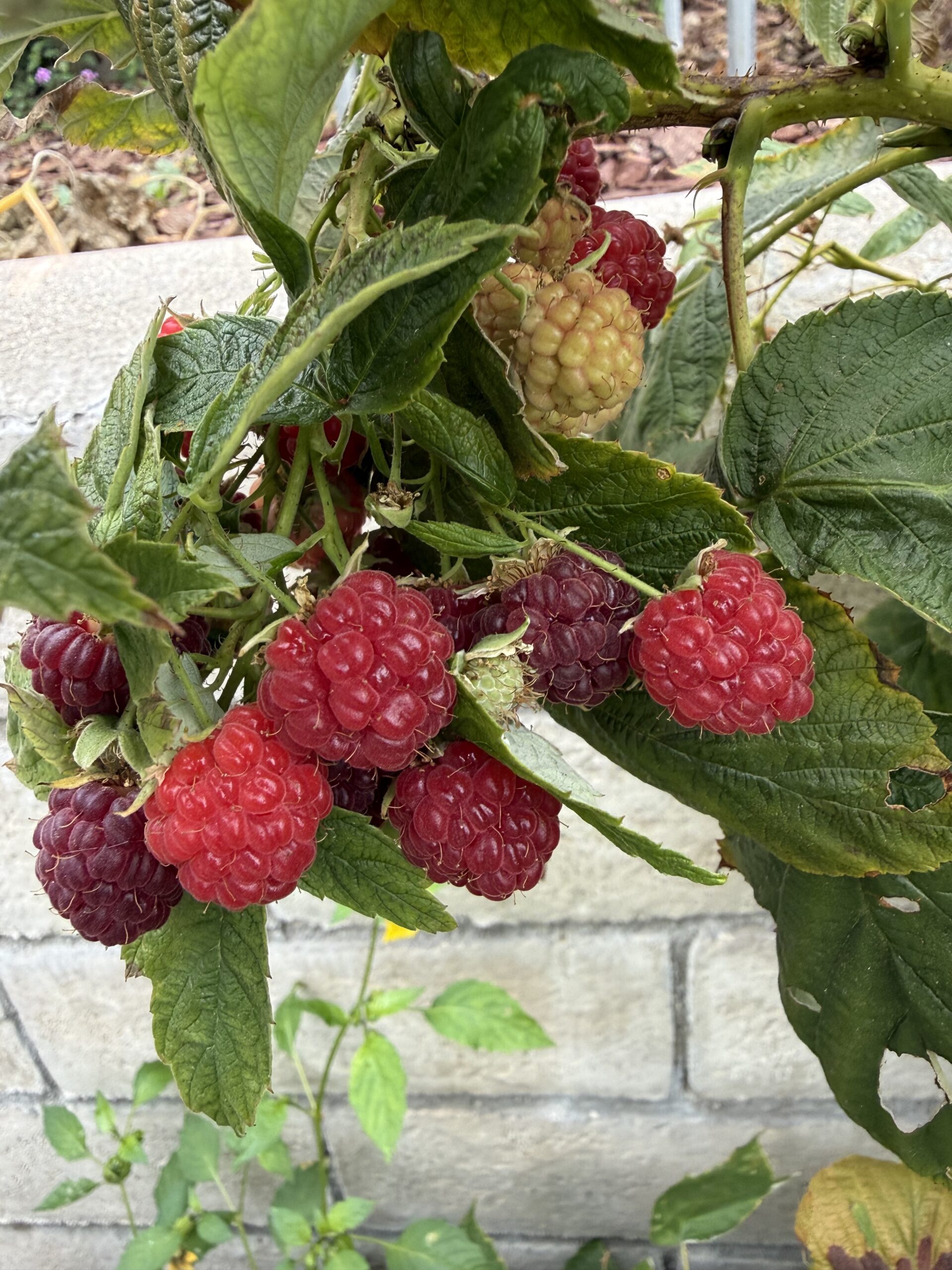
    • Appearance: The fruits are a brilliant ruby red, plump, and round. As seen in my photos, they hang in clusters among the green leaves, creating a beautiful pastoral scene.
    • Flavor Profile: Although it’s a common variety, the taste is top-notch. It has an intense red raspberry fragrance and is delightfully sweet and sour. Picking them fresh in the morning and eating them right away provides a succulent, bursting sensation that store-bought raspberries simply can’t match.
    • Growth Habit: It has incredibly resilient vitality and adapts well to various soils and climates. Under the abundant Rowland Heights sunshine, it grows wildly and is full of life.

    📝 My Planting Record

    • A Great Bargain Surprise: In the summer of 2024, I chose this ordinary raspberry at Home Depot on a whim, never expecting such a huge return. It isn’t finicky at all; with just some sun and water, it rewarded me with a wall full of red berries by 2025. The yield is truly astonishing.
    • The Joy of Self-Sufficiency: Now I can walk into the backyard, grab a handful of ripe raspberries to eat fresh, or add them to yogurt for breakfast. This experience of a self-sufficient pastoral life is wonderful, and the flavor of homegrown fruit is even better than I imagined.

    🛠️ My Care Essentials

    • Trellising and Training: Raspberry canes are long, soft, and covered in tiny thorns. To keep them from resting on the ground where they might get dirty or rot, I let them grow against the garden wall and use ties or supports to secure the canes. This looks neat and makes harvesting much easier.
    • Ruthless Pruning: Pruning is key for raspberries. Canes that have finished fruiting will die back in the fall. I must be firm during winter dormancy and prune these dead “old canes” right down to the ground, leaving only the strong new canes to ensure another explosive harvest next year.
    • Water and Mulching: They love the sun but have shallow roots, making them sensitive to drought. During the hot California summers, I must keep the soil moist. Applying a thick layer of wood mulch at the base is my secret weapon—it locks in moisture, protects against the sun, and prevents weeds from stealing nutrients.
    • Bird Protection: Such bright red fruits are bound to catch the eyes of birds. When a large portion starts to ripen, I need to stay vigilant and, if necessary, cover them with bird netting to protect my harvest.
  • Ruby Wax Apple

    Ruby Wax Apple

    🍎 Plant Profile: Ruby Wax Apple

    📊 Basic Information

    • Variety Name: Ruby Wax Apple (Thub Thim Chan)
    • Planting Time: 2023 (brought into the orchard as a small sapling)
    • Yield Performance: ★★★★☆ (Grew rapidly; already successfully yielded about 30 fruits in 2025, showing immense future potential)
    • Taste Characteristics: Extremely crisp flesh, almost no spongy core, bursts with juice when bitten, highly sweet with a refreshing floral and fruity aroma, incredibly thirst-quenching.

    📖 Variety Introduction The “Ruby” is definitely one of the most tropical and premium “star fruits” in my orchard.

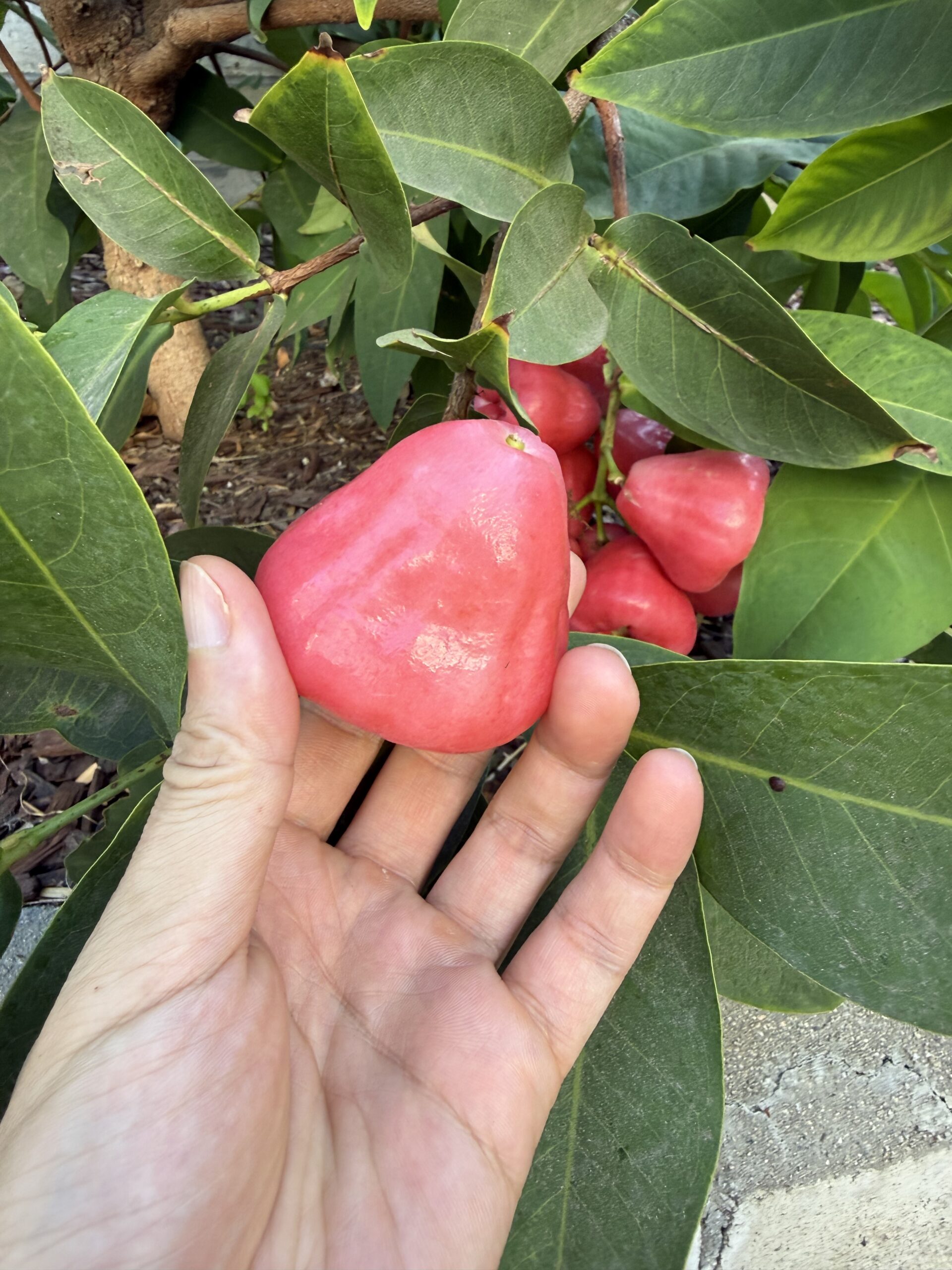
    • Appearance: It’s shaped like a delicate little bell, and the skin carries a natural waxy gloss. Looking at the plump, translucent, bright red fruit I grew myself in the photo, its brilliant color truly resembles a real ruby. It is absolutely one of the most beautiful sights in my garden.
    • Flavor Profile: This variety perfectly corrects the common flaws of traditional wax apples, which often have a large, tasteless spongy center. Its flesh is dense, full, and magically crisp and juicy. It’s not a cloying, heavy sweetness, but rather a very premium, fresh, and high-level sweet crispness. Chilling it in the fridge before eating makes it the ultimate refreshing treat during the scorching California summers.
    • Growth Habit: Being a tropical plant, it is terrified of the cold but incredibly thirsty for water. The fact that I’ve been able to grow it so successfully here in Rowland Heights, allowing its skin to develop such a stunning ruby-red hue, proves that the microclimate and abundant sunshine here perfectly bring out the best in this variety.

    📝 My Planting Record

    • Rapid Three-Year Growth: I brought this home as a small sapling back in 2023. Watching it grow from an inconspicuous little plant into a tree that successfully bore over 30 beautiful fruits in just two short years by 2025 gives me an indescribable sense of accomplishment.
    • Flavor Evolution: This year’s harvest gave me a massive surprise! I could clearly taste that the 2025 fruits were significantly sweeter and much crisper than the initial ones it produced in 2024. This tells me that the tree’s root system is now firmly established, its nutrient absorption is getting better and better, and its “peak fruiting stage” is just around the corner.

    🛠️ My Care Essentials

    • Generous Watering: The wax apple is a literal “water” fruit. During its blooming and fruit expansion stages, I absolutely cannot let it go thirsty. I must keep the soil consistently moist; the more adequate the water supply, the crisper the fruits will be, preventing them from becoming dry or shriveled.
    • Potassium for Sweetness: Since I’ve already tasted the sweet reward of increased sugar levels this year, I will definitely continue to supplement it with high-potassium fertilizer after it blooms in future seasons. This not only makes the skin color even more stunningly red but is also the ultimate secret to boosting the overall sugar content and crisp texture.
    • Frost Protection: Even though it has grown quite a bit, I cannot let my guard down. Low winter temperatures and occasional frosts are fatal to this delicate tropical tree. When cold snaps hit on winter nights, I must remember to drape it in frost cloth to keep it warm.
    • Sun Protection and Bagging: Just like the perfectly red wax apple in the photo, as my yields get even larger in the future, I need to wrap the fruits in specialized paper or mesh bags before they start changing color. This not only stops birds and bugs from stealing a sweet bite but also protects the delicate skin from getting scorched by the intense sun.
  • Pink Lemonade Blueberry

    Pink Lemonade Blueberry

    🌸 Plant Profile: Pink Lemonade Blueberry

    📊 Basic Information

    • Variety Name: Pink Lemonade Blueberry
    • Planting Time: Spring 2024
    • Yield Performance: ★★★★★ (Purchased from the nursery as a mature, large bush; extremely heavy fruiting and excellent productivity)
    • Taste Characteristics: Crisp, sweet, and juicy; highly unique flavor; accompanied by a surprising and rich peach aroma.

    📖 Variety Introduction “Pink Lemonade” is not only a visual stunner in the blueberry world, but its background is also quite interesting. It is a masterpiece cultivated over many years by the USDA, created as a hybrid of Rabbiteye and Highbush blueberries.

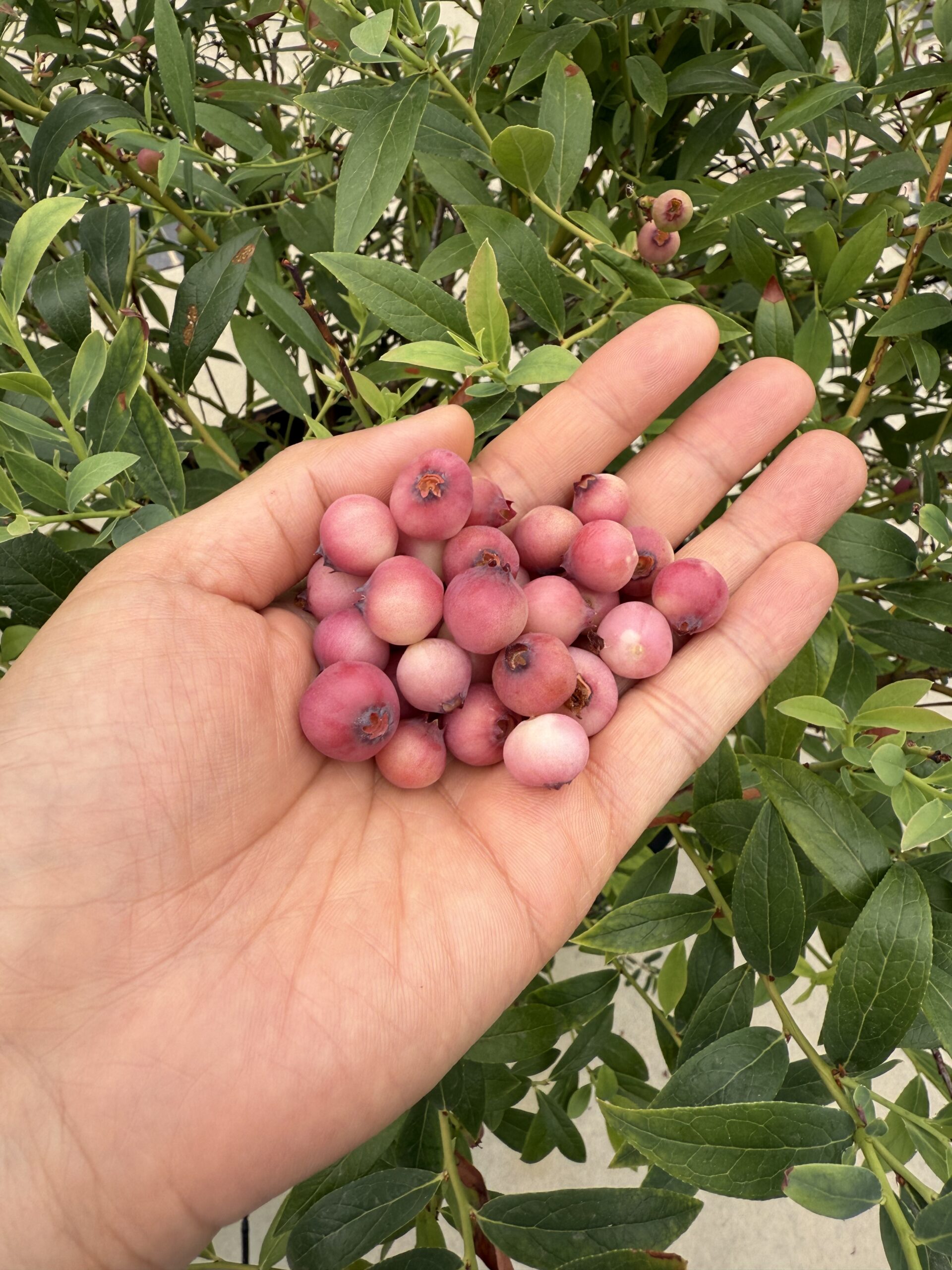
    • Appearance: The ripening process is highly ornamental. The berries transition from a translucent light green early on, to a mottled pale pink, and finally reveal a stunning bright pink or deep magenta when fully ripe. Beyond the beautiful fruit, it blooms with pinkish-white bell-shaped flowers in the spring, and its leaves turn a brilliant orange-red in the fall, offering great ornamental value year-round.
    • Flavor Profile: Its sweetness is higher than most traditional blueberries, with almost no tartness or astringency. Although the variety is named “Lemonade,” the flavor can vary subtly depending on the environment and sunlight. Its rich and layered sweetness often evokes notes of other sweet fruits.
    • Growth Habit: As a hybrid, it perfectly inherits the heat tolerance and broad adaptability of Rabbiteye blueberries, while requiring relatively few chilling hours (around 300 hours). This makes it highly suitable for the warm winters of Southern California, exhibiting strong stress resistance and vigorous growth.

    📝 My Planting Record

    • Winning at the Starting Line: Brought home this large, mature bush directly from the nursery in the spring of 2024, skipping the long seedling nurturing phase entirely. Its performance after entering the orchard has been outstanding, ushering in a bumper harvest in its very first year. The branches were densely packed with fruit, and the yield was astonishing.
    • Exclusive Taste Memory: This is one of the fruits with the most signature flavor in the orchard. Compared to the citrus or lemon notes often mentioned online, the berries from this tree have a very unique and enchanting peach aroma. This richly layered sweet taste has made it an irreplaceable, exclusive delicacy.
    • Environmental Feedback: Basking in the abundant sunshine of Rowland Heights, it has shown incredible vitality. The ample sunlight not only makes its pink skin more translucent but also perfectly locks in that unique peach fragrance and high sweetness within the fruit.

    🛠️ Care Essentials

    • Shallow Roots & Mulching: Blueberry roots are very shallow and dense. Since this tree is already a large bush, its water and nutrient consumption will be higher. Applying a thick layer of wood mulch around the base is crucial—it locks in moisture, defends against the high surface temperatures of California summers, and provides natural organic matter as the mulch slowly breaks down.
    • Acidic Soil Maintenance: Maintaining a soil pH between 4.5 and 5.5 is the cornerstone of high blueberry yields. In California’s relatively alkaline soil environment, regularly supplementing with a soil acidifier or specialized acidic blueberry fertilizer ensures this large bush consistently maintains an excellent fruiting condition.
    • Water Management: An adequate and stable water supply is needed during the fruiting period. It prefers a moist but well-draining, breathable environment; standing water at the roots must be strictly avoided.
    • Thinning and Pruning: Because it was already a mature bush when purchased, appropriate thinning during the winter dormancy period is recommended to maintain high yields in the future. Remove crossing, weak, and overly old branches from the interior to keep the center of the entire bush well-ventilated and well-lit. This not only reduces pests and diseases but also allows next year’s pink berries to grow larger and more evenly sized.