Author: Lucas Lu

  • Big Jim Loquat

    Big Jim Loquat

    🌿 Plant Profile: Big Jim Loquat

    📍 Basic Information

    • Variety Name: Big Jim (Eriobotrya japonica)
    • Planting Date: Summer 2023
    • Yield Performance: ★★★★☆ (Produces large fruits; high yield potential once established)
    • Flavor Profile: Refreshingly sweet, meaty texture, easy to peel, well-balanced sugar-to-acid ratio

    📖 Variety Introduction

    The Big Jim is one of California’s most famous loquat varieties, renowned for its “giant fruits” and excellent commercial potential.

    • Fruit Quality: It is one of the largest varieties known, with fruits reaching over 1.5 inches in diameter upon maturity. The skin is a bright golden-yellow, and the flesh is thick with fewer seeds, making for an effortless peeling and eating experience.
    • Flavor Profile: Unlike the intense richness of the “Gold Nugget,” Big Jim offers a refreshing, mild sweetness. Its crisp texture and low acidity make it a crowd-pleaser for all ages.
    • Growth Habit: This variety is a vigorous grower with an upright, stately form and large, lush leaves, making it an excellent choice for both fruit production and ornamental shade.

    📓 My Planting Records

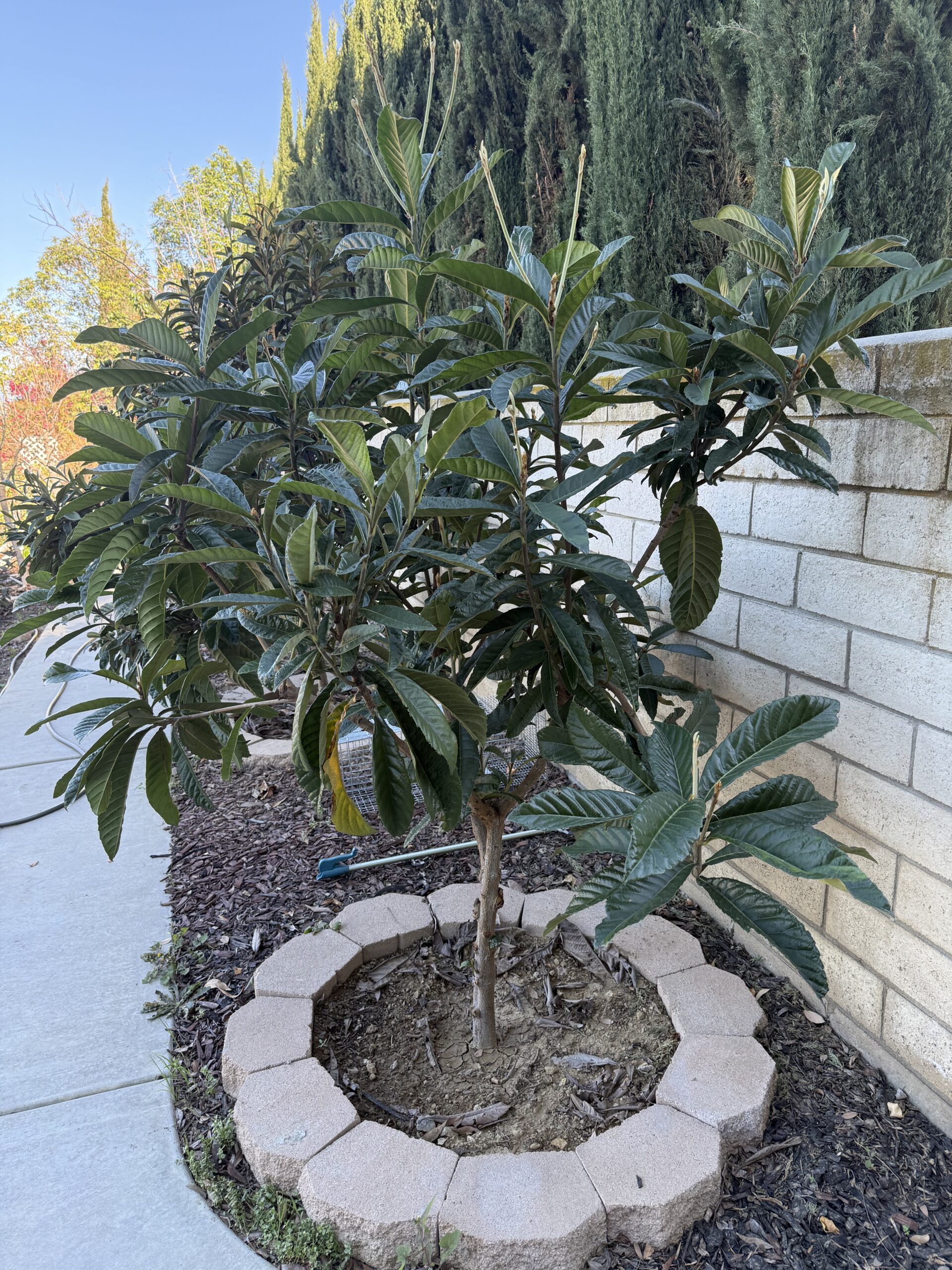
    I purchased this tree in Summer 2023 from Da Sen Nursery. Although it has been in the orchard for less than three years, it is already showing some of the strongest growth among all my varieties.

    • Current Status: Since its planting in 2023, the tree has shown remarkable vegetative growth, with the canopy expanding rapidly. The trunk and branches are sturdy and healthy.
    • Fruiting Expectations: As of early 2026, the tree has not yet begun to fruit. This is largely due to the variety’s strong growth potential, as young trees often prioritize building their structure and root systems. Given its 2023 planting date, I expect a transition toward reproductive growth and a significant harvest within the next 1–2 years as the tree matures.
    • Comparative Performance: Compared to other trees of similar age, Big Jim’s foliage is more lustrous and has shown outstanding tolerance to the hot, dry summer climate of Rowland Heights.

    🛠️ Maintenance Essentials

    • Encouraging Fruit Production: Because Big Jim can have a slightly longer juvenile phase, I plan to adjust my fertilization strategy by reducing nitrogen and increasing phosphorus and potassium to encourage the tree to transition from “growing wood” to “setting buds.”
    • Height Control & Pruning: Due to its strong apical dominance (the tendency to grow straight up), I will perform regular tipping or “pinch back” pruning to encourage lateral branching. This not only keeps the fruit within reach but also helps stimulate the formation of fruiting spurs.
    • Spring Water Management: While it hasn’t fruited yet, loquats follow a “winter bloom, spring fruit” cycle. During our dry Rowland Heights springs, I ensure consistent root moisture to prepare the tree for its eventual first flowering season.
    • Fertilization Strategy: I apply well-composted organic fertilizer in early spring and early fall. For this young, non-fruiting tree, the focus remains on establishing a robust, deep root system to support heavy future yields.
  • Gold Nugget Loquat

    Gold Nugget Loquat

    🌿 Plant Profile: Gold Nugget Loquat

    📍 Basic Information

    • Variety Name: Gold Nugget (Eriobotrya japonica)
    • Planting Date: Late 2021
    • Yield Performance: ★★★★★ (Extremely prolific, bears in dense clusters)
    • Flavor Profile: Tart before maturity, honey-sweet when fully ripe, rich flavor, orange-yellow flesh

    📖 Variety Introduction

    The Gold Nugget loquat is widely regarded by home gardeners as the “gold standard” for cultivation, especially for those who prefer a bold, intense fruit flavor.

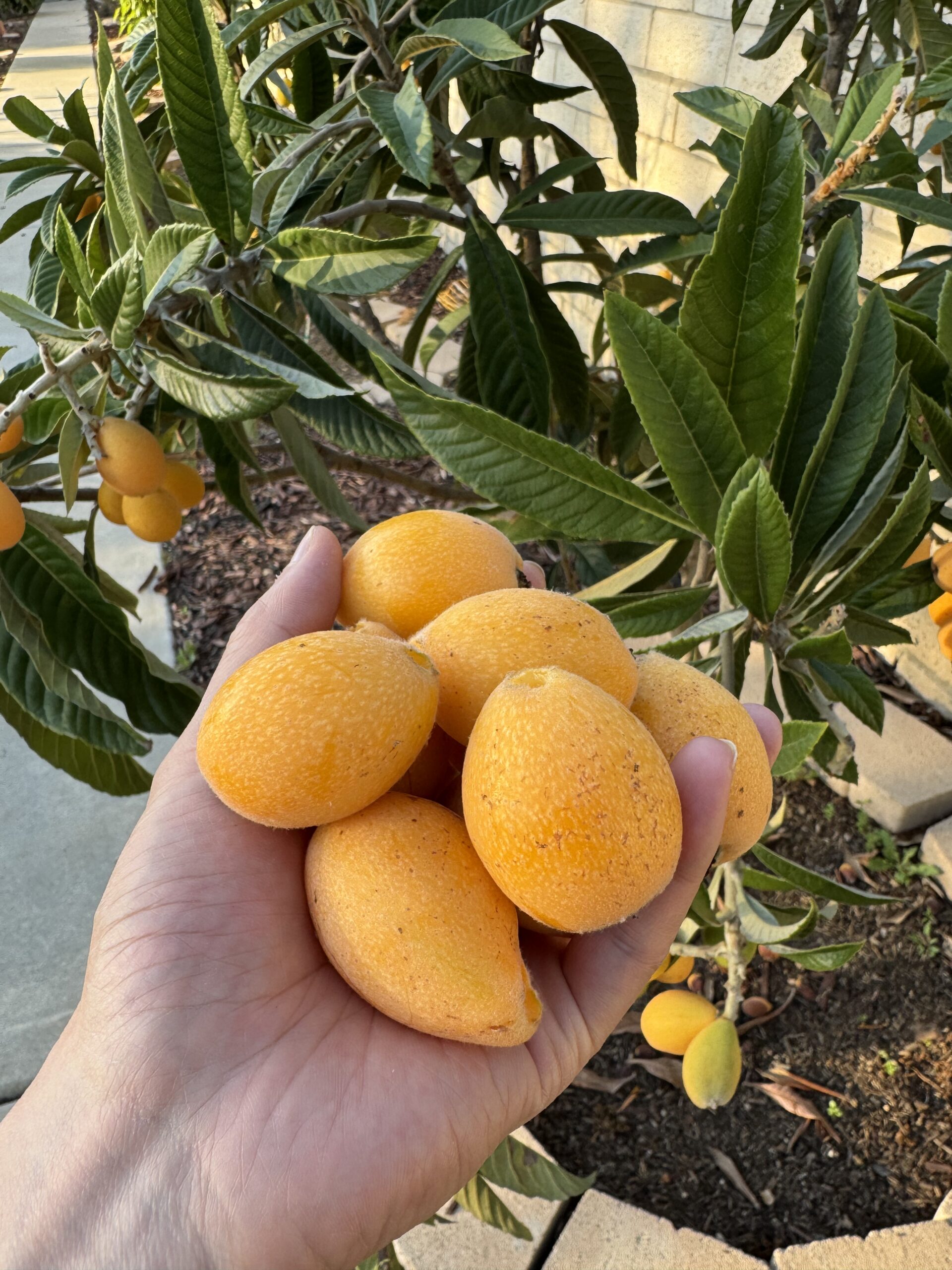
    • Flavor Comparison: Unlike the milder sweetness of the Big Jim variety, Gold Nugget features a dynamic sugar-to-acid ratio. Once the skin turns a deep orange-yellow and softens slightly, the acidity vanishes, replaced by a deep, high-brix sweetness and a rich aroma.
    • Fruit Morphology: The fruit is rounded to short-oval in shape and medium-sized (slightly smaller than Big Jim). Its skin is relatively thick and resilient, making it more durable for storage and less prone to bruising compared to other varieties.
    • Growth Habit: The tree has a compact growth habit with strong branching and large, leathery evergreen leaves that offer high ornamental value.

    📓 My Planting Records

    This tree joined the orchard in late 2021. While the individual fruits may not be the largest, it produces the most “robust” flavor in the entire garden.

    • Climate Adaptation: It has performed exceptionally well under the intense sun of Rowland Heights. Even during high summer temperatures, its thick foliage provides excellent resistance to sunscald.
    • Growth & Yield: The productivity is staggering; a single flower cluster often yields over a dozen fruits. Compared to the Big Jim in my orchard, the Gold Nugget shows much more explosive yield potential.
    • Harvesting Insights: Growing this variety requires patience. Early-season tasting often reveals a sharp tartness, but waiting until the skin transitions from bright yellow to a deep orange rewards you with a stunning “sweet-after-sour” honeyed flavor.

    🛠️ Maintenance Essentials

    • Strict Thinning: Because Gold Nugget is so prolific, it is prone to “biennial bearing” (heavy yield one year, low yield the next). I thin out about 1/2 of the small fruits in each cluster during the young fruit stage to ensure quality and prevent branches from breaking.
    • Water & Split Control: During the spring ripening period, heavy rains can cause the thick skins to split. Therefore, I maintain consistent soil moisture during the color-turning stage to avoid sudden water intake after a dry spell.
    • Determining Ripeness: Don’t judge by color alone; use the “squeeze test.” When the fruit changes from firm to slightly soft, it is the signal that the acidity has fully receded and the sugar levels have peaked.
    • Pest & Disease Management:
      • Fungal Protection: During the California rainy season (November to February), watch for fungal infections on leaves and fruit; apply anti-fungal treatments if necessary.
      • Bird Protection: Due to its high sugar content and strong aroma, it is a prime target for birds and squirrels. I recommend bagging the fruit as soon as it begins to change color.
  • Pakistan Mulberry

    Pakistan Mulberry

    🌿 Plant Profile: Pakistan Mulberry

    📋 Basic Info

    • Variety Name: Pakistan Mulberry (Morus macroura)
    • Date Planted: Spring 2023
    • Yield: ⭐⭐⭐⭐⭐ (Extremely Prolific)
    • Flavor Profile: Pure sweet with no acidity, firm texture, juicy

    📖 Variety Introduction

    The Pakistan Mulberry is often hailed as the “King of Mulberries” and is currently one of the most popular tropical/subtropical mulberry varieties on the market. Compared to other mulberries, it boasts unique and significant advantages:

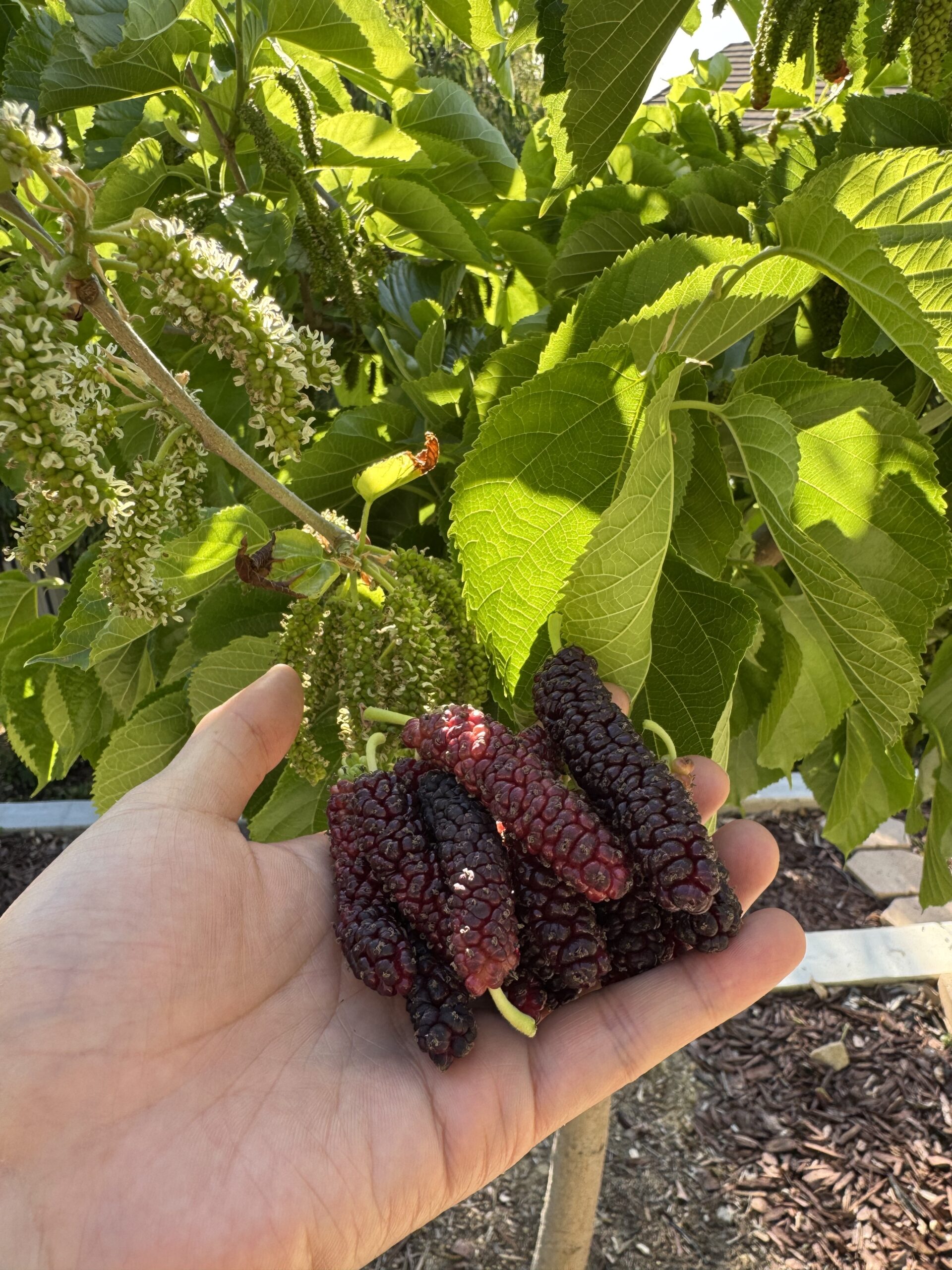
    • Extra Long Fruit: The fruits are elongated, reaching 3–4 inches (6–10 cm) in length when mature. Their massive size makes them visually stunning.
    • Pure Sweetness: This is its biggest selling point. Unlike common mulberries which have a “sweet-tart” balance, the Pakistan Mulberry is purely honey-sweet upon maturity. It has a very high Brix (sugar content) and absolutely no acidity, making it perfect for those who dislike sour fruits.
    • Edible at Various Stages: The fruit begins to develop sweetness as soon as it turns red, and the flavor deepens as it ripens to a dark purple-black.
    • Firm Texture: Compared to wild mulberries which can be mushy and stain easily, this variety has relatively firmer flesh. It holds well on the branch and offers a much better harvesting experience.

    🏡 My Planting Record

    This tree was added to the orchard in Spring 2023. Although it hasn’t been established for long, it has shown explosive growth power.

    • Growth Vigor: The tree is extremely robust and fast-growing. In just a few years, the canopy has already reached a significant scale.
    • Yield Performance: Its productivity is astonishing. During the peak season, the branches are densely packed with long fruits. The yield is massive—I can harvest a full basket almost every day. It is undoubtedly one of the most rewarding trees in my garden.

    🛠️ Care & Maintenance

    To maintain its “massive yield” and healthy growth, I have summarized the following key points from my daily management:

    • Pruning:
      • Pakistan Mulberries grow extremely fast, so controlled pruning is a must.
      • Summer Pruning (Post-Harvest): I recommend a heavy pruning right after the harvest season ends. This controls the tree height for easier picking and stimulates new growth, laying the foundation for next year’s yield.
      • Winter Pruning: Remove dead, diseased, or overcrowded branches to ensure good airflow and light penetration.
    • Watering & Fertilizing:
      • Mulberries love water and fertilizer. Before bud break in spring and after summer pruning, I supplement with organic fertilizer (such as chicken manure or compost) or a balanced composite fertilizer to support the massive fruit load.
      • During Fruit Swelling: Keep the soil consistently moist to prevent fruit drop or shriveling due to drought.
    • Sun Exposure:
      • Requires Full Sun. Ample sunlight is the necessary condition for high sugar content and high yield.
    • Pest Control:
      • This variety has strong disease resistance; the main challenge is birds and squirrels. Because the fruit is so sweet, I strongly recommend installing bird netting during the ripening season, otherwise, they will enjoy the harvest before you do.