Author: Lucas Lu

  • Longan

    Longan

    🍈 Plant Profile: Longan

    📊 Basic Information

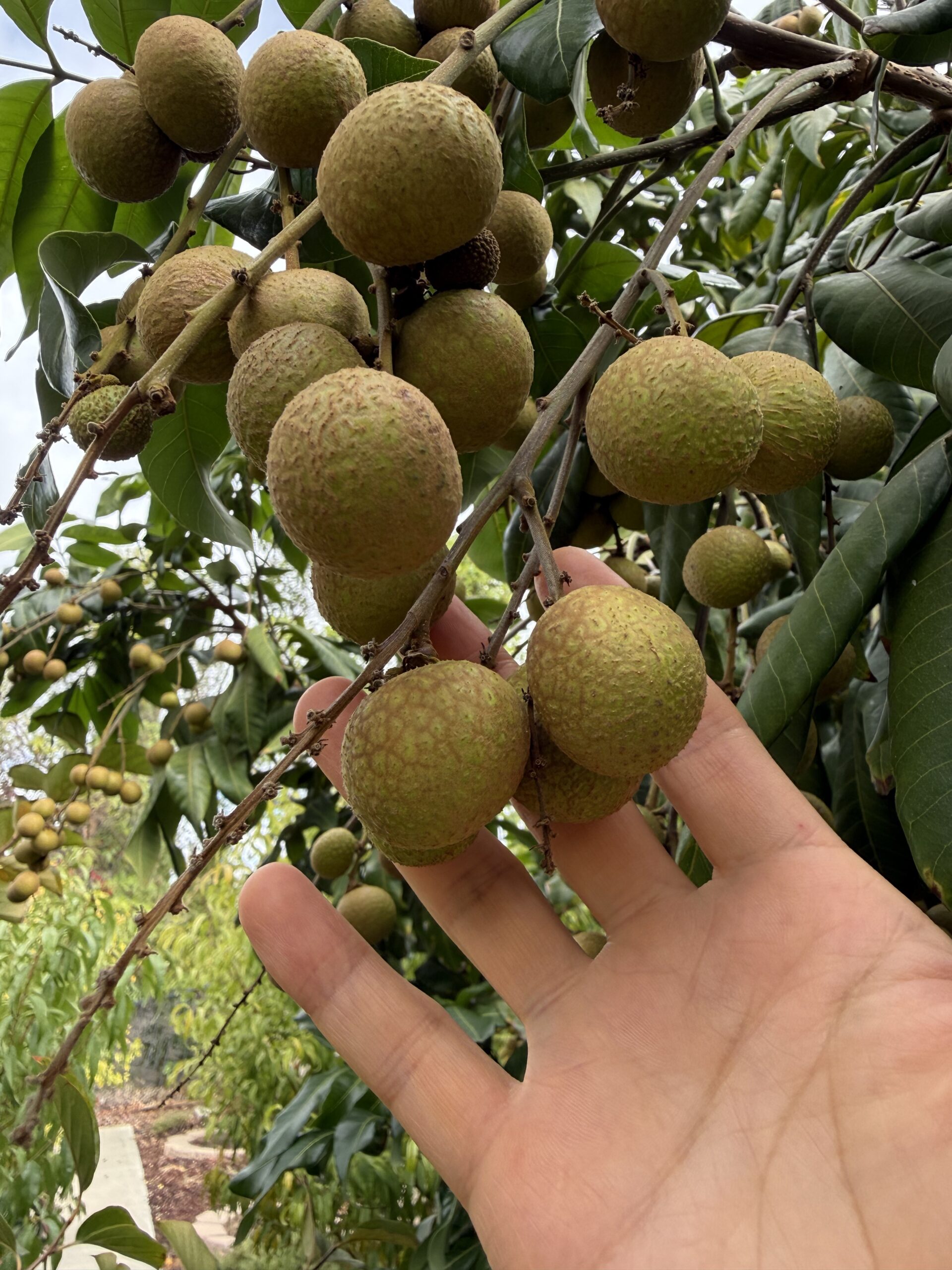
    • Variety Name: Highly likely Kohala Longan
    • Planting Time: Original old tree in the orchard, many years old
    • Yield Performance: ★★★☆☆ (Yield is highly unstable with a pronounced “alternate bearing” pattern, but explosive during a “big year”)
    • Taste Characteristics: Crystal clear and translucent flesh, abundantly juicy, extremely sweet like honey, with a rich, classic longan aroma.

    📖 Variety Introduction This longan tree is a “senior veteran” in my orchard. If it truly is the Kohala variety, it is definitely one of the most popular and excellent varieties in California, famous for its large fruit, small seeds, thick flesh, and extreme sweetness.

    • Appearance: Its shell is yellowish-brown with a slightly rough, netted texture. Every harvest season, looking at this heavy, plump cluster of fruit I’m holding in my hand fills me with the joy of a great harvest.
    • Flavor Profile: Peeling back the thin shell reveals pearl-like, translucent flesh. One bite and the juice overflows; the sweetness rushes to the taste buds. It completely rivals the top-tier longans sold in markets and is incredibly addictive to eat.
    • Growth Habit: As a typical subtropical evergreen fruit tree, it thoroughly enjoys the warm sunshine of Rowland Heights. However, these types of fruit trees share a frustrating common trait—if left without human intervention, they easily fall into a cycle of “alternate bearing” (biennial bearing).

    📝 My Planting Record

    • Planted by Predecessors: This tree is a precious asset left behind by the previous homeowner. After years of weathering, it has taken deep root in my orchard and has become my family’s most anticipated source of sweetness every autumn.
    • A Crazy “Big Year”: Its temper is somewhat unpredictable, and its yield fluctuates wildly. But in 2025, it ushered in a super “big year”! The entire tree was laden with heavy fruit clusters, the yield was astonishing, and every single one was sweet to the core. It felt like it was making up for all the missing yields from previous years at once.
    • A Sweet Trouble: Although a bumper harvest in a big year makes me incredibly happy, I know this means the tree has consumed a massive amount of nutrients. If I don’t quickly give it some heavy post-harvest care to replenish its nutrition, next year will definitely be a barren “small year.”

    🛠️ My Care Essentials

    • Breaking the Alternate Bearing Curse (Fruit Thinning): To make its future yield more stable, I have to learn to be ruthless. In the spring of future “big years,” when the flower panicles have just formed or young fruits have just set, I need to prune away about 1/3 to 1/2 of them. This not only allows the remaining fruits to grow larger but also preserves the tree’s nutrients so it can bloom and fruit normally the following year.
    • Post-harvest Fertilization: It produced so much fruit in 2025 that it practically exhausted all its energy. Immediately after the harvest, I must give it a comprehensive organic fertilizer rich in nitrogen, phosphorus, and potassium, and apply a thick layer of mulch. This helps it quickly recover its vitality and store energy for the coming year.
    • Water Management: Longans desperately need water during the flowering and fruit expansion stages. During the long, dry California summers, I will give it deep watering to ensure the fruits can absorb enough moisture to become plump and juicy, while also ensuring good drainage to prevent root rot.
    • Winter Pruning: After harvest and in late winter to early spring, I will give it a proper pruning. I’ll primarily cut off the leftover fruit stalks, dead branches inside the canopy, and overly dense crossing branches to maintain good airflow and light penetration, which greatly reduces the occurrence of pests and diseases.
  • Fuyu Persimmon

    Fuyu Persimmon

    🍊 Plant Profile: Fuyu Persimmon

    📊 Basic Information

    • Variety Name: Fuyu Persimmon
    • Planting Time: Original old tree in the orchard, reborn after transplanting
    • Yield Performance: ★★★★☆ (Survived a near-death experience and has bounced back completely; currently producing a heavy crop)
    • Taste Characteristics: Crisp and sweet like an apple, completely non-astringent, with delicate flesh and unique notes of cantaloupe and brown sugar.

    📖 Variety Introduction Fuyu is one of the most popular non-astringent persimmon varieties, and it’s definitely a star in my autumn orchard.

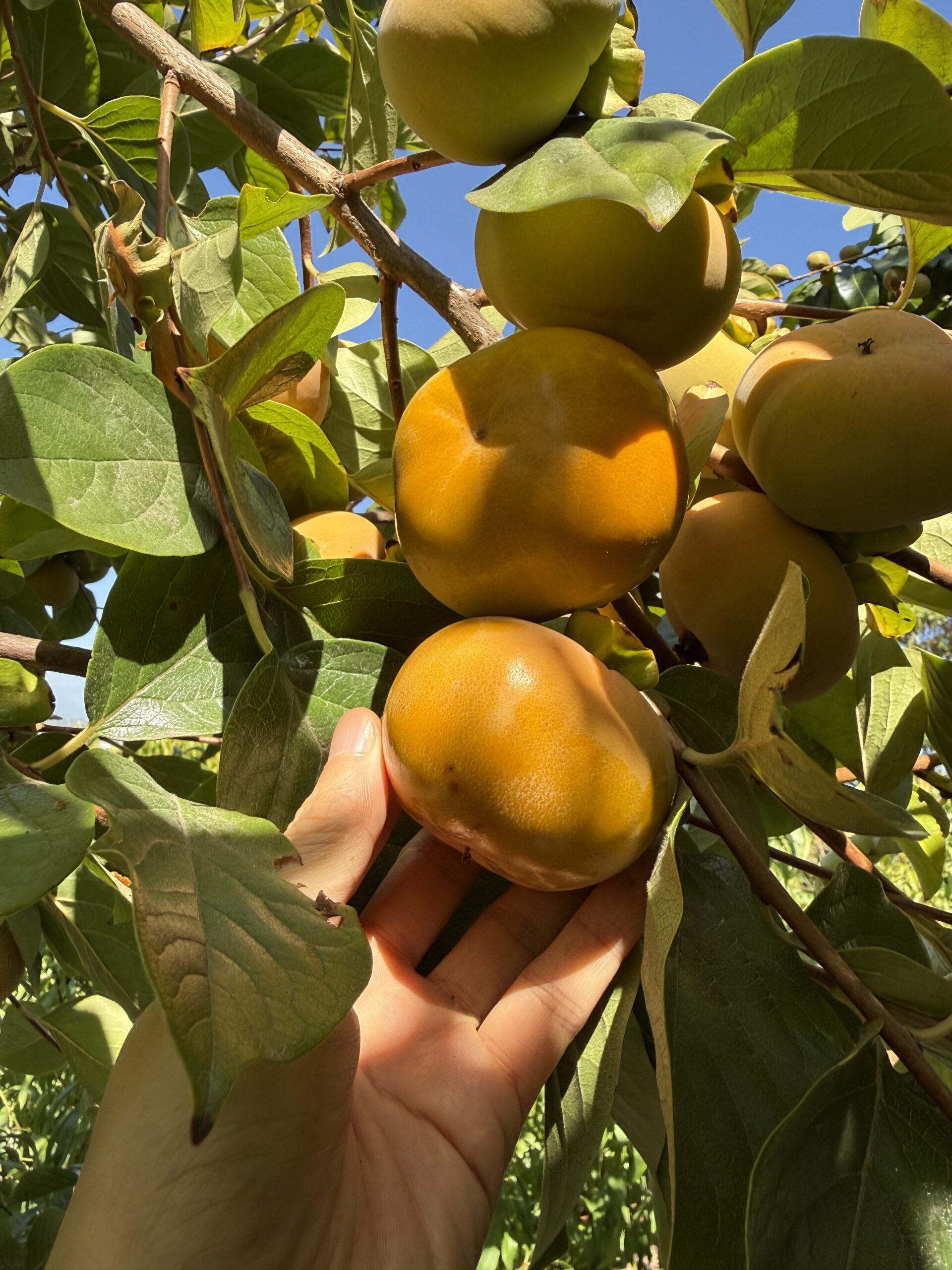
    • Appearance: Its fruit shape is flat and slightly squarish. When ripe, the skin turns a highly tempting bright orange, smooth and glossy. Looking at the plump fruits I grew in the photo, the visual appeal is just stunning.
    • Flavor Profile: Unlike traditional astringent persimmons that must be soft and mushy to eat, the biggest feature of the Fuyu is that I can bite right into it, skin and all, while it’s still hard and crisp. The taste is refreshingly sweet but not cloying. If you don’t like a mushy texture, this is absolutely the top choice.
    • Growth Habit: It loves warm, abundant sunshine and has adapted perfectly to the climate here in Rowland Heights. In late autumn, its leaves will turn beautiful shades of deep red and golden yellow. After the leaves drop, the whole tree looks like it’s covered in little red lanterns, offering incredible ornamental value.

    📝 My Planting Record

    • A Thrilling Rebirth: This tree has a very rocky backstory. It was actually an old resident that was already here when I first moved in. Later, because I was building a retaining wall at home, I had to undertake a massive transplanting operation. That move severely drained its vitality, and it was on the brink of death. It was truly heartbreaking to see it looking so weak.
    • Survival by Amputation: To save it, I made a difficult but ultimately correct decision: I ruthlessly cut off almost all of its branches, making a desperate bet by keeping only two main trunks. It was this extreme, heavy pruning that drastically reduced water evaporation and nutrient consumption, giving the damaged root system a chance to breathe and miraculously saving its life.
    • The Gift of Harvest: After a long period of rest and recovery, not only did it stubbornly survive, but today it gave me a huge surprise—it has started fruiting heavily! Looking at the dense, heavy persimmons hanging on the branches, all the hard work and initial reluctance to prune so hard were totally worth it. The vitality of this tree is truly admirable.

    🛠️ My Care Essentials

    • The Lesson of Severe Pruning: My personal experience taught me that transplanting an old tree carries huge risks, and you have to be willing to “behead” it to balance the damaged root system. Now that it has a new lease on life, my future winter pruning will focus on maintaining airflow and light penetration in the canopy, removing water sprouts and crossing branches to keep it from growing too tall.
    • Watering: Even though its reborn root system is now well-established, during the hot California summers and its current heavy fruiting stage, I need to provide deep and consistent watering, while also being careful to avoid waterlogged soil that could rot the roots. Stable moisture effectively prevents autumn fruit drop.
    • Moderate Fruit Thinning: Although I’m thrilled to see such a massive fruit load this year, to protect the newly recovered tree from collapsing under the weight (and potentially snapping those two precious main branches), and to ensure each persimmon grows larger and sweeter, I might have to harden my heart and thin out some of the smaller or overly crowded fruits.
    • Fall Nutrient Reserves: Once this batch of fruit is fully harvested and before it drops its leaves for dormancy, I will treat it to a hearty feast of organic fertilizer and mulch to reward its hard work this year and help it store up plenty of energy for next spring.
  • Kyoho Grape

    Kyoho Grape

    🍇 Plant Profile: Kyoho Grape

    📊 Basic Information

    • Variety Name: Kyoho Grape
    • Planting Time: Spring 2023
    • Yield Performance: ★★☆☆☆ (Currently in the vine-growing and energy-storing phase; moderate fruiting in 2025, expecting a massive boom in the future)
    • Taste Characteristics: Huge berries, slip-skin, jelly-like soft and juicy flesh, extremely high sweetness with a rich strawberry or “foxy” flavor profile.

    📖 Variety Introduction Kyoho grapes are a very classic table grape variety in my orchard, winning my heart completely with their unmatched “size” and “sweetness.”

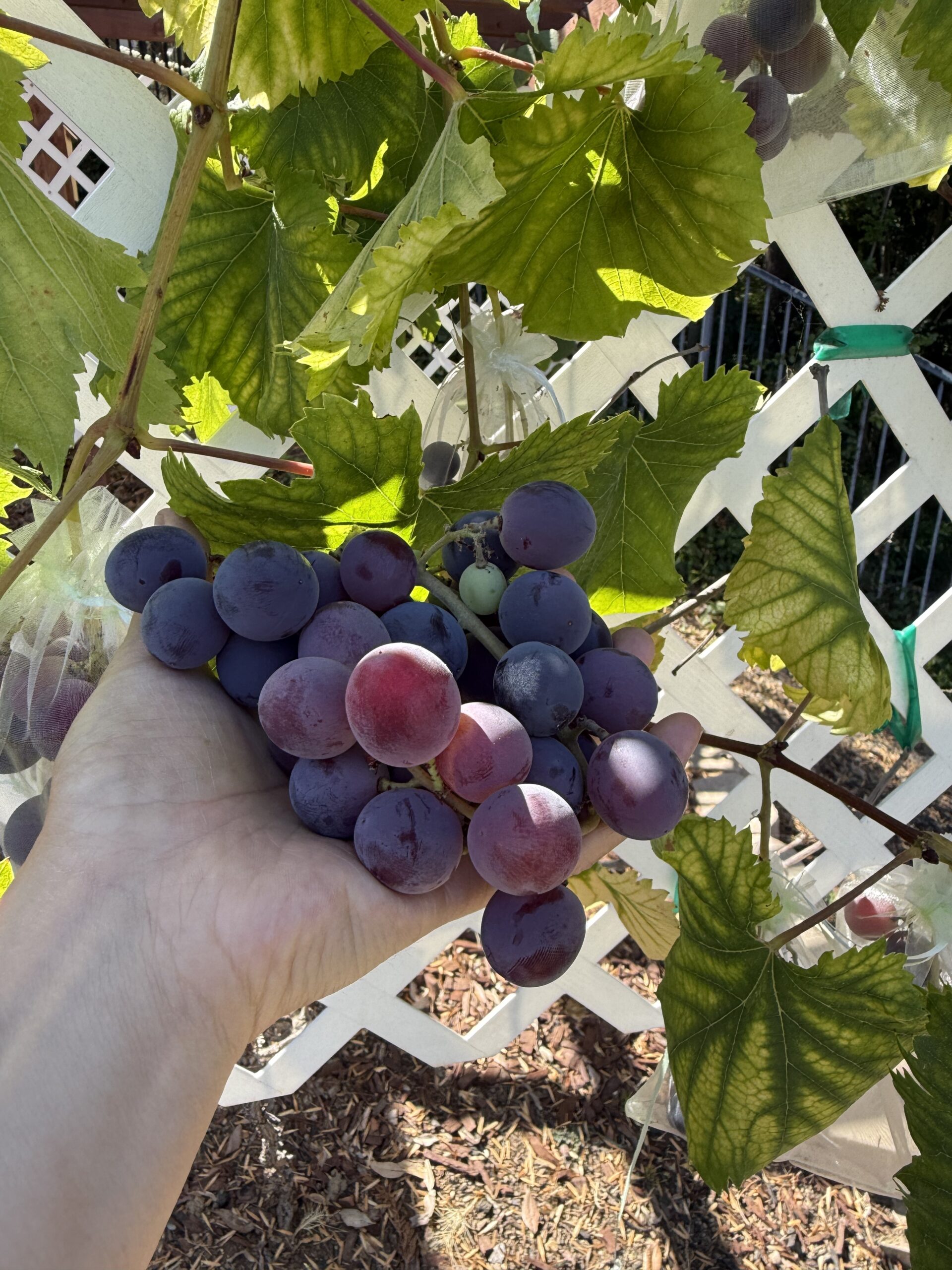
    • Appearance: The berries are exceptionally large, turning purplish-black or purplish-red when fully ripe, with a thicker skin covered in a natural white bloom. The plump, purplish-red clusters I’ve grown perfectly showcase the iconic appearance of the Kyoho.
    • Flavor Profile: The skin and flesh separate very easily. After peeling back the slightly tart skin, the inside reveals translucent, bouncy, jelly-like flesh. It’s incredibly juicy and sweet, offering a very unique and rich fruity aroma when eaten.
    • Growth Habit: It’s a highly vigorous climbing vine. It stretches out beautifully in the warm, abundant sunshine of Rowland Heights, but I need to ensure it has a sturdy trellis system to support the increasingly massive vines and heavy fruit clusters in the future.

    📝 My Planting Record

    • Energy-Storing Phase: I planted this Kyoho in the spring of 2023, and by 2025, it successfully started bearing fruit. The current yield isn’t massive just yet, but that’s mainly because the vines are still developing and climbing; they haven’t fully covered my white lattice trellis. Establishing a strong main trunk and root system takes time, and this is a necessary part of its growth journey.
    • Promising Future: Grapes are long-lived vines, and the first three years are generally considered the “nurturing” period. As the vines continue to extend and grow much thicker over the next few years, I firmly believe the yield will experience a qualitative leap.
    • Meticulous Management: The California sun gives the fruit a stunning color. To protect these hard-won grapes, I specifically wrap them in protective mesh bags to keep birds and insects away. I can clearly see how this careful attention directly translates into a beautiful harvest.

    🛠️ My Care Essentials

    • Training and Tying: Since the vines are still actively in their growth phase, my most important job right now is guiding the new branches to distribute evenly across the white trellis. I use soft ties to secure the vines, ensuring they have enough space to climb, preventing the leaves from getting too crowded, and maintaining excellent airflow and sunlight penetration.
    • Heavy Winter Pruning: I know very well that grape yield and quality heavily depend on winter pruning. Every winter during dormancy (after leaf drop), I have to be ruthless and cut back the vast majority of the current year’s growth, leaving only strong fruiting canes and a few buds. This not only controls the overall shape of the vine but also concentrates the nutrients, allowing for much larger and sweeter grape clusters the following year.
    • Fruit Thinning: To guarantee the huge size and premium quality of the individual berries, I must manually thin the clusters after they bloom and during the early fruit development stage, snipping away a portion of the grapes. Even though it’s hard to part with them sometimes, if I don’t aggressively thin the fruit, it will actually lead to smaller berries, uneven coloring, and a drop in overall sweetness.
    • Water and Fertilizer: I make sure to provide plenty of water during the spring bud break and the summer fruit expansion phases. In the spring, I apply nitrogen fertilizer to encourage the vines to climb quickly. Then, after blooming and during the fruiting stage, I shift my focus to supplementing phosphorus and potassium, which significantly boosts the grapes’ sweetness and helps them develop that perfect deep color.
  • Pink Lemonade Blueberry

    Pink Lemonade Blueberry

    🌸 Plant Profile: Pink Lemonade Blueberry

    📊 Basic Information

    • Variety Name: Pink Lemonade Blueberry
    • Planting Time: Spring 2024
    • Yield Performance: ★★★★★ (Purchased from the nursery as a mature, large bush; extremely heavy fruiting and excellent productivity)
    • Taste Characteristics: Crisp, sweet, and juicy; highly unique flavor; accompanied by a surprising and rich peach aroma.

    📖 Variety Introduction “Pink Lemonade” is not only a visual stunner in the blueberry world, but its background is also quite interesting. It is a masterpiece cultivated over many years by the USDA, created as a hybrid of Rabbiteye and Highbush blueberries.

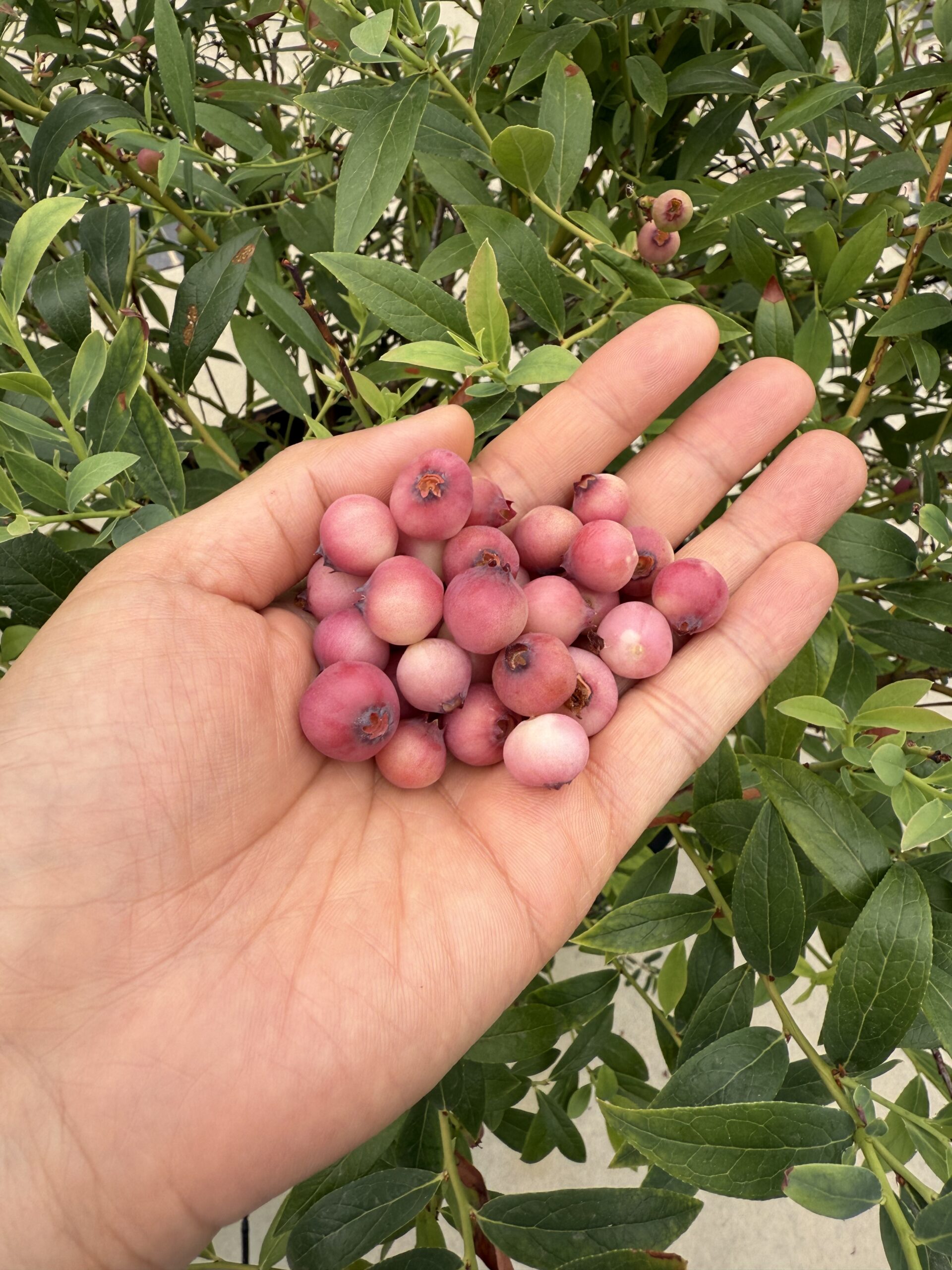
    • Appearance: The ripening process is highly ornamental. The berries transition from a translucent light green early on, to a mottled pale pink, and finally reveal a stunning bright pink or deep magenta when fully ripe. Beyond the beautiful fruit, it blooms with pinkish-white bell-shaped flowers in the spring, and its leaves turn a brilliant orange-red in the fall, offering great ornamental value year-round.
    • Flavor Profile: Its sweetness is higher than most traditional blueberries, with almost no tartness or astringency. Although the variety is named “Lemonade,” the flavor can vary subtly depending on the environment and sunlight. Its rich and layered sweetness often evokes notes of other sweet fruits.
    • Growth Habit: As a hybrid, it perfectly inherits the heat tolerance and broad adaptability of Rabbiteye blueberries, while requiring relatively few chilling hours (around 300 hours). This makes it highly suitable for the warm winters of Southern California, exhibiting strong stress resistance and vigorous growth.

    📝 My Planting Record

    • Winning at the Starting Line: Brought home this large, mature bush directly from the nursery in the spring of 2024, skipping the long seedling nurturing phase entirely. Its performance after entering the orchard has been outstanding, ushering in a bumper harvest in its very first year. The branches were densely packed with fruit, and the yield was astonishing.
    • Exclusive Taste Memory: This is one of the fruits with the most signature flavor in the orchard. Compared to the citrus or lemon notes often mentioned online, the berries from this tree have a very unique and enchanting peach aroma. This richly layered sweet taste has made it an irreplaceable, exclusive delicacy.
    • Environmental Feedback: Basking in the abundant sunshine of Rowland Heights, it has shown incredible vitality. The ample sunlight not only makes its pink skin more translucent but also perfectly locks in that unique peach fragrance and high sweetness within the fruit.

    🛠️ Care Essentials

    • Shallow Roots & Mulching: Blueberry roots are very shallow and dense. Since this tree is already a large bush, its water and nutrient consumption will be higher. Applying a thick layer of wood mulch around the base is crucial—it locks in moisture, defends against the high surface temperatures of California summers, and provides natural organic matter as the mulch slowly breaks down.
    • Acidic Soil Maintenance: Maintaining a soil pH between 4.5 and 5.5 is the cornerstone of high blueberry yields. In California’s relatively alkaline soil environment, regularly supplementing with a soil acidifier or specialized acidic blueberry fertilizer ensures this large bush consistently maintains an excellent fruiting condition.
    • Water Management: An adequate and stable water supply is needed during the fruiting period. It prefers a moist but well-draining, breathable environment; standing water at the roots must be strictly avoided.
    • Thinning and Pruning: Because it was already a mature bush when purchased, appropriate thinning during the winter dormancy period is recommended to maintain high yields in the future. Remove crossing, weak, and overly old branches from the interior to keep the center of the entire bush well-ventilated and well-lit. This not only reduces pests and diseases but also allows next year’s pink berries to grow larger and more evenly sized.
  • O’Neal Blueberry

    O’Neal Blueberry

    🫐 Plant Profile: O’Neal Blueberry

    📊 Basic Information

    • Variety Name: O’Neal Blueberry
    • Planting Time: Spring 2024
    • Yield Performance: ★★★★☆ (A classic Southern Highbush variety, very early ripening, excellent productivity)
    • Taste Characteristics: Firm, crisp, and sweet flesh, extremely low acidity, with a pure and rich traditional blueberry aroma.

    📖 Variety Introduction O’Neal is widely recognized as one of the best-tasting Southern Highbush blueberry varieties, making it an absolute must-have classic for any home orchard.

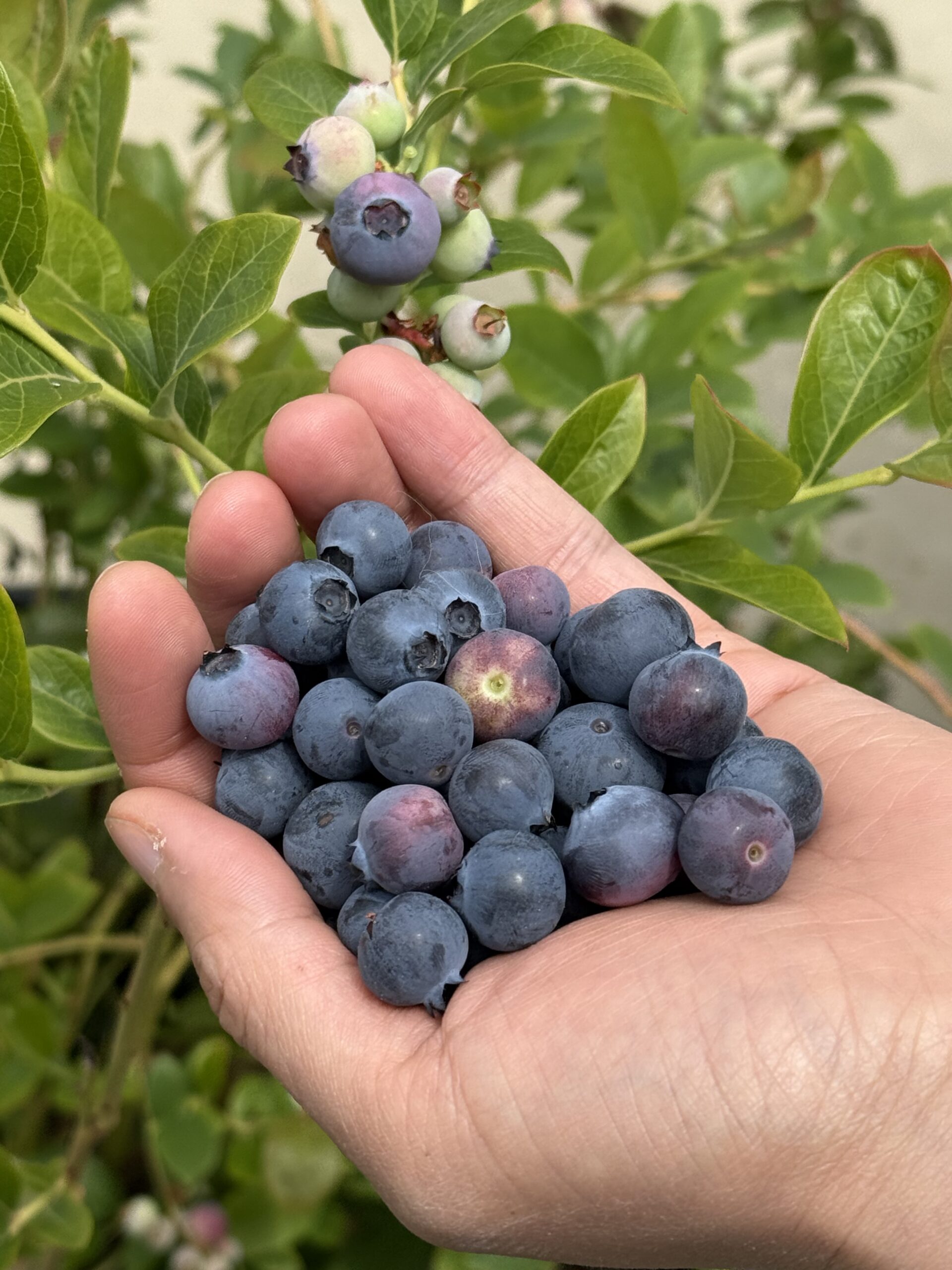
    • Appearance: The berries are a beautiful deep blue to purplish-black, covered with a thin layer of natural white bloom. They are medium-to-large in size, round, and plump. Judging from the photo in your hand, this batch has a perfectly deep color and excellent quality.
    • Flavor Profile: It is often considered the benchmark for blueberry sweetness. The flesh is crisp, sweet, and juicy with almost no sourness, radiating a rich blueberry fragrance. It’s perfect for grabbing a handful to eat fresh.
    • Growth Habit: This is a very early-season variety. As a Southern Highbush, it has a very low chilling hours requirement, making it perfectly tailored for the warm Southern California climate, like Rowland Heights.

    📝 My Planting Record Documenting the outstanding performance of this O’Neal in the orchard.

    • Early Spring Gift: Being a very early-ripening variety, it always wakes up the orchard early in the spring, bringing the first joy of harvest. It’s usually one of the first fruit trees to offer a fresh taste each year.
    • Management Experience: While blueberries are somewhat strict about soil pH, once they get past the initial rooting and adaptation phase, they have very few pest and disease issues. It’s a “put in effort early, enjoy ease later” kind of crop.
    • Environmental Feedback: Basking in the abundant California sunshine, its sugar accumulation is absolutely perfect. That heavy, deep blue handful of berries in the photo is the best reward for good sunlight and careful water management.

    🛠️ Care Essentials

    • Strict Acidic Soil Control: Blueberries are typical “acid lovers,” requiring a strict soil pH between 4.5 and 5.5. In California’s more alkaline soil, regularly applying a soil acidifier or specialized acidic fertilizer is a lifeline for ensuring it can properly absorb nutrients.
    • Shallow Roots & Mulching: Blueberry roots are very fine and shallow, making them highly sensitive to drought and high surface temperatures. Applying a thick layer of wood mulch around the base is crucial—it locks in moisture, keeps the roots cool, and provides natural acidic organic matter as it slowly breaks down.
    • Water Quality & Watering: They love moist but well-draining soil and absolutely cannot tolerate standing water. Since Southern California tap water tends to be hard (alkaline), it’s important to maintain consistent soil moisture. If possible, collecting and using rainwater yields the best results.
    • Moderate Pruning: Winter dormancy is the best time for pruning. Remove weak, crossing, and overly dense inner branches to maintain good airflow and light penetration within the canopy. This stimulates the plant to produce more flower buds and yield larger, sweeter berries the following year.
  • Ice Cream Banana

    Ice Cream Banana

    🍌 Plant Profile: Ice Cream Banana (Blue Java)

    📊 Basic Information

    • Variety Name: Ice Cream Banana / Blue Java (Musa acuminata × balbisiana)
    • Planting Date: Late July 2023
    • Yield Performance: ★★★★★ (Incredible efficiency; fruiting started in early 2024, less than a year after planting)
    • Flavor Profile: Silky smooth texture, distinct vanilla custard notes, melt-in-the-mouth consistency.

    📖 Variety Introduction

    The Ice Cream Banana is celebrated for its unique dessert-like quality and surprising hardiness, making it a standout in any home orchard.

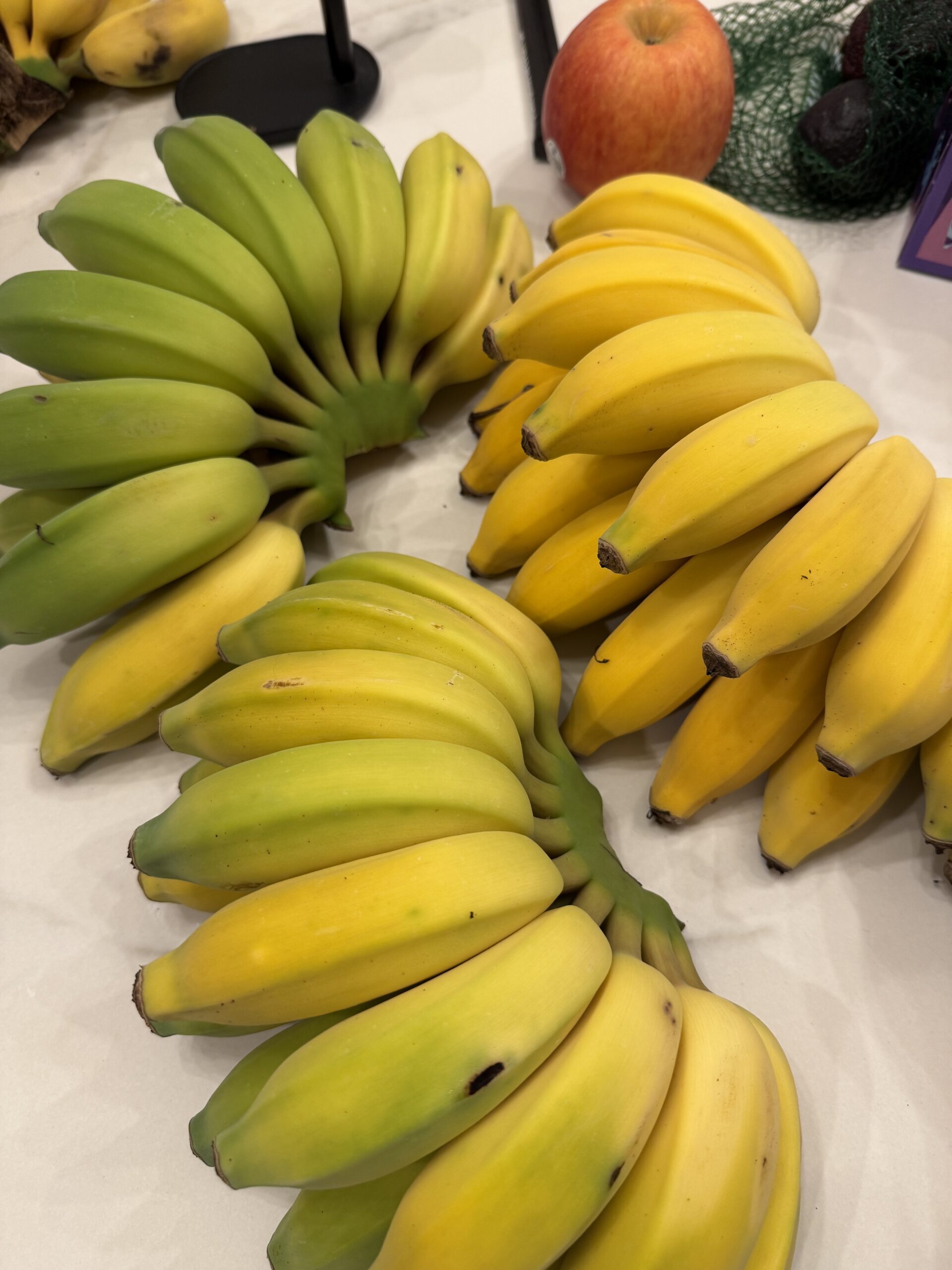
    • Physical Characteristics: The fruits are somewhat shorter and blockier than standard Cavendish bananas. Unripe fruits possess a stunning silvery-blue hue, which ripens into a pale yellow.
    • Flavor Experience: Often called the “dessert of the tree,” its texture is more reminiscent of custard or softened ice cream than a typical starchy banana, accompanied by a natural hint of vanilla.
    • Growth Habit: Known for vigorous growth. It thrives in the sunny climate of Rowland Heights and boasts a relatively fast turnaround from planting to harvest.

    📝 My Planting Record

    Two of these trees were added to the garden in late July 2023, and they have exceeded all expectations in terms of speed.

    • Rapid Production: By early 2024, the trees had already produced their first bunches. The transition from a new transplant to a fruiting tree in just about six months is remarkable.
    • Management Style: This is a low-maintenance variety. Once established, they require very little hands-on intervention to thrive.
    • Garden Observation: They are heavy feeders and sun lovers. As long as the nutrient levels are maintained, they grow with impressive speed and strength.

    🛠️ Care & Maintenance

    • Heavy Fertilization: To sustain the large leaves and heavy fruit bunches, “heavy feeding” is essential. Plenty of fertilizer is the key to their success.
    • Shoot Management: Strategic management of new shoots is vital. I limit the number of suckers to prevent them from draining energy from the main plant, selecting only the strongest as successors.
    • Sustainable Cycling: Following the rule that “a stalk fruits only once,” I cut down the tree after harvest. The felled trunk is then composted, recycling all that stored biomass and nutrients back into the soil for the next generation.
  • Donut Peach

    Donut Peach

    🍩 Plant Profile: Donut Peach (Saturn Peach)

    📊 Basic Information

    • Variety Name: Donut Peach / Saturn Peach (Prunus persica var. platycarpa)
    • Planting Date: Early 2022
    • Yield Performance: ★★★★☆ (Consistent high yield in 2025; fruits are large and well-formed)
    • Flavor Profile: Refreshingly sweet, fine-textured flesh, exceptionally small pit, with a rich floral aroma.

    📖 Variety Introduction

    The Donut Peach, also known as the Saturn Peach, is a unique flat-shaped heirloom variety prized for its ease of eating and superior sweetness compared to traditional round peaches.

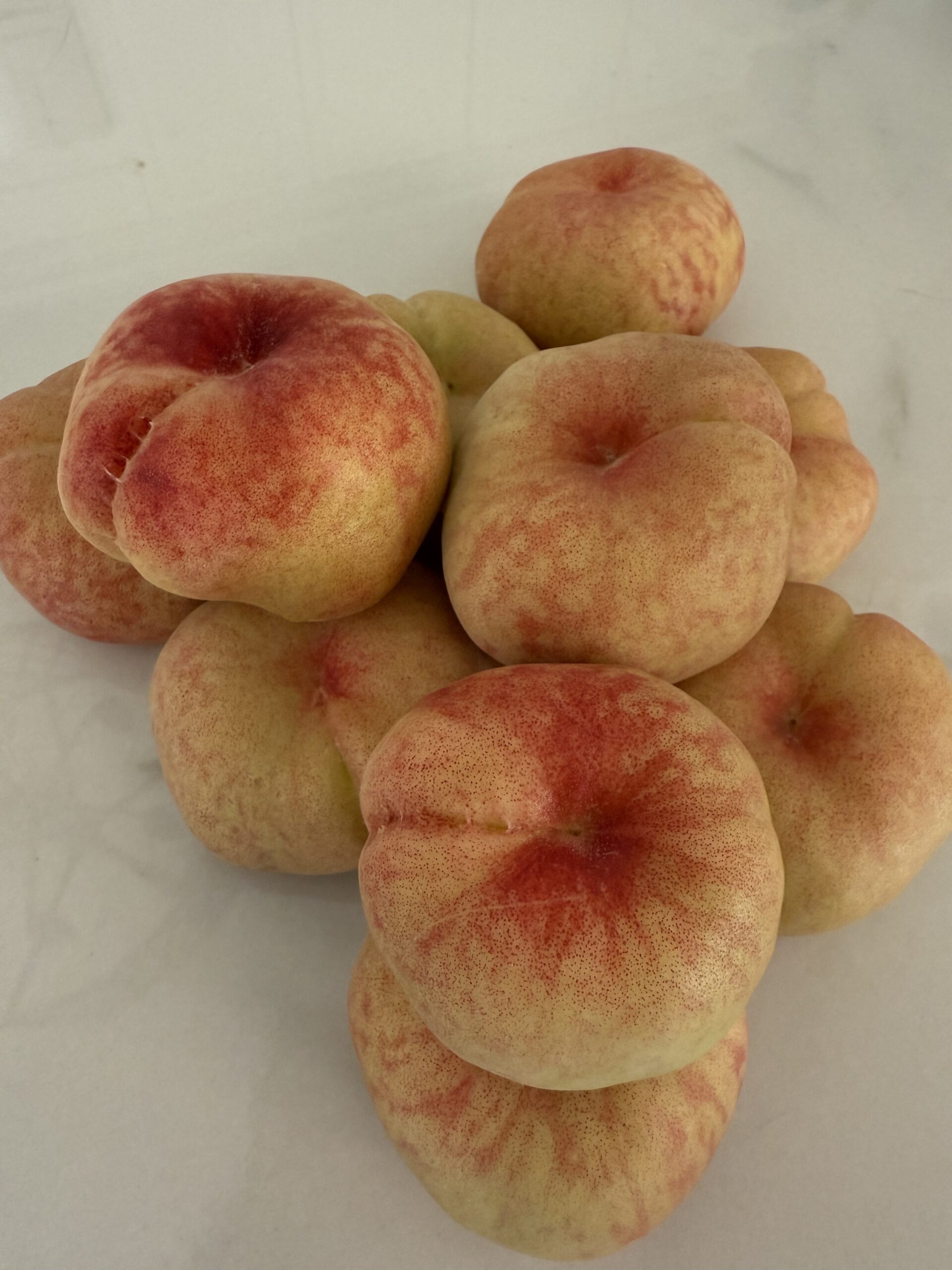
    • Physical Characteristics: Unlike standard peaches, it features a distinct flattened, disc-like shape with a sunken center. When ripe, the skin displays a beautiful blush of crimson over a creamy yellow background, with very fine fuzz.
    • Flavor Experience: Renowned for its low acidity and high sugar content. The flesh is typically white or pale yellow, offering a succulent, melt-in-your-mouth texture. Its small, freestone pit makes it a perfect “snack fruit.”
    • Garden Value: Beyond the fruit, the tree provides a stunning floral display in spring. It thrives in the sunny, Mediterranean climate of Rowland Heights, which is ideal for maximizing fruit brix (sugar levels).

    📝 My Planting Record

    Planted in early 2022, this peach tree has evolved from a young sapling into a cornerstone of the orchard over the past four seasons.

    • Growth Progress: After two years of establishing a strong root system, the tree hit its stride in its third and fourth years. The intense California sun has been instrumental in developing the vibrant red blush seen in the latest harvest.
    • Harvest Performance: By the 2025-2026 seasons, the tree reached a mature production phase. As shown in the recent photos, the harvest is bountiful, with uniform fruit size and excellent symmetry.
    • Environmental Adaptation: The tree has adapted perfectly to our local climate. The dry heat helps minimize fungal issues common in stone fruits, resulting in cleaner skin and more concentrated sugars.

    🛠️ Care & Maintenance

    • Fruit Bagging: This is the most critical step for a successful harvest. Bagging must be done during the early fruiting stage. This creates a physical barrier against borers (fruit worms) and prevents birds and local wildlife from pecking at the fruit as it ripens.
    • Strategic Pruning: Regular canopy management is essential. I perform structural pruning during the winter dormancy to maintain height and summer thinning to remove water sprouts, ensuring sunlight reaches the interior fruiting wood.
    • Nutrient & Water Management: A consistent fertilization schedule is followed: nitrogen-rich fertilizer in early spring for growth, phosphorus/potassium during fruit swell, and a “post-harvest” feeding to prep for next year. Consistent deep watering is maintained while avoiding waterlogging to prevent fruit drop.
  • White Peach

    White Peach

    🍑 Orchard Profile: The Prolific White Peach

    1. Basic Information

    • Variety: White Peach
    • Planting Date: Early 2022
    • Tree Age: Approx. 4 years (Entering its prime production years)
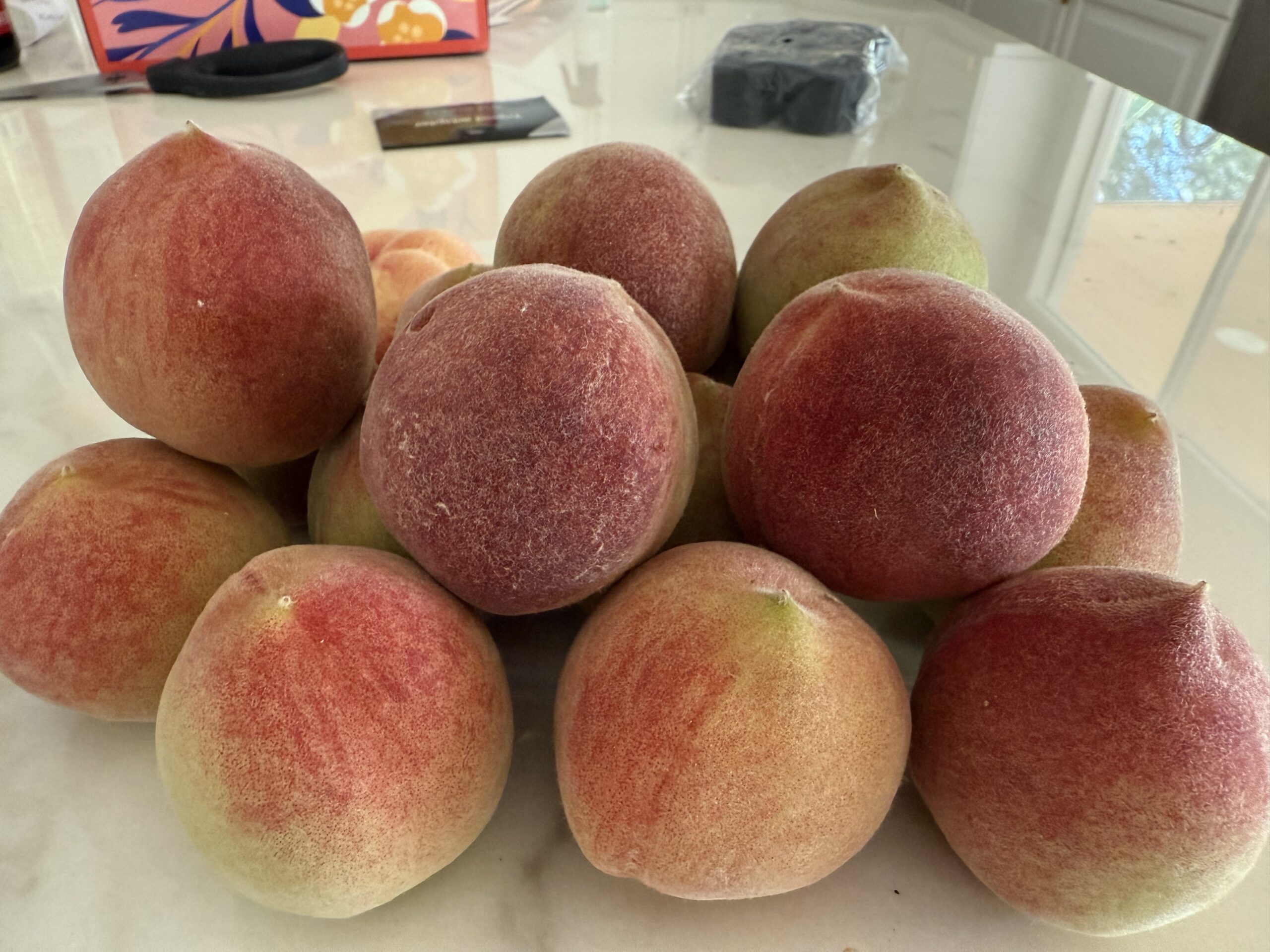
    • Fruit Characteristics: Known for its delicate, pale skin with a rosy blush, exceptionally juicy flesh, and a floral sweetness that is less acidic than yellow varieties.

    2. Growth & Performance

    This tree has proven to be a high-yield powerhouse within the orchard. Having reached maximum productivity just a few years after its 2022 planting, it stands as a testament to excellent soil quality and meticulous care.

    • Productivity: Consistently delivers a heavy crop, showing remarkable vigor for a relatively young tree.
    • Appearance: The fruit features a classic “peach tip” and fine fuzz, indicating healthy physiological development.

    3. Key Cultivation Insights

    The success of this harvest is credited to a rigorous “Protect & Preserve” management strategy:

    • Strategic Bagging:
      • Pest Barrier: Early-stage bagging is essential to defend the high-sugar fruit against the oriental fruit moth (borers) and other larvae.
      • Wildlife Deterrent: It serves as a physical deterrent against squirrels and birds, who are often drawn to the fruit’s scent as it ripens.
    • Quality Control: Beyond protection, bagging helps maintain the pristine, unblemished complexion of the white peach skin, preventing “wind scar” and sunburn.

    4. Grower’s Note

    “While this variety demands high maintenance during the bagging season to outsmart the local wildlife and insects, the reward is a bountiful harvest of flawless, honey-sweet peaches that are well worth the extra labor.”

  • Black Mission Fig

    Black Mission Fig

    Here is the formal English version for your Black Mission Fig profile:


    🪴 Plant Profile: Black Mission Fig

    📍 Basic Information

    • Variety Name: Black Mission (Ficus carica ‘Mission’)
    • Planting Date: Early 2023
    • Yield Performance: ★★★★★ (Entered peak production in 2025 with exceptional yields)
    • Flavor Profile: Intensely sweet, jam-like texture, rich flavor with a natural syrupy finish

    📖 Variety Introduction

    The Black Mission fig is a classic and highly esteemed California variety, renowned for its deep coloration and superior sweetness.

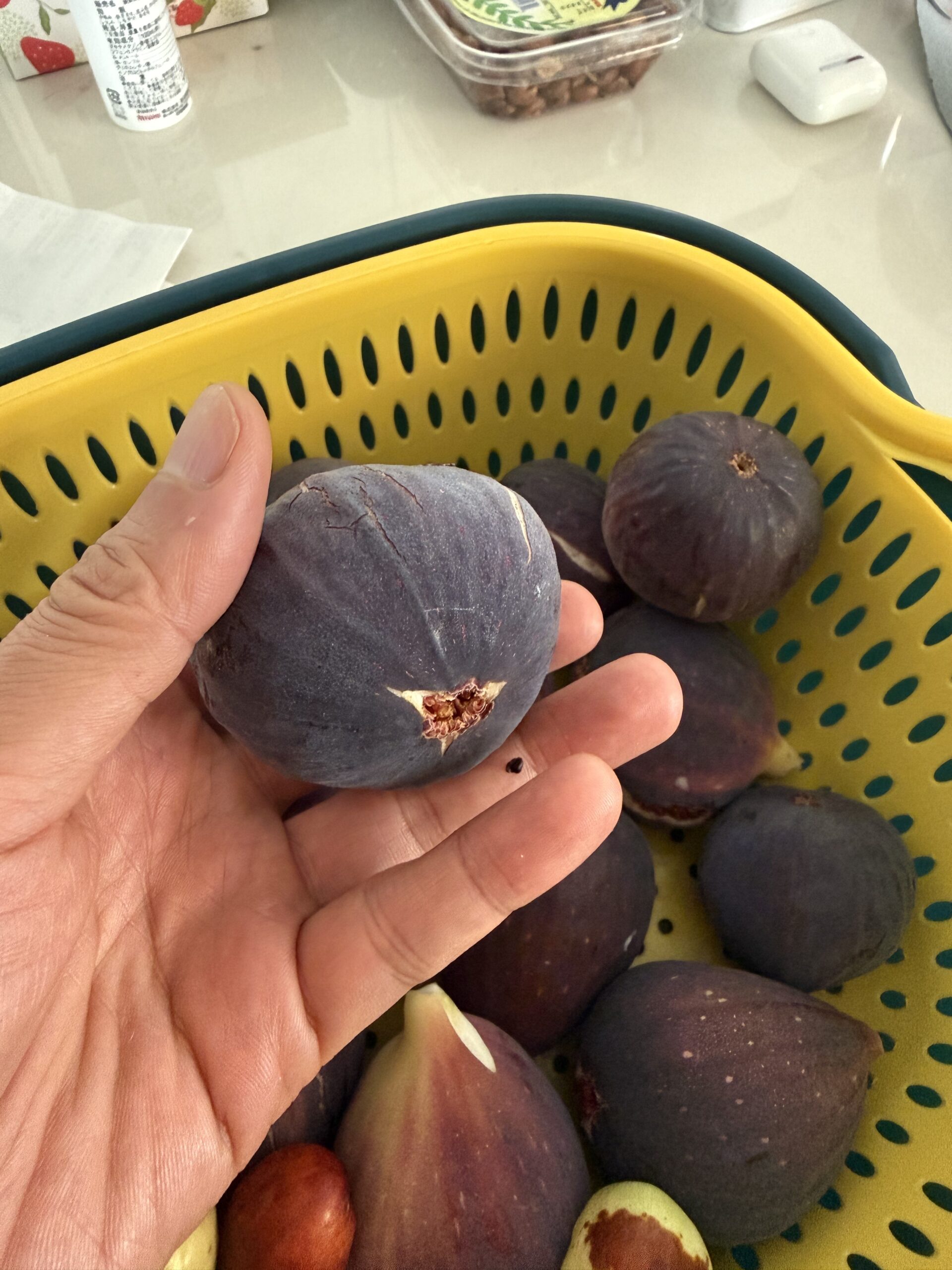
    • Appearance: The fruit is a plump, pear-shaped fig that transitions to a deep purple or nearly black skin upon maturity. The interior reveals an inviting strawberry-red flesh with a fine, delicate texture.
    • Flavor Profile: As a representative of high-sugar varieties, it offers a soft, honey-like consistency. Once fully ripe, the skin becomes thin, and the flesh provides a gourmet eating experience, making it a top choice for fresh consumption.
    • High Productivity: This variety is highly adaptable and has the potential to produce two crops per year (Breba and Main crops), making it ideal for home orchards.

    📓 My Planting Records

    This tree joined the orchard in early 2023 and has become the garden’s “productivity champion” in just two years.

    • Growth Vigor: Since planting, it has shown incredible vitality. Under the abundant sunlight of Rowland Heights, the canopy has expanded rapidly with well-balanced branching.
    • Harvest Milestone: Following two years of establishment, the tree saw an explosive harvest in 2025. The branches were heavily laden with deep purple fruits, providing more than enough for fresh eating and sharing with neighbors.
    • Climate Adaptation: It thrives in the dry California climate. During the 2025 harvest season, the sugar accumulation was excellent, as evidenced by the fine “sugar cracks” appearing on the skin—a hallmark of high quality.

    🛠️ Maintenance Essentials

    • Structural Pruning: Due to its vigorous growth, I perform structural pruning during the winter dormancy period. This maintains a manageable height for harvesting and stimulates new shoot growth for the following year’s crop.
    • Wildlife & Harvesting: Because of its high sugar content, ripe Black Mission figs are a favorite for birds and squirrels. It is best to harvest as soon as the fruit turns color or use bird netting to protect the crop.
    • Water Balance: While figs are drought-tolerant, providing consistent moisture during the fruiting stage prevents the fruit from undersizing. However, I avoid overwatering during the final ripening phase to prevent excessive splitting or diluted sweetness.
    • Soil Health: I supplement with organic fertilizer every early spring to ensure the tree has the nutrient reserves needed for a heavy production year.
  • Shanxi Li Jujube

    Shanxi Li Jujube

    🫒 Plant Profile: Shanxi Li Jujube (Pear Jujube)

    📍 Basic Information

    • Variety Name: Shanxi Li (Pear Jujube / Ziziphus jujuba)
    • Planting Date: Estimated 2014–2015 (Inherited from the previous homeowner)
    • Yield Performance: ★★★★★ (Extremely high yield; consistently prolific)
    • Flavor Profile: Balanced sweet and tart, light and crispy texture, thin skin, and juicy

    📖 Variety Introduction

    The Shanxi Li is a premium jujube variety famous for its massive fruit size and refreshing flavor profile, earning its name because its round, plump shape resembles a small pear.

    • Distinctive Flavor: Unlike many jujube varieties that are purely sweet, the Shanxi Li features a pleasant acidity that balances the sugar, creating a refreshing and complex taste.
    • Texture: The flesh is airy and crisp rather than dense or hard, offering a satisfying “crunch” that makes it one of the best varieties for fresh eating.
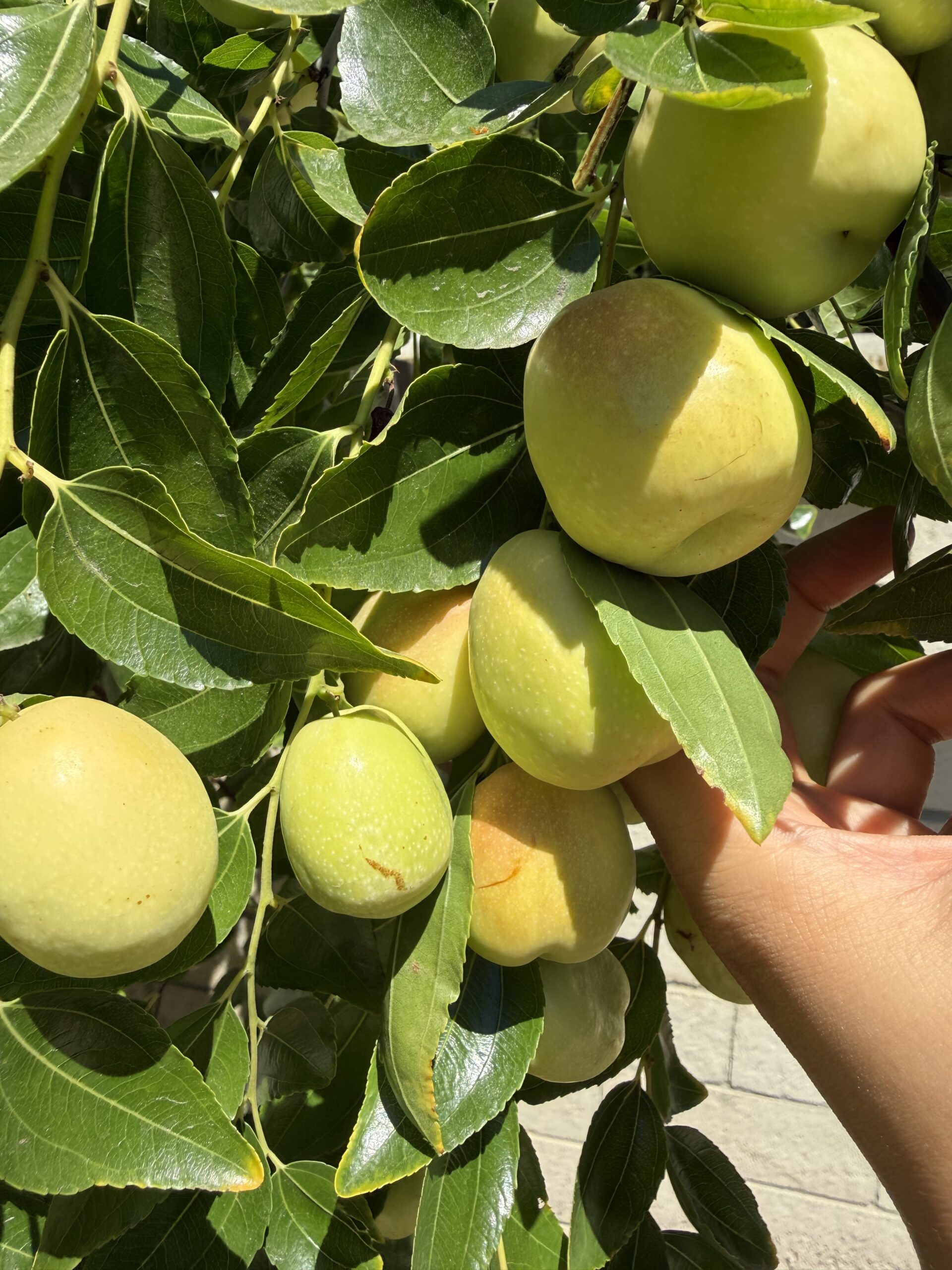
    • Appearance: The fruits are exceptionally large and transition from a bright lime-green to a beautiful mottled reddish-brown as they ripen.

    📓 My Planting Records

    This mature tree has been a cornerstone of the orchard for over a decade and remains one of the most reliable producers on the property.

    • Established Growth: Having been in the ground for over ten years, this tree is fully acclimated to the Rowland Heights environment and shows incredible vigor year after year.
    • Low Maintenance: This tree is remarkably “set and forget.” It requires very little intensive care to maintain its high productivity.
    • Harvest Spectacle: During the peak season from September to October, the branches are heavily laden with large clusters of dates, creating one of the most impressive sights in the garden.

    🛠️ Maintenance & Planting Precautions

    • Wildlife Protection: Because the fruits are large and flavorful, they are the primary target for birds and squirrels. Protective measures, such as netting or squirrel guards, are essential during the ripening season to ensure a harvest.
    • Aggressive Root System (Warning): The root system of this jujube is extremely powerful and invasive. It frequently sends up “suckers” (new shoots from the roots) across the yard that must be cleared regularly.
    • Companion Planting Strategy: Due to the aggressive nature of the roots, any fruit trees planted nearby must be “strong” varieties capable of competing for nutrients. Weaker species may struggle or be “bullied” by the jujube’s expansive root network.
    • Pruning: Maintenance is generally simple, requiring only occasional thinning of overcrowded branches to ensure good airflow through the canopy.