Author: Lucas Lu

  • Glenn Mango

    Glenn Mango

    🥭 Plant Profile: Glenn Mango

    📊 Basic Info

    • Variety: Glenn Mango
    • Planting Date: Early 2024
    • Source: Mimosa Nursery (Mimosa OC)
    • Yield Performance: ★☆☆☆☆ (Sacrificed the 2025 blooms to build structural strength; officially ready for its first “trial harvest” in 2026)
    • Flavor Profile: Widely considered one of the most elegant and delicious mangoes available. The flesh is 100% fiberless with a silky-smooth texture. It boasts intense sweetness with a highly distinct, aromatic blend of peach and floral notes.

    📖 Variety Overview

    Originating in Florida as a descendant of the famous Haden mango, the Glenn thrives beautifully in the Rowland Heights microclimate.

    • The Ultimate Backyard Choice: Unlike some mango varieties that grow into towering giants, the Glenn naturally maintains a small to medium, compact canopy. It is incredibly easy to keep pruned low for effortless harvesting, making it the perfect centerpiece for a limited-space orchard.
    • Disease Resistance: It possesses excellent natural resistance to Anthracnose, a fungal disease that plagues many other mango growers, which makes your routine maintenance much easier.
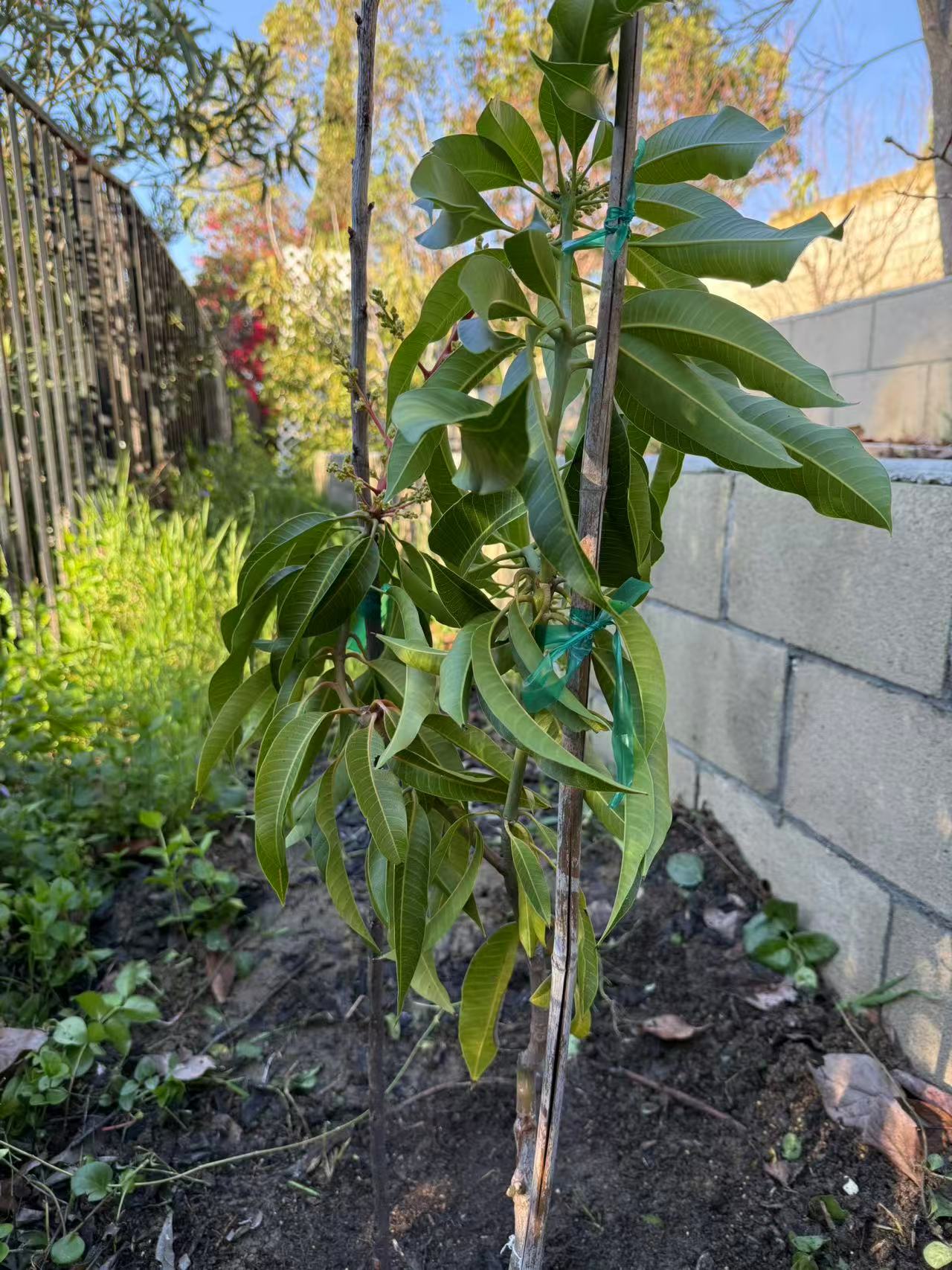
    • Current Bloom Status: The photo shows healthy panicles (flower spikes) emerging at the top. This proves the tree responded perfectly to your “prune and build” strategy last year and is now biologically primed to support fruit.

    📅 Precise Ripening Months

    The Glenn is an early-to-mid season variety, delivering premium tropical flavor right in the heat of summer:

    • Flowering: February to April
    • Expected Harvest: August to September.
    • Ripeness Cues: This is a stunningly beautiful fruit. When ripe, the skin transitions from green to a bright, eye-catching golden yellow, often developing a gorgeous peach-orange/red blush on the sun-exposed side. It is ready to pick when it emits a strong, room-filling fruity aroma and yields slightly to a gentle squeeze.

    📝 My Gardening Notes

    • The Identity Twist: Purchased in early 2024 from Mimosa OC. Initially thought to be the late-season giant ‘Kent’, a closer look at the tag revealed it is actually a ‘Glenn’—a top-tier, peach-flavored gem.
    • The Wisdom of Restraint: Stripping the heavy blooms in 2025 was a tough but necessary decision, preventing the slender main trunk from snapping under the weight of premature fruit. Now, in Spring 2026, the tree is pushing out healthy panicles again. It is finally time to enjoy the sweet rewards of that patience.

    🛠️ Care & Maintenance (The 2026 Fruiting Plan)

    • Extreme Thinning & Staking (Critical): As the photo clearly shows, the main trunk is still quite thin and heavily reliant on the bamboo stakes. While you can let it fruit this year, you must aggressively thin the tree down to a maximum of 1 or 2 mangoes total. Crucially, the specific branch holding the fruit must be securely tied to the bamboo support; otherwise, the weight of the growing fruit will snap the branch.
    • Fungal Protection: Despite its resistance to Anthracnose, Southern California’s spring weather (warm days with cool, dewy nights) is the perfect breeding ground for Powdery Mildew. Apply Neem Oil before the panicles fully open to protect the delicate blossoms.
    • Post-Set Feeding: Once the flowers drop and the remaining fruitlets reach the size of a pea without falling off, apply a potassium-rich fruit tree fertilizer to support rapid fruit expansion and sugar development.
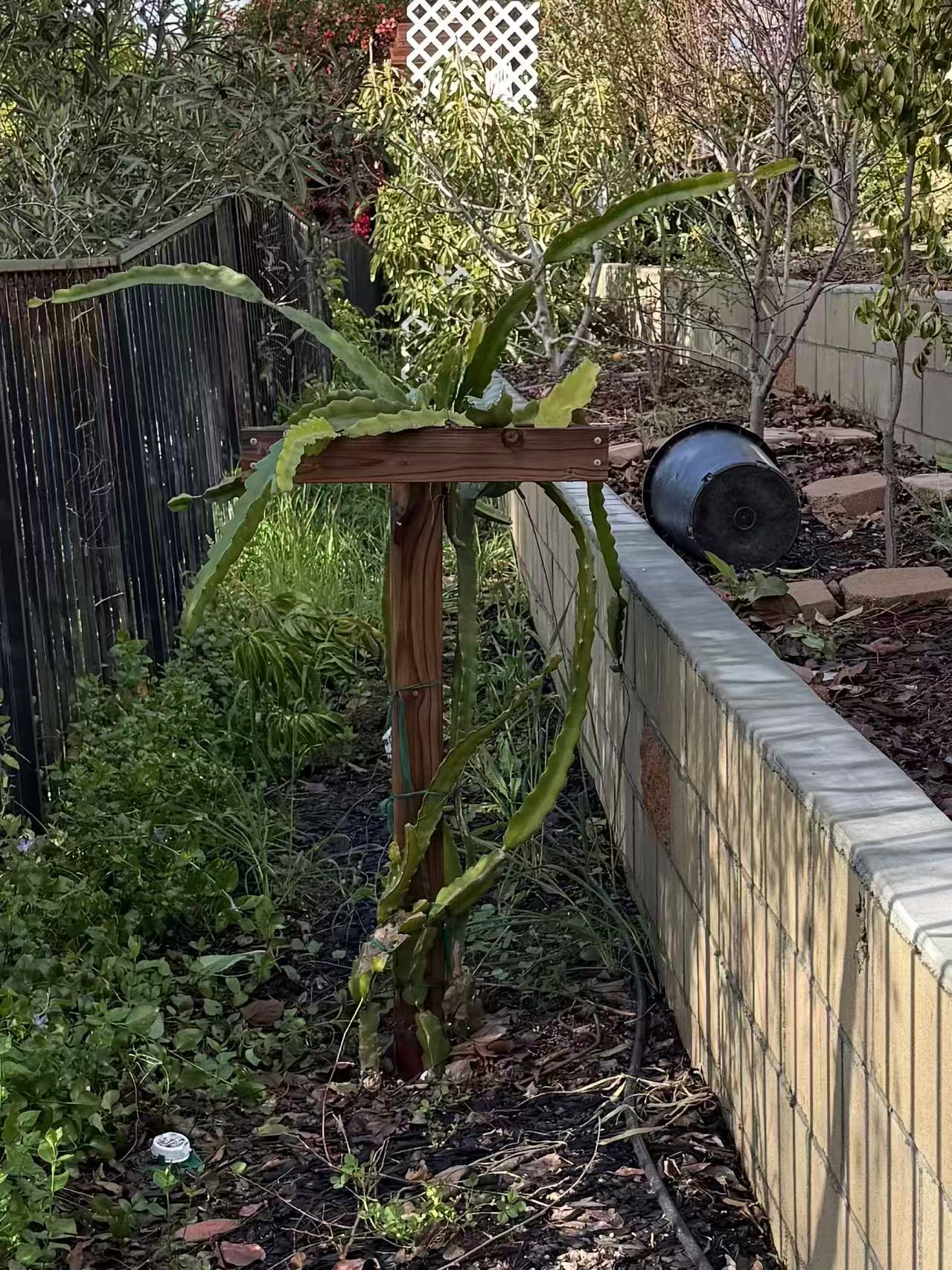
  • Red & White Dragon Fruit

    Red & White Dragon Fruit

    🌵 Plant Profile: Red & White Dragon Fruit

    📊 Basic Info

    • Variety: Red-fleshed & White-fleshed Dragon Fruit
    • Planting Date: Summer 2023
    • Source: Home Depot seedlings / Custom DIY 2×4 Wooden Trellis
    • Yield Performance: ★★☆☆☆ (Bloomed in 2025; primed for its first true harvest in 2026)
    • Flavor Profile: The red variety offers intense sweetness with subtle berry notes, while the white variety provides a refreshing, crisp, kiwi-like crunch.

    📖 Variety Overview & Diagnosis

    Planting both red and white varieties on the same structure is a brilliant horticultural strategy. Many dragon fruits are self-sterile and require cross-pollination. Having two different genetics drastically increases fruit set and size.

    • The Custom Trellis: Dragon fruit vines become incredibly heavy as they mature. The 2×4 wooden crown trellis you built from scratch is exactly the robust, professional-grade support this epiphytic cactus needs to thrive.
    • The 2025 Bloom Mystery: Blooming without setting fruit in its second year is completely normal. Dragon fruits are nocturnal bloomers. If night-time pollinators (like certain moths) miss the brief midnight window, the flower simply drops off.

    📅 Precise Ripening Months

    Fueled by the intense Southern California summer sun, the cycle from flower to ripe fruit is a rapid 30 to 50 days:

    • Flowering: June to September (Blooms typically open at night, often in waves coinciding with hot weather).
    • Expected Harvest: August to November.
    • Ripeness Cues: The fruit is ready to harvest when the skin turns a vivid, even pink/red and the tips of the “scales” (bracts) just begin to yellow and dry out.

    📝 My Gardening Notes

    • The DIY Project: Established in Summer 2023. Building the heavy-duty wooden trellis was a crucial investment, combining practical carpentry with orchard planning to support the plant’s massive future weight.
    • The 2026 Outlook: The vines have beautifully cascaded over the wooden frame. This umbrella shape naturally induces flowering. With the trial run of 2025 behind it, 2026 is the year of the harvest.

    🛠️ Care & Maintenance

    • Hand Pollination (The Secret Weapon): When those massive, beautiful flowers open this summer, I will take a small paintbrush between 9 PM and midnight and transfer pollen from the white flowers to the red flowers (and vice versa) to guarantee fruit set.
    • Tip Pruning: I will trim the very tips of the hanging branches if they get too close to the ground. This stops vegetative growth and forces the plant to push out flower buds instead.
    • Summer Feeding: Starting in May, I will apply a potassium-rich fertilizer to support the upcoming waves of massive blooms.
  • Owari Satsuma Mandarin (2023 Batch)

    Owari Satsuma Mandarin (2023 Batch)

    🍊 Plant Profile: Owari Satsuma Mandarin (2023 Batch)

    📊 Basic Info

    • Variety: Owari Satsuma Mandarin (Semi-Dwarf)
    • Planting Date: December 2023
    • Source: Four Winds Growers
    • Yield Performance: ★☆☆☆☆ (Growth stunted by prior pest damage; currently in an active rehabilitation and rebuilding phase)
    • Flavor Profile: 100% seedless with a famously loose “zipper-skin.” The flesh is tender, melting, and offers an impeccable balance of sweetness and mild acidity.

    📖 Variety Overview & Diagnosis

    Part of the “Class of 2023,” this tree shares the exact same backstory as your Cara Cara and Moro Blood Orange.

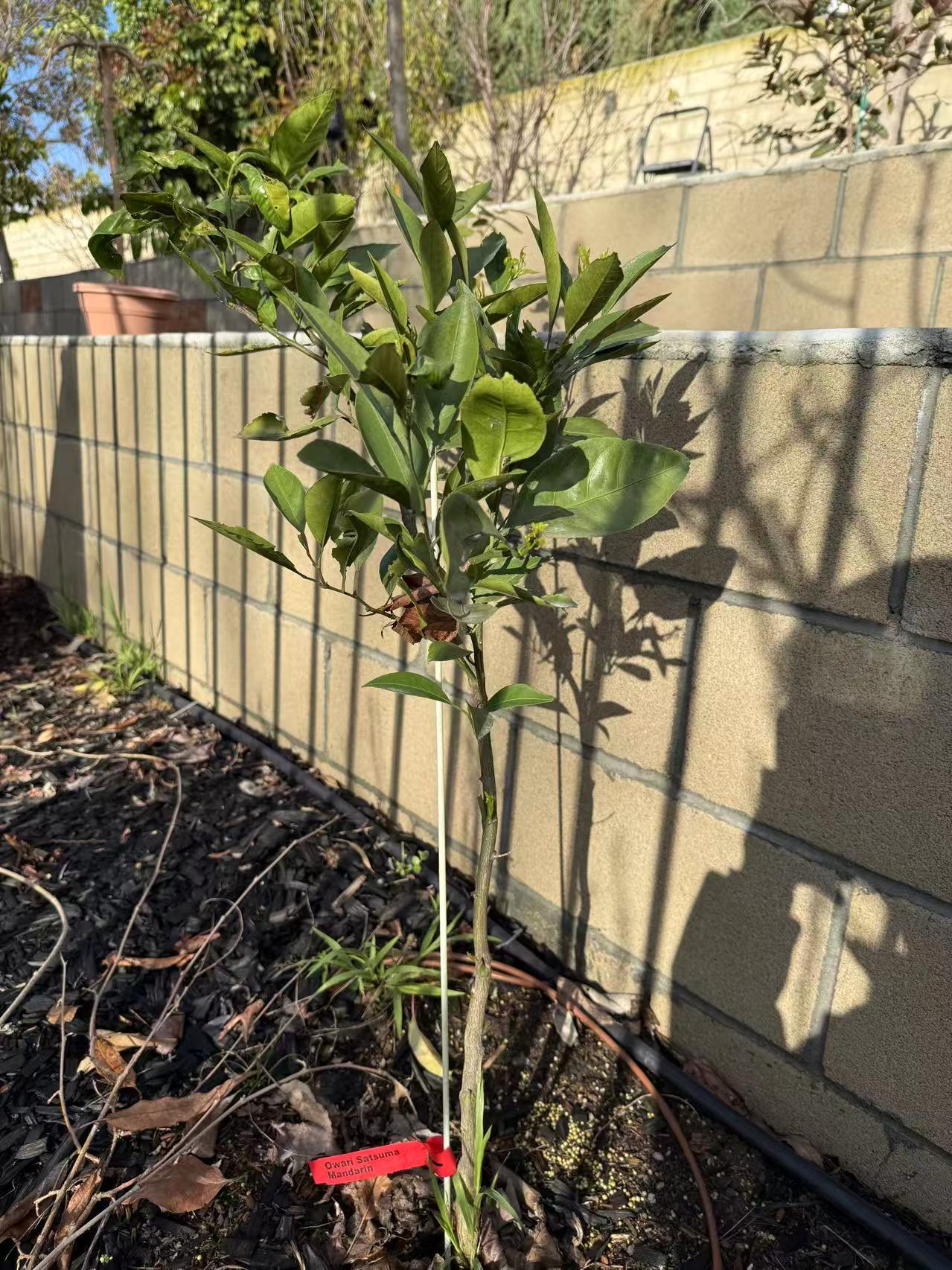
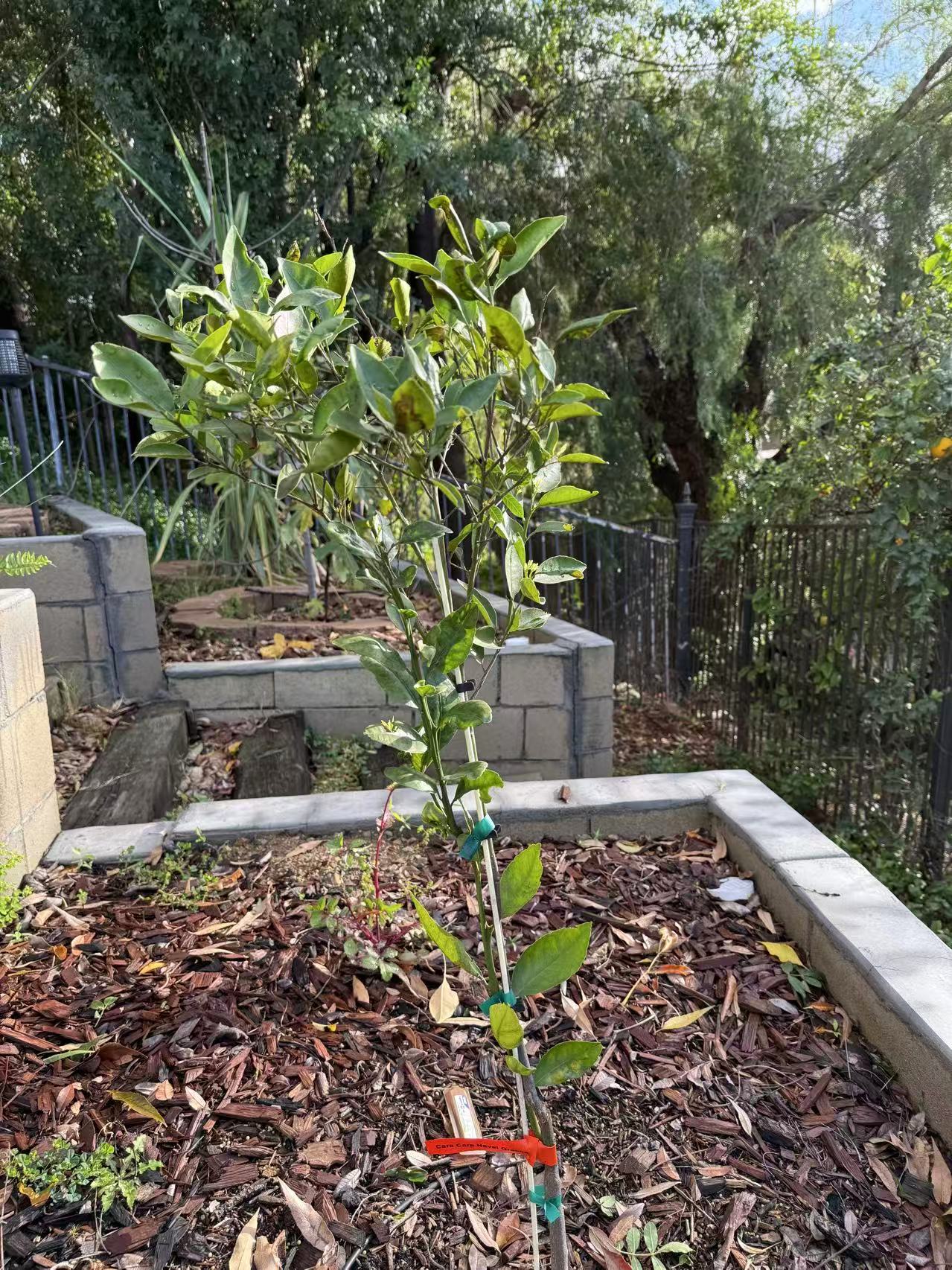
    • The Leafminer Toll: The curled, distorted, and slightly yellowed leaves visible in the photo are classic scars from last year’s Citrus Leafminer infestation. Because the foliage was compromised, the tree couldn’t photosynthesize efficiently, resulting in underwhelming growth over the past two years.
    • Inherent Toughness: Despite the intense pest pressure, the Owari’s natural cold-hardiness helped it survive the winters. Its ability to push new buds this spring proves the root system is still viable and ready to fight back.

    📅 Precise Ripening Months

    The ultimate holiday citrus treat:

    • Expected Harvest: November to January.
    • Peak Quality Month: December.
    • Harvesting Pro-Tip: Satsumas are deceptive. They often reach peak internal sweetness while the rind still has patches of green. Taste-test one before they turn completely puffy and orange.

    📝 My Gardening Notes

    • The Living Experiment: Sourced from Four Winds in late 2023. Having both a 2023 and a 2026 Owari Satsuma provides a unique opportunity to compare recovery growth versus fresh establishment in the orchard.
    • The Proactive Strike: Learning from the frustrating setbacks of 2024 and 2025, I deployed pest control sprays at the very first sign of bud break this year. 2026 is entirely dedicated to protecting the spring flush.

    🛠️ Care & Maintenance (Rehab Strategy)

    • Hold the Line: The initial spray was perfect, but consistency is key. I must reapply the treatment every 7 to 10 days until the new flush of leaves fully hardens off and darkens in color, rendering them impervious to leafminer moths.
    • Keep the Ugly Leaves: It is tempting to prune off the distorted, damaged foliage from last year, but they are currently the tree’s only solar panels. I will leave them intact until a lush, healthy new canopy emerges this summer.
    • Post-Flush Feeding: Once the weather warms and the new leaves are secure, I will apply a balanced organic citrus fertilizer. With healthy new leaves to process the nutrients, the tree is primed for explosive vertical growth this season.
  • Moro Blood Orange

    Moro Blood Orange

    🍊 Plant Profile: Moro Blood Orange

    📊 Basic Info

    • Variety: Moro Blood Orange (Semi-Dwarf)
    • Planting Date: December 2023
    • Source: Four Winds Growers
    • Yield Performance: ★☆☆☆☆ (Recovering from leafminer stunting; positioned for a major comeback this year due to proactive pest control)
    • Flavor Profile: The most deeply colored of all blood oranges. The flesh ranges from dark red to deep burgundy, offering a rich, sweet-tart flavor with distinct, intense notes of raspberry and blackberry.

    📖 Variety Overview

    The Moro is the most popular commercial and backyard blood orange in California, renowned for being the earliest to ripen.

    • The Chill Factor: Unlike the Cara Cara (which is pigmented by lycopene), the Moro gets its spectacular color from anthocyanins. It actually requires the chilly winter nights of Rowland Heights to fully develop its dark red pigmentation.
    • Growth Habit: Grafted onto a Semi-Dwarf rootstock, it will stay relatively compact, making it incredibly manageable for routine pest-control spraying and harvesting in a raised planter bed.

    📅 Precise Ripening Months

    The Moro brightens up the winter orchard just when you need fresh citrus the most:

    • Expected Harvest: December to March.
    • Peak Quality Month: January and February.
    • Harvesting Tip: You will often see a red blush developing on the outside of the rind—this is a great indicator that the inside is deeply pigmented. Leaving them on the tree through the coldest winter nights guarantees the deepest color and strongest berry flavor.

    📝 My Gardening Notes

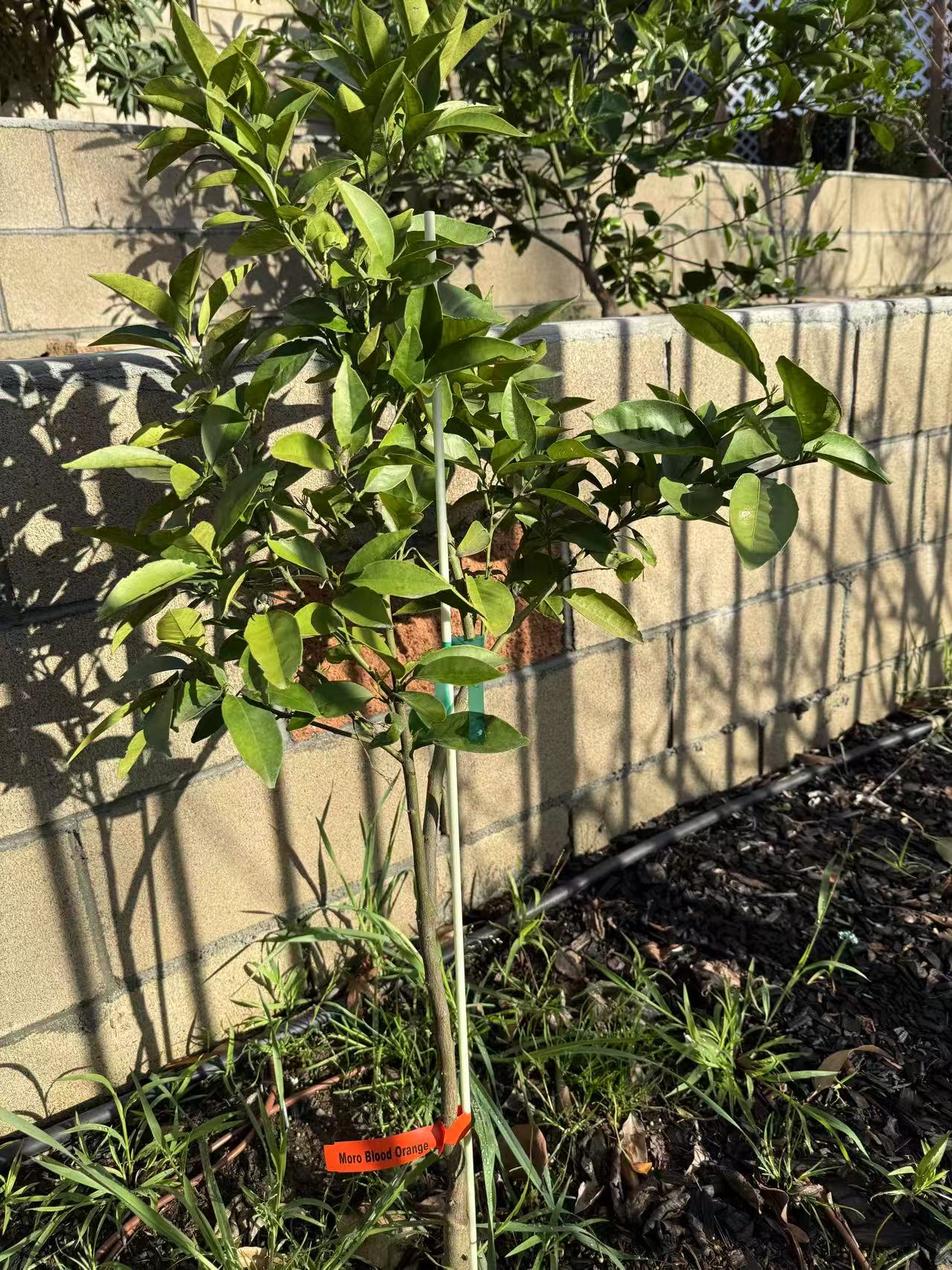
    • The Sibling Struggle: Planted alongside the Cara Cara in late 2023 from Four Winds. Both trees endured heavy Citrus Leafminer attacks over the past two years, which severely stunted their vegetative growth.
    • The 2026 Turning Point: Learning from past seasons, I applied a pre-emptive pesticide strike the moment the spring buds appeared. The core mission for 2026 is to protect this spring flush at all costs to rebuild the canopy.

    🛠️ Care & Maintenance (The Spring Flush Defense)

    • Maintain the Shield (Crucial): One spray is not enough. I must reapply the treatment (Neem Oil or Spinosad) every 7 to 10 days until the new tender leaves fully harden off and turn dark green. Once the leaves harden, the leafminer moth can no longer lay eggs inside them.
    • Fuel the Growth: Since the new buds are protected, I will apply a high-quality organic citrus fertilizer as the weather warms up to fuel rapid branch extension.
    • Patience with Damage: I will resist the urge to prune off last year’s distorted, curled leaves just yet. They are still providing valuable solar energy to the tree. They will be removed only after a robust new canopy is established this summer.
  • 4-in-1 Apple Tree

    4-in-1 Apple Tree

    🍎 Plant Profile: 4-in-1 Apple Tree (Featuring Anna & Dorsett Golden)

    📊 Basic Info

    • Active Varieties: Anna Apple & Dorsett Golden Apple
    • Planting Date: Early 2024
    • Source: Dave Wilson Nursery (Multi-grafted)
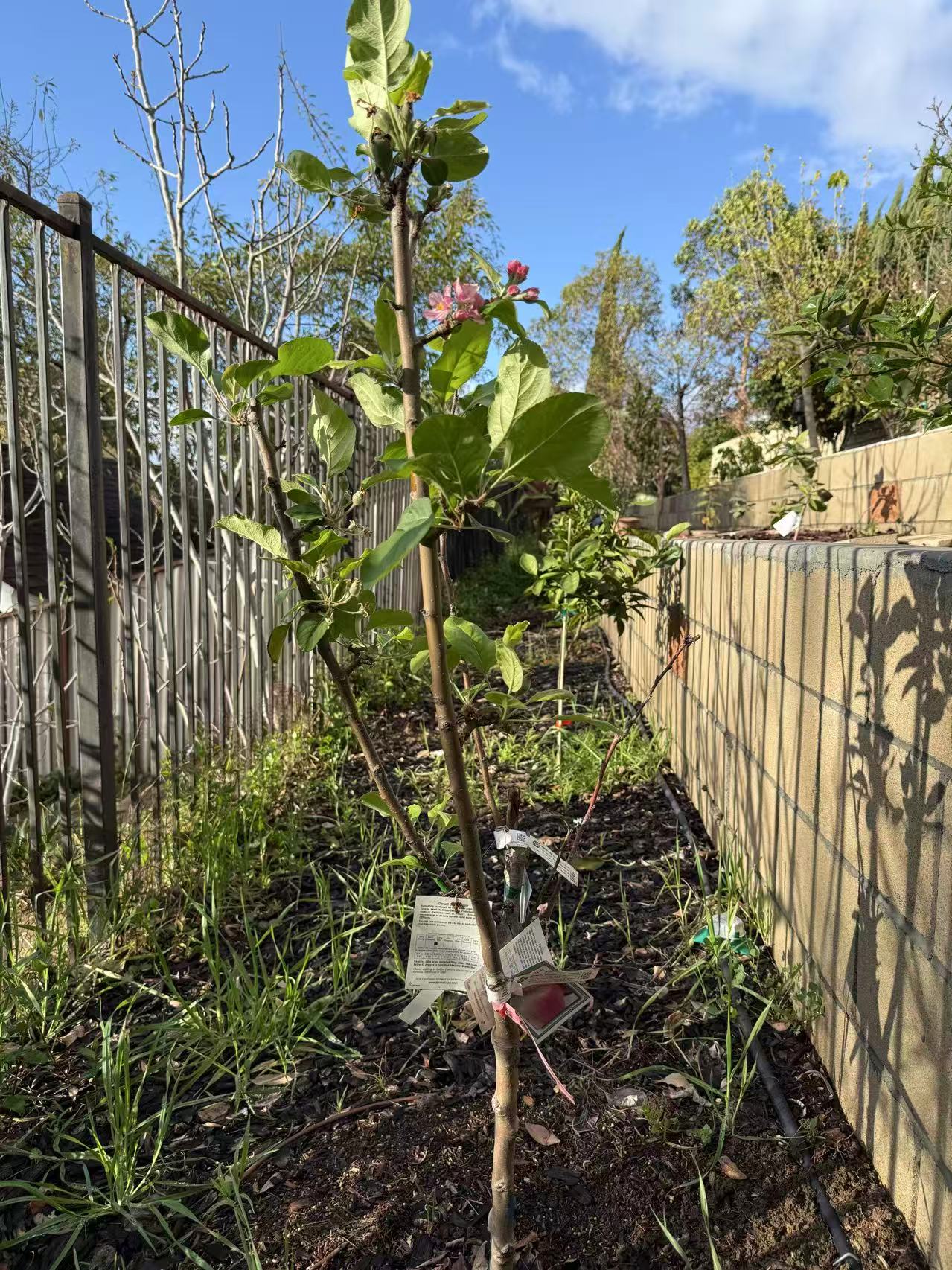
    • Yield Performance: ★★☆☆☆ (Showing beautiful pink/white blooms in early Spring 2026; set for its first real harvest)
    • Flavor Profile:
      • Anna: A crisp, sweet-tart apple with a red blush, reminiscent of a cross between a Gala and a Granny Smith.
      • Dorsett Golden: A purely sweet, crisp, yellow apple that tastes similar to a Golden Delicious.

    📖 Variety Overview

    This tree is an absolute masterclass in selecting the right fruit for the Southern California climate.

    • The Perfect Match: Anna and Dorsett Golden are “ultra-low chill” varieties (requiring only 100-300 chill hours). They bloom simultaneously, acting as the perfect cross-pollinators for one another to guarantee a heavy fruit set.
    • The “Slow” Growth: Your observation of its mediocre vigor is actually completely normal. Apple trees on dwarfing/semi-dwarfing rootstocks grow much slower and woodier than vigorous stone fruits like plums. Steady, moderate growth is exactly what you want.
    • The “Dead” Branch Mystery: Do not cut off the two dormant grafts yet! Because Anna and Dorsett Golden are ultra-low chill, they wake up very early (February). The other two grafts likely have higher chill requirements and simply won’t wake up until late March or April.

    📅 Precise Ripening Months

    Because these varieties bloom so early in the year, they are among the first apples to ripen anywhere in the country:

    • Expected Harvest: Late June to July (A rare mid-summer apple harvest).
    • Ripeness Cues: Pick Dorsett when the skin turns a clear, golden yellow. Pick Anna when it develops a robust red blush. Both varieties should be harvested promptly upon ripening, as they do not store well on the tree and can become mealy in the summer heat.

    📝 My Gardening Notes

    • The Low-Chill Miracle: Planted in early 2024. Growing crisp apples in Rowland Heights is challenging, but this specific grafted combo makes it effortless.
    • Patience with the Multi-Graft: By February 2026, half the tree is covered in blossoms while the other half looks bare. This is a great lesson in chill-hour differences—the remaining grafts are simply sleeping in and waiting for warmer spring weather.

    🛠️ Care & Maintenance

    • Aggressive Thinning (Crucial): Apples bloom in clusters of five. If all five set fruit, the weight will easily snap these young branches. Once the fruit reaches the size of a cherry, I must thin each cluster down to just 1 or 2 apples.
    • Sunscald Prevention: Young apple bark is susceptible to sunburn in the harsh SoCal summer. Since the canopy is still developing, I will monitor the exposed trunk and apply diluted white latex tree paint if necessary.
    • Spring Feeding: With the tree actively blooming and setting fruit right now, a moderate application of an organic, balanced fruit tree fertilizer will provide the necessary energy for fruit development.
  • Owari Satsuma Mandarin

    Owari Satsuma Mandarin

    🍊 Plant Profile: Owari Satsuma Mandarin

    📊 Basic Info

    • Variety: Owari Satsuma Mandarin (Semi-Dwarf)
    • Planting Date: January 2026
    • Source: Four Winds Growers
    • Yield Performance: ★☆☆☆☆ (Currently settling in; known to be extremely prolific once mature, often requiring fruit thinning to prevent branch breakage)
    • Flavor Profile: 100% seedless. Famous for its “zipper-skin” which peels off effortlessly. The melting flesh offers a classic, rich mandarin flavor with an exquisite sweet-tart balance.

    📖 Variety Overview

    Originating from Japan, the Satsuma is a cornerstone of backyard citrus, and Owari is the undisputed king of the late-season Satsumas.

    • Cold Hardy Champion: Satsumas are among the most cold-tolerant of all sweet citrus. This tree will easily shrug off any occasional winter chill in Rowland Heights.
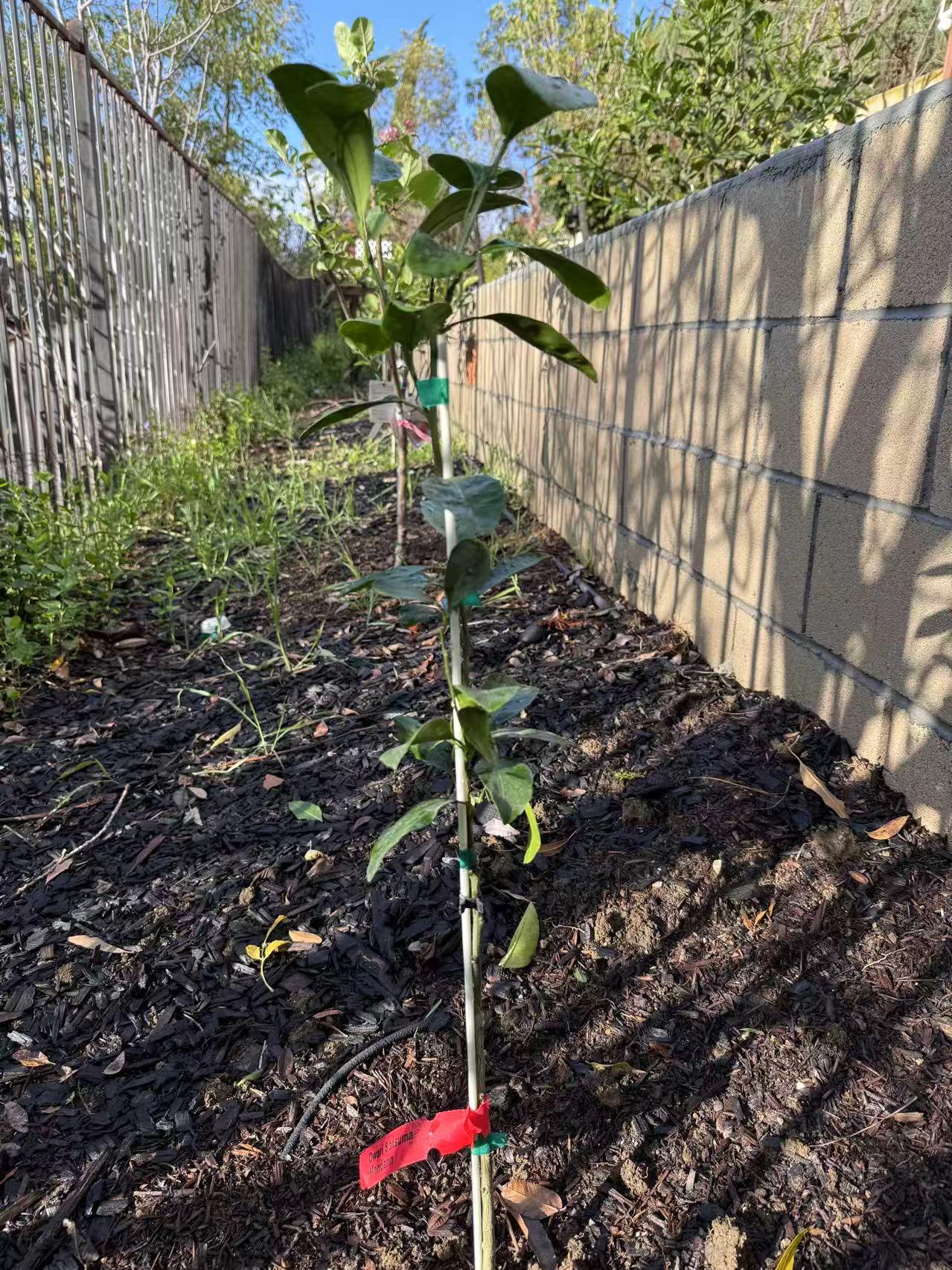
    • Smart Placement: Planted in the narrow planter strip next to the fence, choosing a Semi-Dwarf rootstock was a brilliant move. It will naturally form a compact, umbrella-like canopy without aggressively outgrowing its designated space.

    📅 Precise Ripening Months

    The Owari is the quintessential holiday fruit:

    • Expected Harvest: November to January.
    • Peak Quality Month: December.
    • Harvesting Pro-Tip: Satsumas are unique in that they often reach internal maturity (peak sweetness) while the rind still shows patches of green. Do not over-leave them on the tree until they are entirely puffy and orange, or they may become dry inside.

    📝 My Gardening Notes

    • Premium Pair: Acquired in January 2026 alongside the Kishu from the top-tier Four Winds Growers.
    • Smooth Transition: The tree is showing zero signs of transplant shock. Planting in January was ideal, allowing the roots to comfortably explore the surrounding soil without the stress of intense summer heat driving water demand from the canopy.

    🛠️ Care & Maintenance (Young Tree Focus)

    • Let It Weep: Satsumas naturally develop a spreading, weeping, and somewhat “shrubby” habit. Avoid pruning in the first few years. Let it grow dense; this foliage will naturally shade and protect its own trunk from the harsh Southern California summer sun.
    • Sunburn Protection: If the trunk is still highly exposed by July, I will apply a 50/50 mix of white interior latex paint and water to the trunk to prevent sunburn and bark splitting.
    • Watering Discipline: The mulch in the photo looks great. I will continue to check the soil moisture beneath the mulch, watering deeply only when the top few inches are dry to prevent root rot in this critical establishment phase.
  • Pomegranate

    Pomegranate

    🍎 Plant Profile: Pomegranate (Likely Tunisian Soft-Seed)

    📊 Basic Info

    • Guessed Variety: Tunisian Soft-Seed Pomegranate (突尼斯软籽石榴)
    • Planting Date: Summer 2022
    • Source: A gift from a Chinese nursery
    • Yield Performance: ★☆☆☆☆ (Currently all foliage, zero fruit; reaching maturity now)
    • Flavor Profile: If it’s the “premium/tasty” variety championed by Chinese nurseries, it is likely a soft-seeded type. Expect incredibly sweet, ruby-red arils with seeds so soft they can be chewed and swallowed effortlessly.

    📖 Variety Speculation & Diagnosis

    The “Tunisian Soft-Seed” has absolutely dominated the premium pomegranate market in China. If a nursery is sending a high-quality freebie, this is the prime suspect.

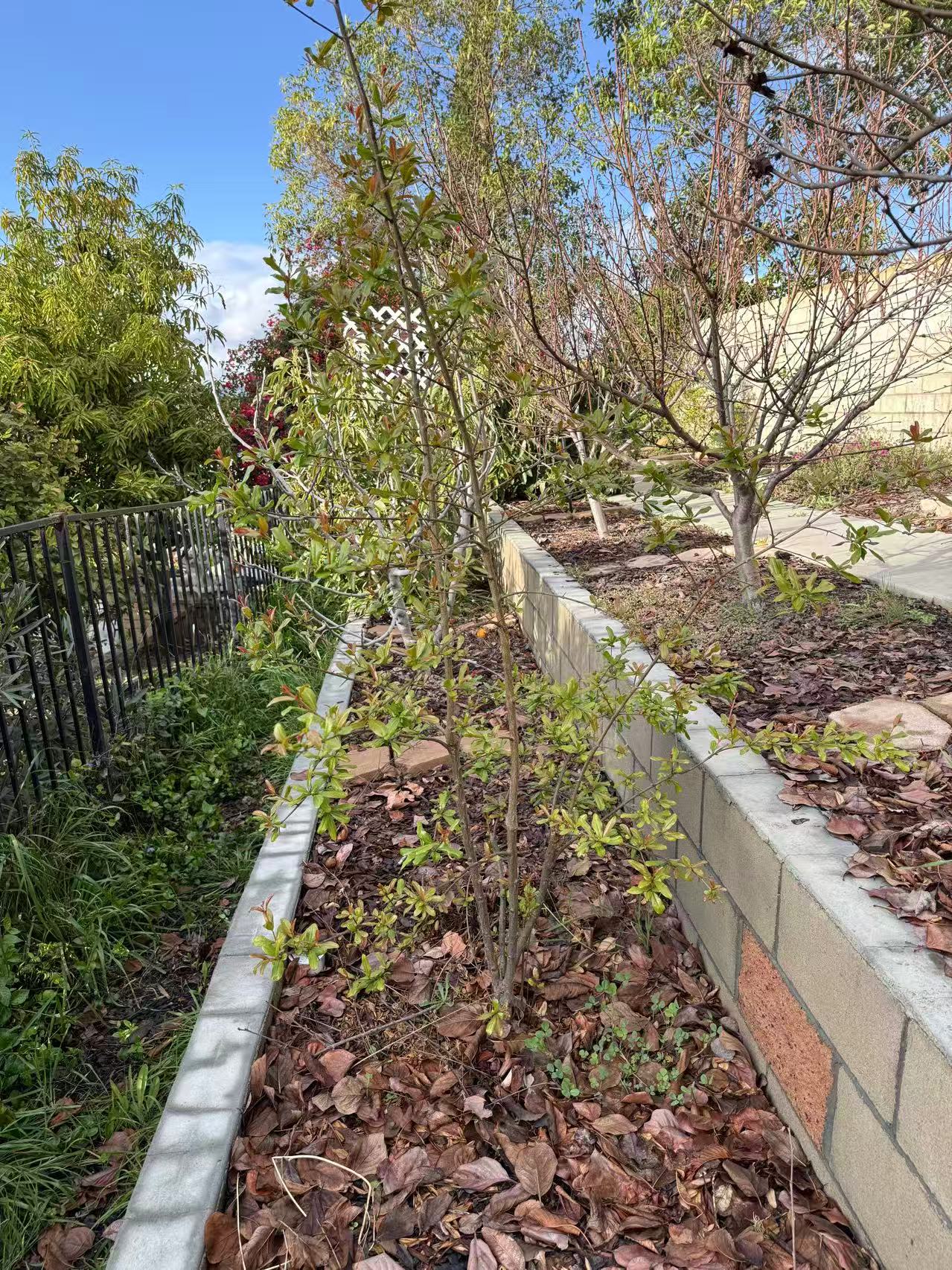
    • Why the Delay in Fruiting? 1. Age: Pomegranates are not instant producers. They typically require 3 to 5 years to establish before setting fruit. Planted in mid-2022, 2026 marks its 4th year—the exact window when it should start flowering. 2. Overcrowded Canopy: The photo shows a very dense, multi-stemmed shrub. When a pomegranate is too congested, it spends all its energy pushing vegetative growth to compete for sunlight, rather than producing fruiting buds.

    📅 Precise Ripening Months

    In the long, hot summers of Southern California, these pomegranates ripen beautifully in early autumn:

    • Flowering: May to June (Expect stunning, vibrant orange-red blossoms).
    • Expected Harvest: Late September to October.
    • Ripeness Cues: It is ready when the skin turns a deep red and the fruit takes on a slightly “squared-off” or blocky shape, indicating the arils inside are swollen with juice.

    📝 My Gardening Notes

    • The “Mystery Box”: Arrived as an unexpected bonus and has shown incredible vigor.
    • The Turnaround Year: It has been allowed to grow wild into a thick bush. To unlock its fruiting potential in 2026, I need to shift its energy from making leaves to making flowers.

    🛠️ Care & Maintenance (The 2026 Bloom Strategy)

    • Aggressive Thinning (Crucial): I will remove the basal suckers and completely clear out the crossing, twiggy growth in the center of the bush. Selecting 3 to 5 strong main trunks and opening the center to sunlight is mandatory for flower production.
    • Phosphorus Push: As the spring foliage emerges, I will switch to a high-phosphorus/high-potassium “bloom booster” fertilizer and strictly avoid heavy nitrogen.
    • Strategic Stress: Allowing the soil to dry out slightly just before the expected late-spring bloom can “stress” the tree into prioritizing flower production over more leaf growth.
  • Taiwan Mulberry

    Taiwan Mulberry

    🍇 Plant Profile: Taiwan Mulberry

    📊 Basic Info

    • Variety: Taiwan Mulberry (Appears to be a Weeping variety)
    • Transplant Date: January 2026 (Relocated within the orchard)
    • Yield Performance: ★☆☆☆☆ (Currently in intensive care/recovery after transplant root shock)
    • Flavor Profile: Produces small, plump berries. Unlike the purely sweet Pakistan Mulberry, this variety offers a complex, slightly tart, and deeply rich berry flavor.

    📖 Variety Overview

    Adding a Taiwan Mulberry to complement your existing Pakistan Mulberry is a brilliant move that diversifies both the aesthetic and the flavor profile of your spring harvests.

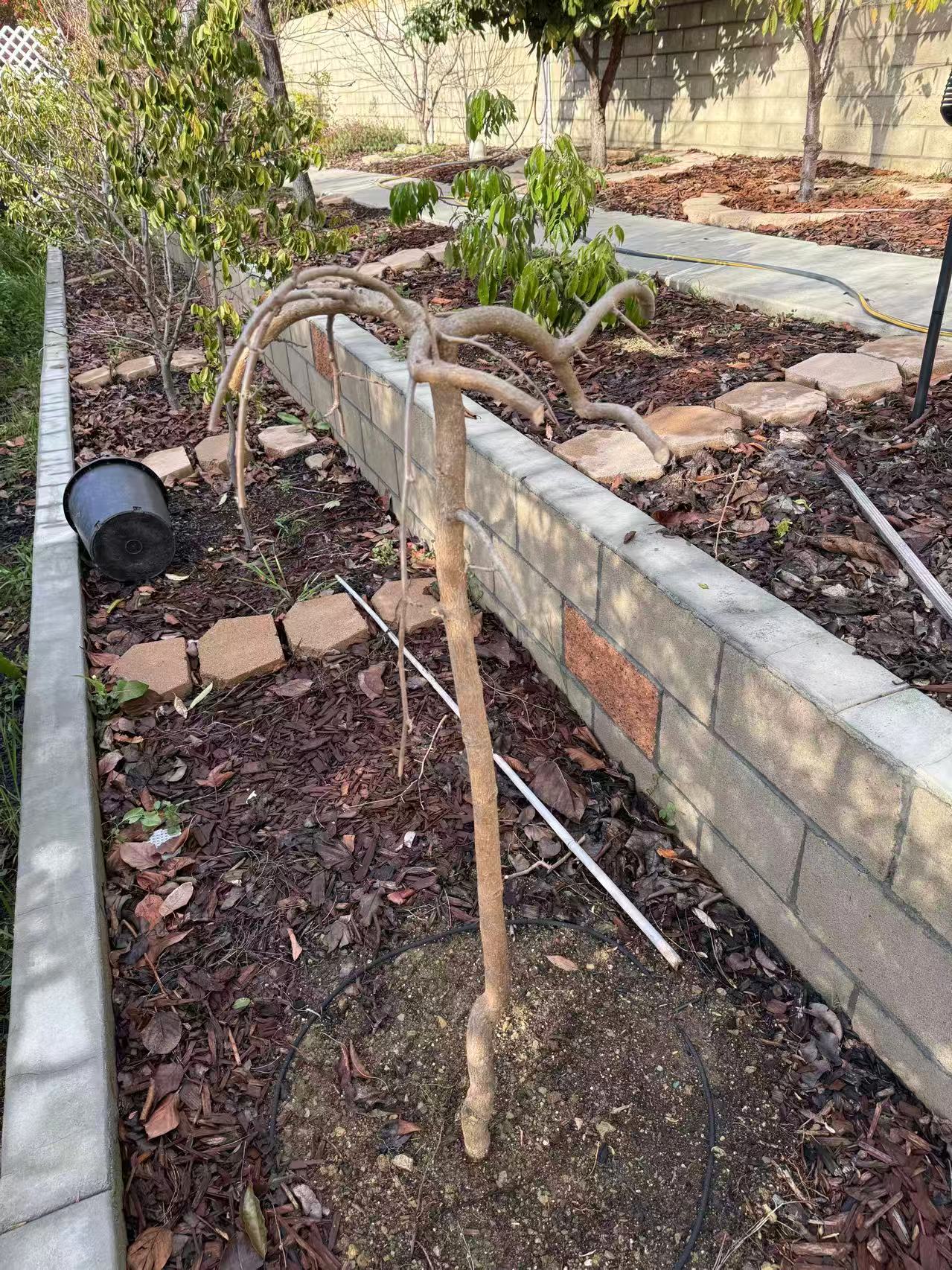
    • Appearance: The photo reveals a beautiful, serpentine trunk with cascading, umbrella-like branches. Even while dormant, its “weeping” architectural form looks like a deliberate bonsai piece.
    • Flavor Contrast: While the Pakistan variety provides straightforward sweetness, the Taiwan mulberry’s sweet-tart balance makes it far superior for snacking if you enjoy complexity, and it’s absolutely perfect for jams.
    • Resilience: Mulberries are renowned for their bulletproof nature. With the proper dormant-season care you’ve provided, it has an incredibly high chance of bouncing back.

    📅 Precise Ripening Months

    Mulberries are among the very first fruits to herald the arrival of spring in Southern California:

    • Bud Break: Expected around early March.
    • Expected Harvest: April to May.
    • Ripeness Cues: The berries ripen quickly. Wait until they turn from red to a deep, dark purple-black and practically fall off into your hand when touched.

    📝 My Gardening Notes

    • Orchard Rearrangement: Relocated in January 2026 while deep in dormancy to better fit the garden’s layout.
    • Proactive Pruning: Acknowledging the inevitable root damage from the move, I heavily pruned the canopy. This classic horticultural technique prevents the damaged roots from being overworked when spring arrives, setting the stage for a strong recovery.

    🛠️ Care & Maintenance (Post-Transplant Recovery)

    • Strict Moisture Control: Without leaves to transpire water, the tree’s water needs are currently near zero. Keep the mulched soil just barely moist to encourage root healing without causing rot.
    • Zero Fertilizer: The injured roots cannot process nutrients right now. Absolutely no fertilizer should be applied until the tree has pushed out a robust canopy of new green leaves later in the spring.
    • Watch for the Wake-Up: Around March, I’ll be closely inspecting the nodes along those weeping branches for tiny green swelling buds—the ultimate sign of a successful transplant.
  • Standard Plum Tree

    🍑 Plant Profile: Standard Plum Tree (Likely Santa Rosa)

    📊 Basic Info

    • Guessed Variety: Santa Rosa Plum or Burgundy Plum
    • Planting Date: Late 2021
    • Source: Home Depot
    • Yield Performance: ★☆☆☆☆ (Currently yielding single digits; suffering from excessive vegetative vigor)
    • Flavor Profile: If Santa Rosa, expect a tart, purplish-red skin with sweet amber/red flesh. If Burgundy, expect a sweet, dark-red skin and flesh.

    📖 Variety Speculation & Diagnosis

    Home Depot overwhelmingly stocks the Santa Rosa plum in Southern California because it is the state’s gold standard for reliability and flavor.

    • The “All Leaves, No Fruit” Syndrome: 1. Age Factor: Plums typically need 3 to 5 years in the ground to transition from growing a structural frame to producing heavy crops. It is just now reaching full maturity. 2. Nitrogen Overload: The massive branch and leaf growth indicates it has taken up plenty of Nitrogen. When a tree has too much Nitrogen, it stays in a “vegetative state” (making leaves) and refuses to enter a “generative state” (making flowers and fruit). 3. Pruning Habits: Plums fruit on specialized short, stubby branches called “spurs.” If the vigorous, long, whip-like branches are aggressively pruned every winter, the tree simply reacts by growing more whips the next spring, at the expense of developing fruiting spurs.

    📅 Precise Ripening Months

    For standard early-to-mid season plums in Rowland Heights:

    • Expected Harvest: June to July.
    • Ripeness Cues: The fruit will slightly soften at the tip, and the skin will develop a dusky, natural “bloom” (a powdery white coating).

    📝 My Gardening Notes

    • The Veteran: Planted in late 2021, this tree is one of the foundational members of the orchard. It has proven its sheer vigor and adaptability to the local soil.
    • The Turning Point: While the single-digit yields have been frustrating, the massive structural growth means the engine is built. 2026 marks its 5th year, the typical breakout year for stone fruit production.
    • The Secret Weapon: The 4-in-1 multi-grafted tree you planted in 2022 features a dominant plum branch. This is a game-changer. These two trees will act as cross-pollinators for each other, which drastically increases the fruit set for both trees!

    🛠️ Care & Maintenance (The 2026 Fruiting Strategy)

    • Zero Nitrogen: Suspend all nitrogen-heavy fertilizers immediately. Switch entirely to Phosphorus and Potassium (like bone meal or a bloom-booster) to shock the tree into flowering.
    • Switch to Summer Pruning: Since winter pruning encourages wild vegetative growth, do the bulk of your pruning in mid-summer (after harvest time). Cut out the vigorous vertical “water sprouts” to let sunlight penetrate the inner canopy, which triggers the formation of fruiting spurs.
    • Branch Bending: Tie down the vigorous, vertically growing branches to a more horizontal angle (45-60 degrees). Bending the branches changes the flow of auxins (plant hormones), naturally slowing down leaf growth and forcing the branch to produce fruit buds for the next year.
  • Cara Cara Navel Orange

    Cara Cara Navel Orange

    🍊 Plant Profile: Cara Cara Navel Orange

    📊 Basic Info

    • Variety: Cara Cara Navel Orange
    • Planting Date: December 2023
    • Source: Four Winds Growers
    • Yield Performance: ★☆☆☆☆ (Currently in a recovery phase after pest damage; focusing on vegetative growth)
    • Flavor Profile: Famous for its seedless, beautiful pinkish-red flesh. It is exceptionally sweet with much lower acidity than standard oranges, often boasting subtle notes of cherry or blackberry.

    📖 Variety Overview

    The Cara Cara is a naturally occurring mutation of the Washington Navel orange and is universally beloved in Southern California.

    • The Premium Orange: Because its pink color comes from lycopene (the same antioxidant found in tomatoes) rather than anthocyanins (like blood oranges), it doesn’t need freezing winter temperatures to develop its stunning internal color.
    • Resilience: The tree is currently showing the classic signs of Citrus Leafminer damage (curled, distorted leaves). While unsightly, young citrus trees are remarkably tough and can bounce back vigorously once their roots are established.

    📅 Precise Ripening Months

    As a classic winter fruit, it brightens up the orchard when most other deciduous trees are bare:

    • Expected Harvest: December to March.
    • Peak Quality Month: January and February (Leaving the fruit on the tree into the new year allows the acids to drop completely, resulting in maximum sweetness).

    📝 My Gardening Notes

    • Premium Start: Sourced from the highly reputable Four Winds Growers in late 2023.
    • The Struggle: The growth has been somewhat sluggish, largely due to a heavy Citrus Leafminer infestation last year. The tree spent more energy surviving than growing. However, with the root system now two years in the ground, 2026 is primed to be its comeback year.

    🛠️ Care & Maintenance (The 2026 Recovery Plan)

    • Leafminer Defense (Crucial): As soon as the first flush of tender, light-green leaves emerges this spring, I will treat the foliage with Neem Oil or Spinosad regularly. Protecting this new flush from the leafminer moth is the #1 priority for growth.
    • Leave the Ugly Leaves: Although the curled, damaged leaves from last year look terrible, I will not remove them yet. They are still photosynthesizing and providing vital energy. I will only prune them away once a healthy, new canopy is established.
    • Spring Feeding: Once the weather consistently warms and buds swell, I will apply a high-quality organic citrus fertilizer with micronutrients (Iron, Zinc, Manganese) to fuel a massive spring growth spurt.