Author: Lucas Lu

  • Malaysian Red Guava

    Malaysian Red Guava

    🌺 Plant Profile: Malaysian Red Guava

    📊 Basic Info

    • Variety: Malaysian Red Guava
    • Planting Date: Early 2025
    • Source: Mimosa Nursery
    • Yield Performance: ★★☆☆☆ (Demonstrated fruiting capability in 2025; pruned for growth, now primed for a breakout year in 2026)
    • Flavor Profile: Features stunning deep pink/red flesh. It is renowned for its intense, floral, and tropical aroma that surpasses many standard white/green varieties.

    📖 Variety Overview

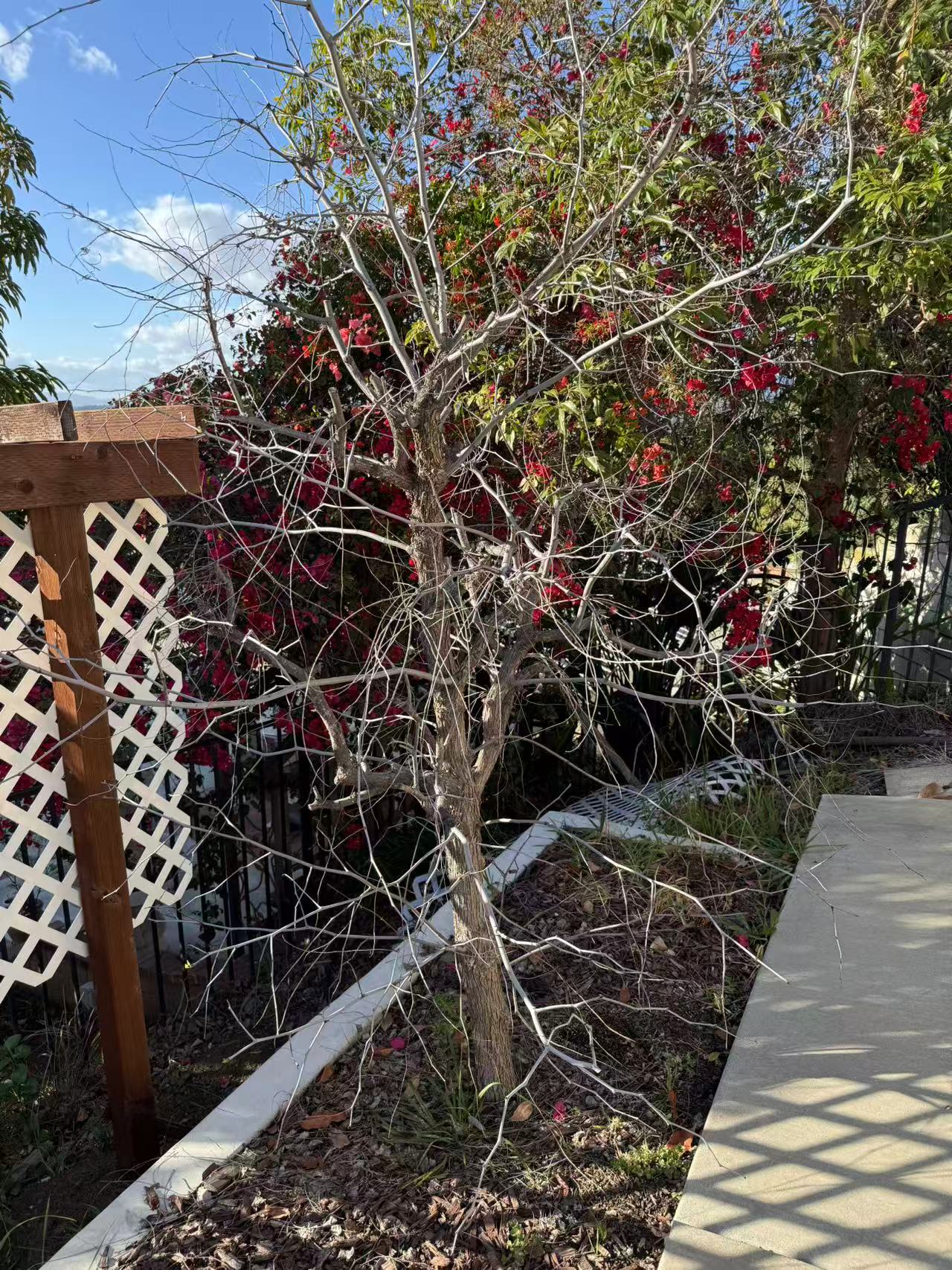
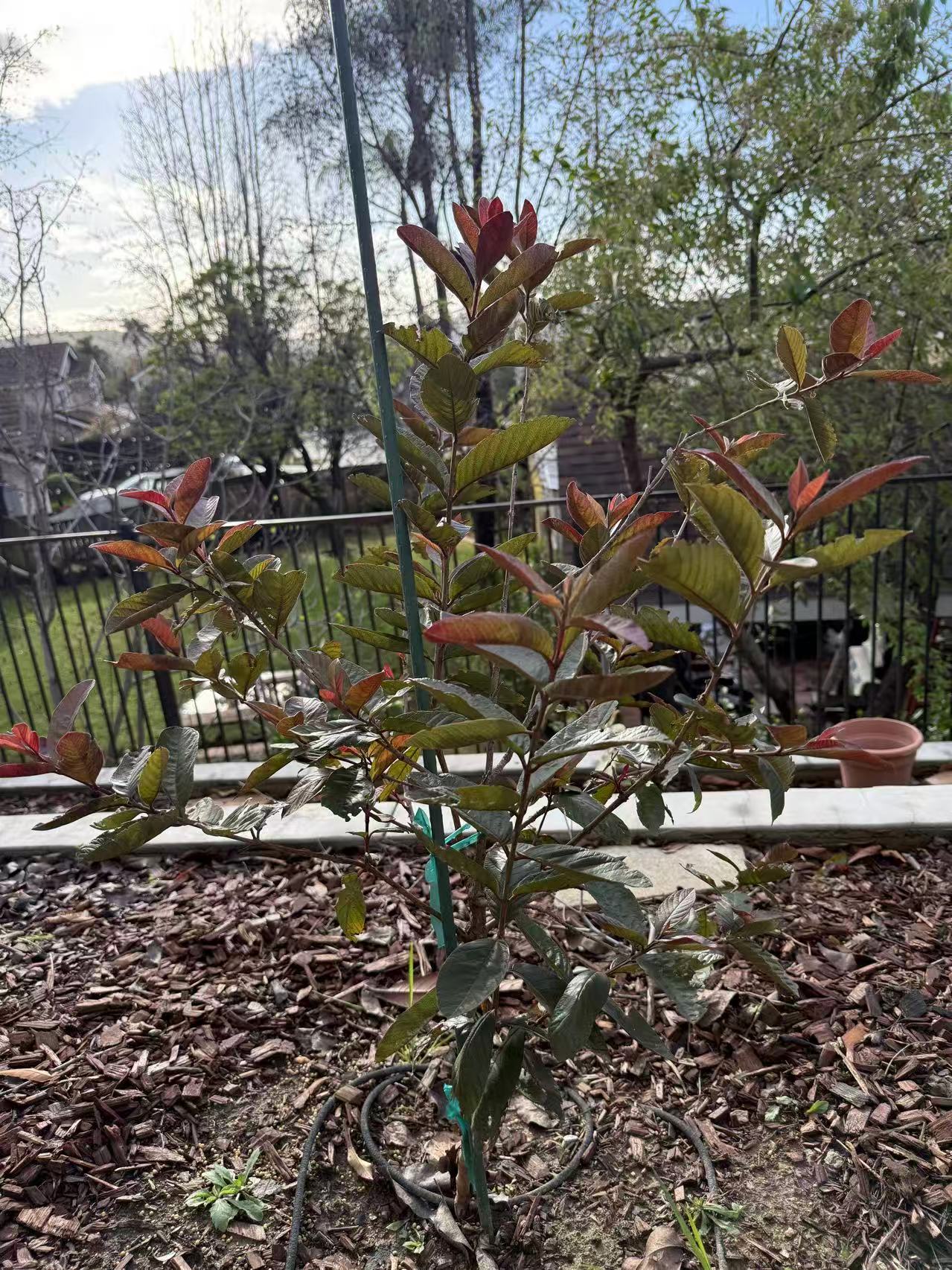
    The striking burgundy and bronze new foliage visible in your photo immediately identifies this as the “Red Malaysian” variety. It doubles as a spectacular ornamental plant and a prolific fruit producer.

    • Appearance: Unlike typical guavas, this variety boasts reddish leaves, produces gorgeous pink flowers (instead of white), and yields fruit with a distinct red/maroon blush on the skin.
    • Growth Habit: It thrives in the Rowland Heights heat. Your decision to strip all the developing fruit in 2025 was a masterclass in orchard management. By doing so, you prevented the young tree from exhausting itself, allowing it to channel all its energy into establishing the robust root system and strong framework we see today.

    📅 Precise Ripening Months

    Guavas enjoy a very long fruiting season in Southern California and can sometimes bloom multiple times a year:

    • Primary Harvest Season: September to December.
    • Secondary Window: Occasionally, a mild winter/warm spring will induce an early crop around May to June.
    • Ripeness Cues: The fruit is ready when the skin transitions to a brighter, slightly yellowish-red, yields to gentle thumb pressure, and emits an unmistakable, room-filling guava fragrance.

    📝 My Gardening Notes

    • The Beautiful Addition: Acquired from Mimosa Nursery in early 2025. Its crimson leaves provide a beautiful pop of color against the standard green backdrop of the orchard.
    • The Year of Rooting: Sacrificing the 2025 fruit crop was tough but necessary. The vibrant flush of red leaves at the top of the canopy proves the tree is incredibly healthy and fully prepared to support a heavy crop in 2026.

    🛠️ Care & Maintenance

    • Bloom Boosting: As the spring flush accelerates (evident by the active red tips), it is time to apply a phosphorus and potassium-rich fertilizer to encourage heavy blooming.
    • Hydration: Guavas are thirsty trees. Consistent deep watering is mandatory during the bloom and fruit-set stages; drought stress will cause it to drop its flowers.
    • Pest Defense: The incredible aroma of ripe guavas is a magnet for fruit flies. I will need to bag the fruit when they reach the size of a ping-pong ball to protect the harvest.
  • 4-in-1 Stone Fruit Tree

    4-in-1 Stone Fruit Tree

    🍑 Plant Profile: 4-in-1 Stone Fruit Tree (Multi-Graft)

    📊 Basic Info

    • Varieties Included: Plum, Nectarine, Apricot, White Peach
    • Planting Date: 2022
    • Source: New Oriental Nursery
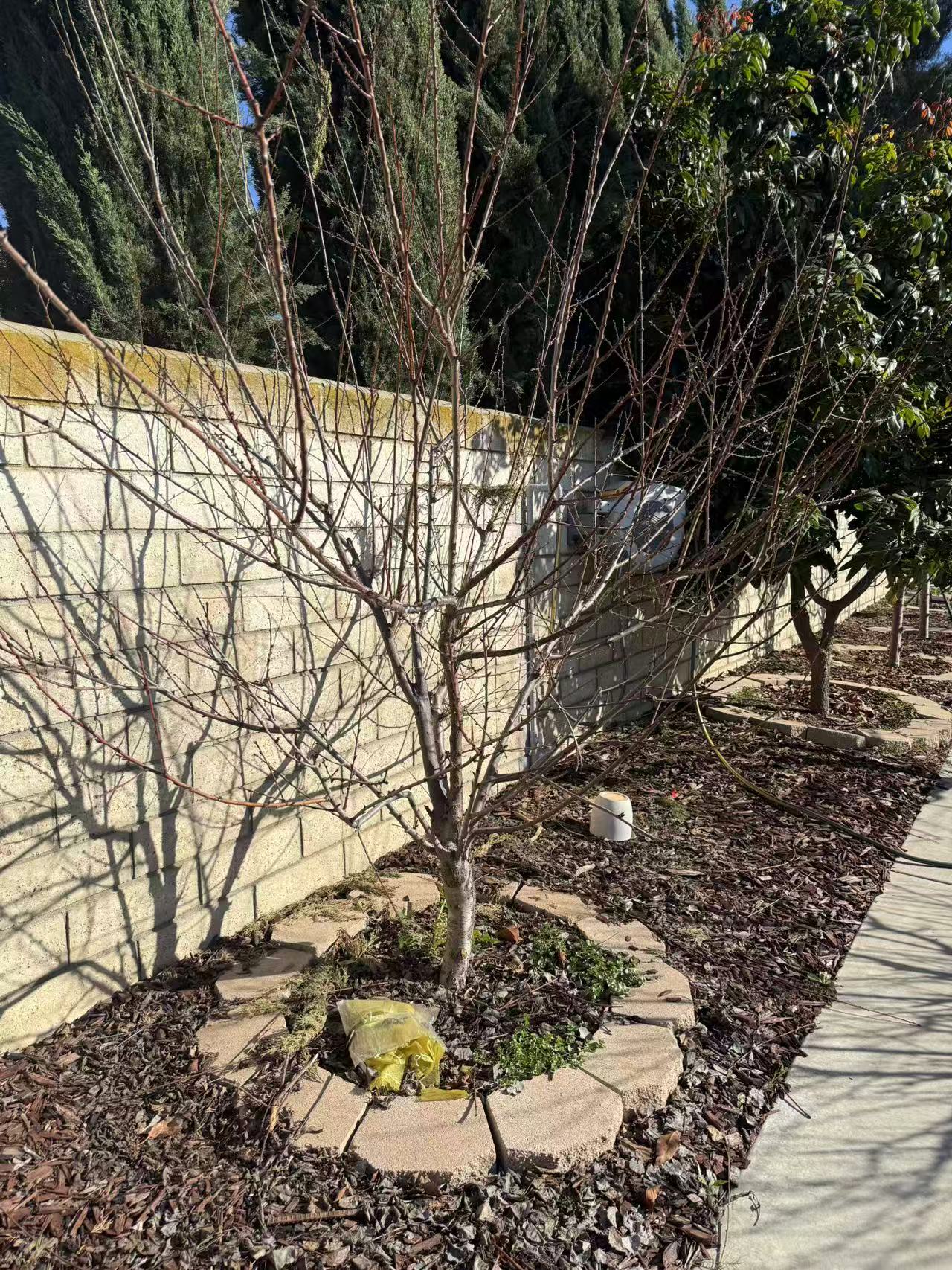
    • Yield Performance: ★★★☆☆ (Plum and Apricot are dominating and fruiting well; Nectarine and Peach are currently struggling to compete)
    • The Magic: The ultimate space-saver. It provides a “fruit salad” on a single trunk and extends the harvest season across the entire summer.

    📖 Variety Overview

    Multi-grafted trees are a marvel of horticulture, but they require a vigilant gardener to maintain the harmony between the different grafts.

    • The Battle for the Canopy: In the plant kingdom, the most vigorous shoots win. Plums and Apricots naturally grow faster and more aggressively than Peaches and Nectarines. Without intervention, they will shade out and eventually kill the weaker grafts.
    • The Balancing Act: Your intuition is spot-on. The key to successfully growing a multi-graft tree is not about feeding it more, but strictly managing the vigor of the dominant branches so the weaker ones can catch up.

    📅 Precise Ripening Months (The Summer Relay)

    In Southern California, these four varieties will ripen in a staggered sequence, providing fresh fruit for months:

    • Leg 1: ApricotLate May to June (The herald of summer).
    • Leg 2: PlumJune to July (Typically the most prolific and juiciest).
    • Leg 3: NectarineJuly to August (Requires intense mid-summer sun for peak sweetness).
    • Leg 4: White PeachLate July to Late August (The sweet, delicate finale to the stone fruit season).

    📝 My Gardening Notes

    • The 2022 Investment: Sourced from New Oriental. It was a strategic choice to maximize fruit diversity in a limited footprint.
    • The Hierarchy Observation: Over the years, the Plum and Apricot branches have clearly established dominance, yielding early fruit and outgrowing the rest. The focus for 2026 is an aggressive pruning strategy to rescue and promote the Nectarine and White Peach.

    🛠️ Care & Maintenance (Crucial: Balance Pruning)

    • Suppress the Strong (Plum/Apricot): Utilize Summer Pruning heavily on these two branches immediately after they fruit. Cut them back aggressively and keep them lower than the peach branches to suppress their vigor.
    • Promote the Weak (Peach/Nectarine): Prune these branches very lightly (or not at all) during winter dormancy to leave as many growth points as possible. Ensure they have the premier spot for sunlight exposure.
    • Directional Care: Spread the dominant branches outward/downward to open up the center, ensuring the sun directly hits the struggling peach and nectarine branches.
  • Seedless Kishu Mandarin

    Seedless Kishu Mandarin

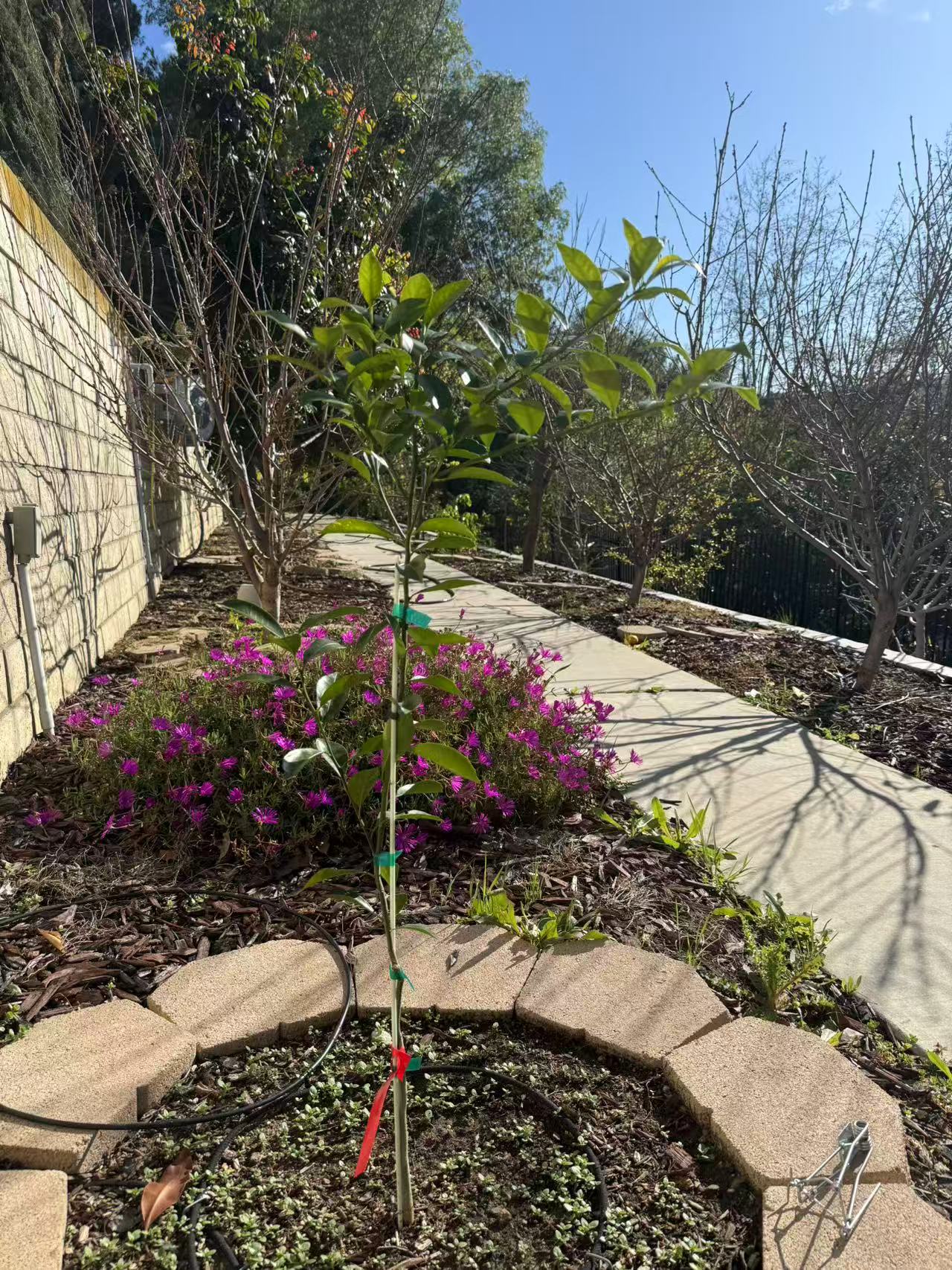
    🍊 Plant Profile: Seedless Kishu Mandarin

    📊 Basic Info

    • Variety: Seedless Kishu Mandarin (Semi-Dwarf)
    • Planting Date: January 2026
    • Source: Four Winds Growers
    • Yield Performance: ★☆☆☆☆ (Currently in the establishment phase; known for prolific fruiting once mature)
    • Flavor Profile: Golf-ball-sized fruits that are 100% seedless and incredibly easy to peel. Explodes with a candy-like sweetness and rich citrus flavor.

    📖 Variety Overview

    The Kishu is often considered the “holy grail” of backyard mandarins. Don’t let the tiny fruit size fool you—it packs the most intense and pleasing mandarin flavor available.

    • The Perfect Fit: Grafted onto a semi-dwarf rootstock, this tree will maintain a manageable, compact size, making it ideal for suburban orchards without sacrificing yield.
    • The Seedless Magic: Unlike some mandarins that develop seeds if cross-pollinated by nearby citrus, the Kishu remains reliably and delightfully seedless.
    • Growth Habit: It thrives under the intense Southern California sun. The compact canopy makes it aesthetically pleasing and easy to protect during unexpected cold snaps.

    📅 Precise Ripening Months

    The Kishu is an early-season variety, which is fantastic because the fruit ripens before the highest risks of deep winter frosts:

    • Expected Harvest: November to January.
    • Peak Harvest Month: December (Perfectly timed for the holiday season. The fruit is ready when the rind turns a deep, vibrant orange).

    📝 My Gardening Notes

    • Premium Sourcing: Acquired from the highly reputable Four Winds Growers in January 2026. Starting with top-tier nursery stock is the best investment for a citrus tree.
    • Settling In: Currently going through its acclimatization period. Planting in January allows the root system to settle and expand into the native soil before the stressful heat of summer arrives.

    🛠️ Care & Maintenance

    • No Fertilizer Yet: During this delicate rooting phase, I am strictly withholding all nitrogen fertilizers to prevent root burn. Feeding will begin only after the first flush of spring growth hardens off.
    • Pest Alert (Leafminers): As soon as the weather warms and the tree pushes out tender new leaves, I will deploy Neem Oil to protect against Citrus Leafminer damage, a common local pest.
    • Watering Discipline: Citrus trees hate “wet feet.” I will allow the top few inches of soil to dry out completely between waterings to encourage deep, resilient root growth and prevent yellowing leaves.
  • Chocolate Persimmon

    Chocolate Persimmon

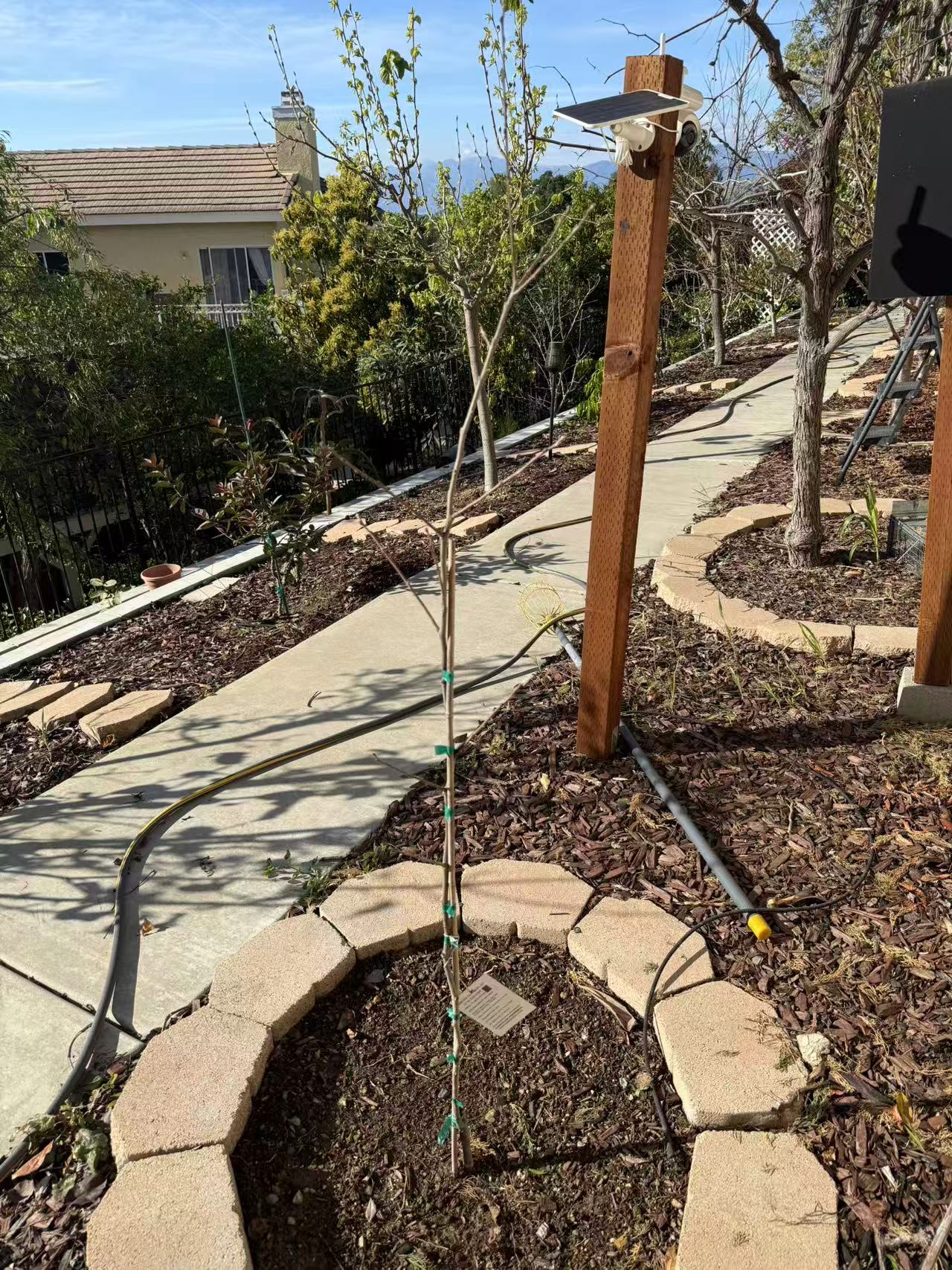
    🍫 Plant Profile: Chocolate Persimmon

    📊 Basic Info

    • Variety: Chocolate Persimmon (Diospyros kaki ‘Chocolate’)
    • Planting Date: January 2026
    • Yield Performance: ★☆☆☆☆ (Currently a dormant seedling establishing its root system)
    • Flavor Profile: Famously soft and incredibly sweet. When pollinated, the flesh turns a rich, dark brown and develops complex notes of brown sugar, nutmeg, and chocolate.

    📖 Variety Overview

    The Chocolate Persimmon is a unique Pollination Variant Non-Astringent (PVNA) variety, offering a stark and delicious contrast to the crisp texture of your Fuyu.

    • The Perfect Companion: This tree produces abundant male flowers, making it an excellent pollinator. Its presence will actually help your existing Fuyu persimmon produce larger and potentially sweeter fruit.
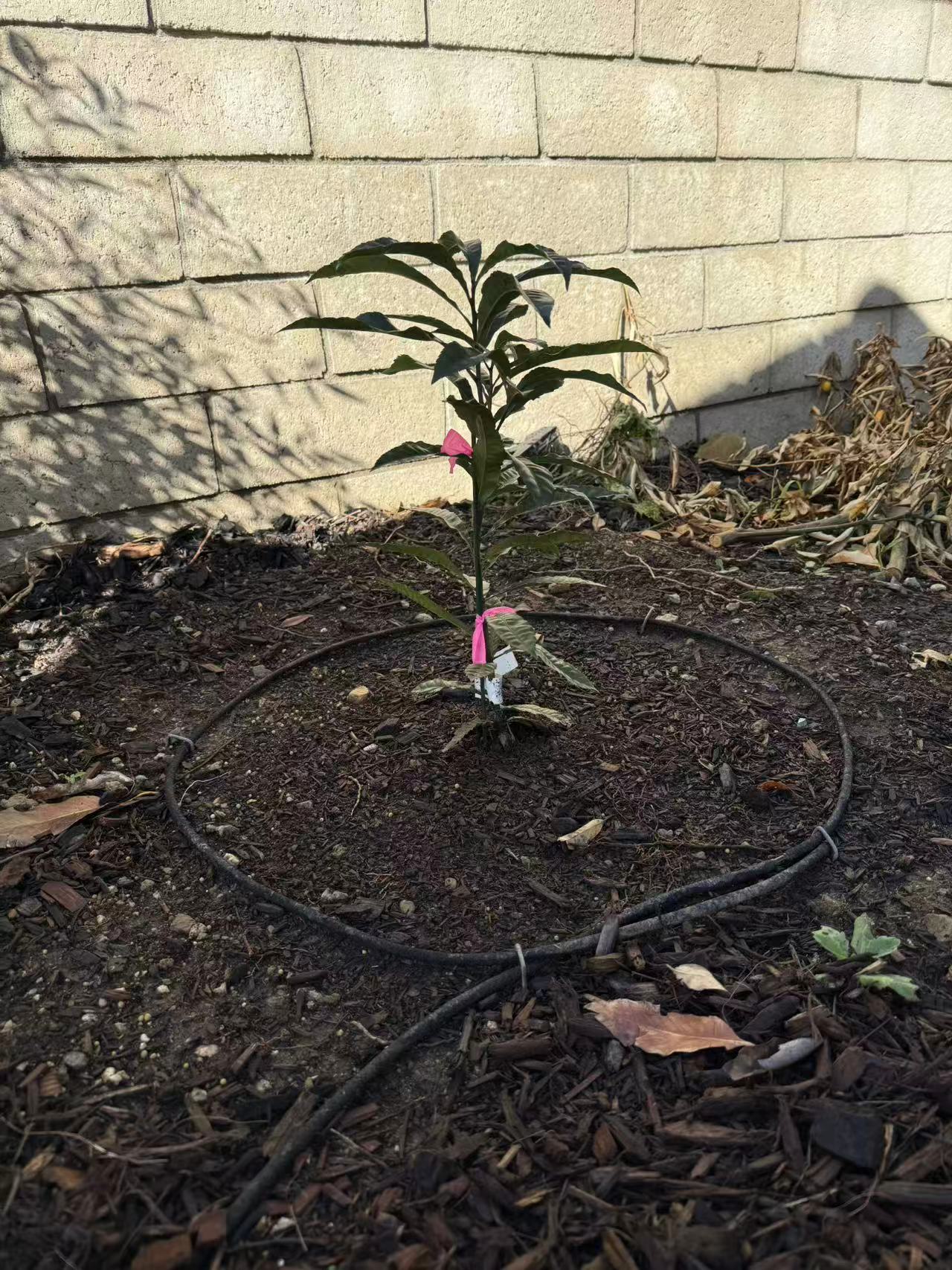
    • Appearance: Currently a bare whip in deep dormancy. Once it wakes up, it will produce broad, glossy leaves that turn spectacular shades of red and orange in the fall.
    • The “Chocolate” Magic: If pollinated, the flesh darkens into its signature chocolatey color. It becomes so sweet and pudding-like that it’s often eaten with a spoon.

    📅 Precise Ripening Months

    Persimmons are the crown jewels of the autumn garden in Southern California:

    • Expected Harvest: Late October to November.
    • Ripeness Cues: Wait until the skin takes on a deep reddish-orange hue and the fruit feels extremely soft (like a water balloon). That is when the “chocolate pudding” texture is at its peak.

    📝 My Gardening Notes

    • The Texture Balance: Planted fresh in January 2026 to complete the persimmon portfolio. Having both the crunchy Fuyu and the soft, rich Chocolate variety covers all the bases for autumn harvests.
    • Winter Slumber: As a new seedling, it is currently fast asleep. The lack of buds right now is a good thing—it means the tree is focusing its energy on root development underground rather than pushing delicate leaves into the cool winter air.

    🛠️ Care & Maintenance

    • Hold the Fertilizer: Do not apply any fertilizer until the tree has fully broken dormancy and pushed out its first set of mature leaves. Fertilizing a sleeping bare-root tree can burn the new roots.
    • Careful Watering: Because it has no leaves to transpire water, its moisture needs are extremely low right now. Keep the soil barely moist to prevent root rot in the heavy local soil.
    • Patience: Persimmons are notoriously late to wake up. Expect to see the first buds swelling around late March or April as the weather consistently warms up.
  • Manila Mango

    Manila Mango

    🥭 Plant Profile: Manila Mango

    📊 Basic Info

    • Variety: Manila Mango
    • Planting Date: 2023
    • Yield Performance: ★★☆☆☆ (First harvest of 2 fruits in 2025; entering its productive years)
    • Flavor Profile: Famous for its paper-thin seed, incredibly sweet and creamy flesh, and absolute lack of stringy fibers.

    📖 Variety Overview

    The Manila is arguably the most reliable and highly recommended mango variety for Southern California backyard orchards due to its robust nature.

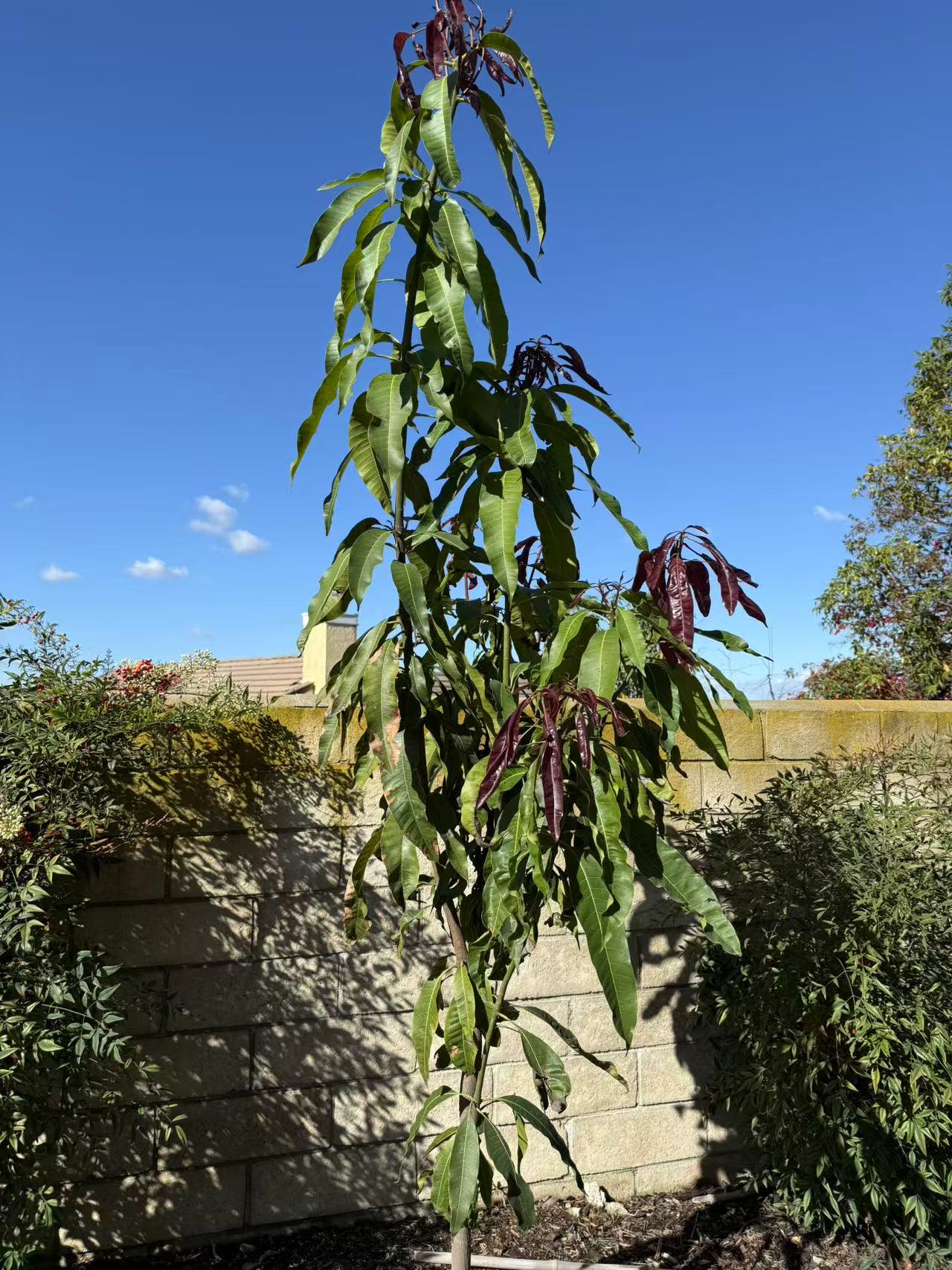
    • Appearance: Characterized by long, narrow leaves. The new growth flushes (visible at the top of the photo) emerge as a striking reddish-bronze before hardening off into a deep green.
    • Growth Habit: It exhibits excellent cold tolerance compared to other tropical mangoes. Its placement near the block wall is highly strategic, as the wall radiates retained daytime heat during cooler nights.

    📅 Precise Ripening Months

    Mangoes in our region enjoy a long, hot summer to develop their sugars:

    • Expected Harvest: August to September.
    • Ripeness Cues: The fruit is ready when the skin transitions to a vibrant, golden yellow, develops a slight waxy sheen, yields to gentle pressure, and emits a strong tropical aroma.

    🩺 Health Check: Powdery Mildew

    The white powder and curling on the leaves you observed is a textbook case of Powdery Mildew.

    • The Cause: The local spring weather pattern—warm days paired with cool, damp nights—creates the perfect breeding ground for this fungus. It aggressively targets the tender new red flushes and developing flower panicles.
    • The Impact: Left untreated, it will blanket the flowers, causing them to drop before fruit can set, directly impacting this year’s harvest.

    🛠️ Care & Maintenance

    • Fungal Treatment (Urgent): Apply a fungicide such as Neem Oil, liquid sulfur, or a bio-fungicide like Bacillus subtilis every 7–10 days during the spring flush and bloom. Pro-tip: Only spray in the early morning or late evening to prevent leaf scorch.
    • Canopy Airflow: Prune away heavily infected leaves and any crossing interior branches. Good air circulation is the natural enemy of powdery mildew.
    • Nutrient Shift: Back off on high-nitrogen fertilizers right now (which just push out more vulnerable soft leaves) and focus on phosphorus and potassium to strengthen the tree and support fruit set.
  • Asian Pear

    Asian Pear

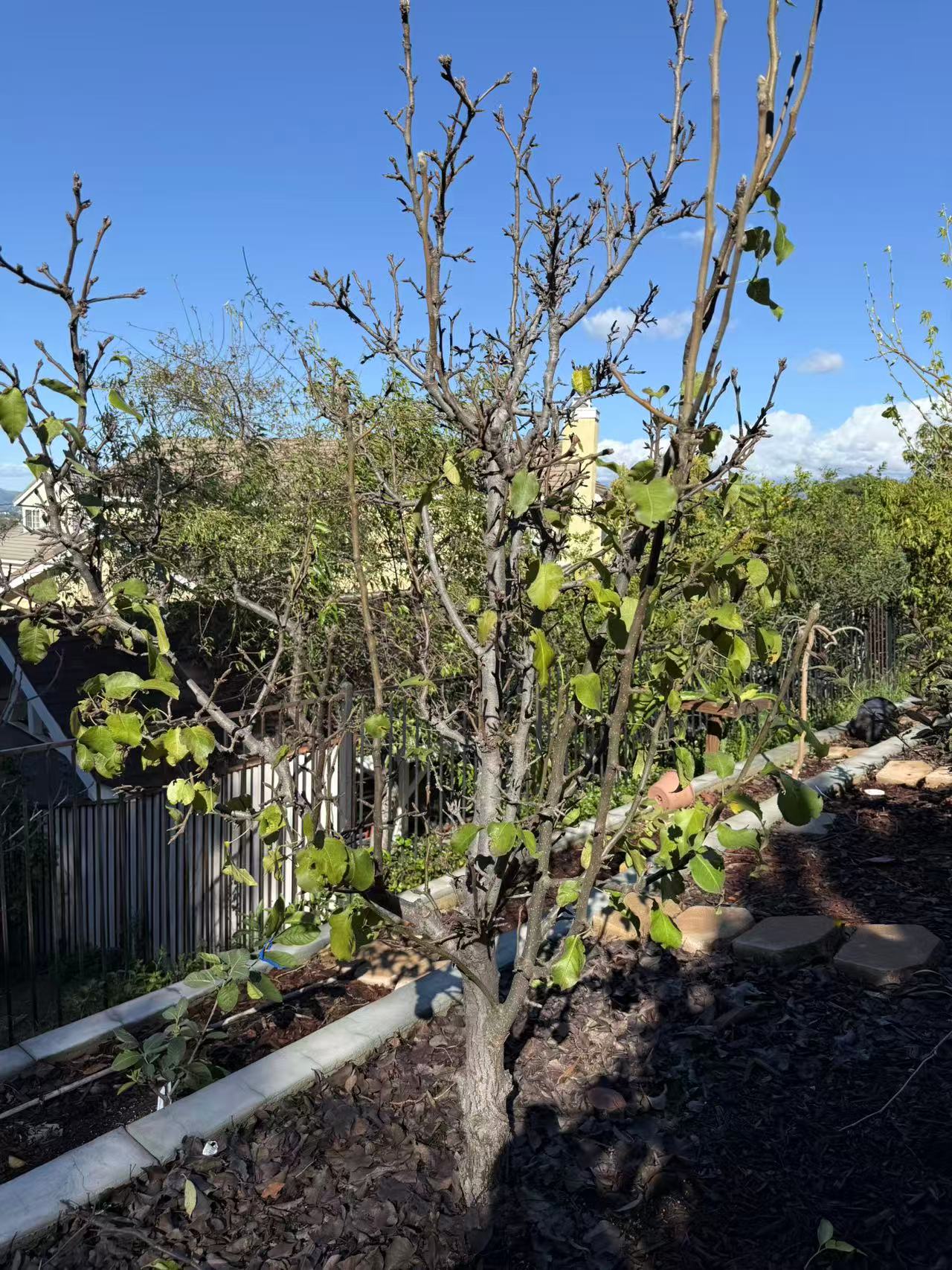
    🍐 Plant Profile: Asian Pear

    📊 Basic Info

    • Variety: Asian Pear (Pyrus pyrifolia)
    • Planting Date: Pre-2022 (Original tree; relocated in 2022 due to retaining wall construction)
    • Yield Performance: ★☆☆☆☆ (Recovering from root damage; no fruit since relocation, but highly promising for this year)
    • Flavor Profile: Distinctively crisp and incredibly juicy; offers a refreshing, sweet, apple-like crunch.

    📖 Variety Overview

    Asian pears are prized for their firm, grainy texture and high water content, making them a staple in local Southern California orchards.

    • The Relocation Challenge: This tree underwent significant stress in 2022 when its roots were damaged during a landscape overhaul. It has spent the last two years in a “recovery and rebuilding” phase.
    • Signs of Vigor: The tree’s condition has improved year over year. The current structure looks robust, with buds ready to push, indicating that the root system has successfully re-established itself.
    • Local Adaptation: They thrive in the Rowland Heights sun and generally receive enough “chill hours” during the winter to trigger a healthy bloom.

    📅 Precise Ripening Months

    While specific ripening varies by cultivar (e.g., Hosui, Shinseiki), the general timeline for our region is:

    • Expected Harvest: August to September.
    • Peak Quality Month: Late August (The ideal balance of sugar and firm texture).

    📝 My Gardening Notes

    • A Resilient Veteran: As one of the original trees in the yard, its steady recovery from major transplant shock is a testament to its hardiness.
    • 2026 Comeback: After three years of patience, 2026 looks to be the year this survivor returns to full production.

    🛠️ Care & Maintenance

    • Fruit Thinning: If it blooms heavily this spring, I will thin the fruit to ensure the tree doesn’t overextend itself while still finalizing its recovery.
    • Hydration: Consistent watering is critical during the heat of July and August to support fruit development and prevent drought stress.
    • Pruning Reflection: Now is the time to remove any minor rubbing branches to maintain an open canopy for better air circulation and sunlight.
  • Winter Jujube

    Winter Jujube

    🌳 Plant Profile: Winter Jujube (Dongzao)

    📊 Basic Info

    • Variety: Winter Jujube (Dongzao)
    • Planting Date: Late 2022
    • Source: Purchased from Omori Nursery (Big Forest Nursery) for $1,500 as a mature tree
    • Yield Performance: ★★★★★ (Being a mature tree upon planting, it has deep roots and offers high, stable yields)
    • Flavor Profile: Extremely sweet and crispy with zero acidity; the flesh is fine-textured and premium in quality

    📖 Variety Overview

    The Dongzao, or “Winter Jujube,” is hailed as the king of jujubes in Northern China.

    • Appearance: The fruit is typically smaller than the “Shanxi Li” variety, featuring a round or slightly oblong shape
    • Flavor Excellence: It is famous for its “crisp-sweet” profile. Unlike the larger Li jujube, which can be airy, the Winter Jujube has a dense, snapping crunch and intense sugar concentration
    • Acclimatization: In the sunny climate of Rowland Heights, this variety thrives, accumulating sugars rapidly due to the significant temperature swings between day and night

    📅 Precise Ripening Months

    While its name implies “Winter,” the abundant Southern California sun accelerates its growth cycle:

    • Primary Harvest Season: Late July to August
    • Maturity Gap: In your garden, it ripens about one month earlier than the Shanxi Li variety
    • Peak Quality: The fruit is best picked when the skin turns from creamy green to a brownish-red blush

    📝 My Gardening Notes

    • The Major Investment: This tree was a significant addition to the orchard in late 2022. Because it was planted as a mature tree, it avoided a long establishment phase and began producing high-quality fruit almost immediately
    • Variety Comparison: Though the fruits are a size smaller than the Li jujube, the superior sweetness and lack of any sour aftertaste make this the family favorite

    🛠️ Care & Maintenance

    • Winter Pruning: As seen in its current dormant state, jujubes require structural pruning to remove “water sprouts” and thinning of inner branches to ensure sunlight reaches the center of the canopy
    • Water Consistency: To prevent the thin, crispy skin from cracking, it is vital to maintain steady irrigation in July as the fruit sizes up
    • Sucker Management: Keep an eye out for root suckers (small shoots emerging from the base) and remove them promptly so they don’t drain energy from the main tree
  • American-Grown Yangmei

    American-Grown Yangmei

    🍒 Plant Profile: American-Grown Yangmei (Waxberry)

    📊 Basic Info

    • Variety: Yangmei / Red Bayberry
    • Scientific Name: Myrica rubra
    • Planting Date: February 2026
    • Source: Woodlanders.com
    • Yield Performance: ★☆☆☆☆ (Juvenile stage; expected to fruit in 3–5 years)
    • Flavor Profile: A refreshing balance of sweet and tart with a unique forest aroma; flesh is rich in anthocyanins.

    📖 Variety Overview

    This specimen is sourced from a domestic U.S. nursery (Woodlanders), which typically offers better acclimatization compared to imported seedlings.

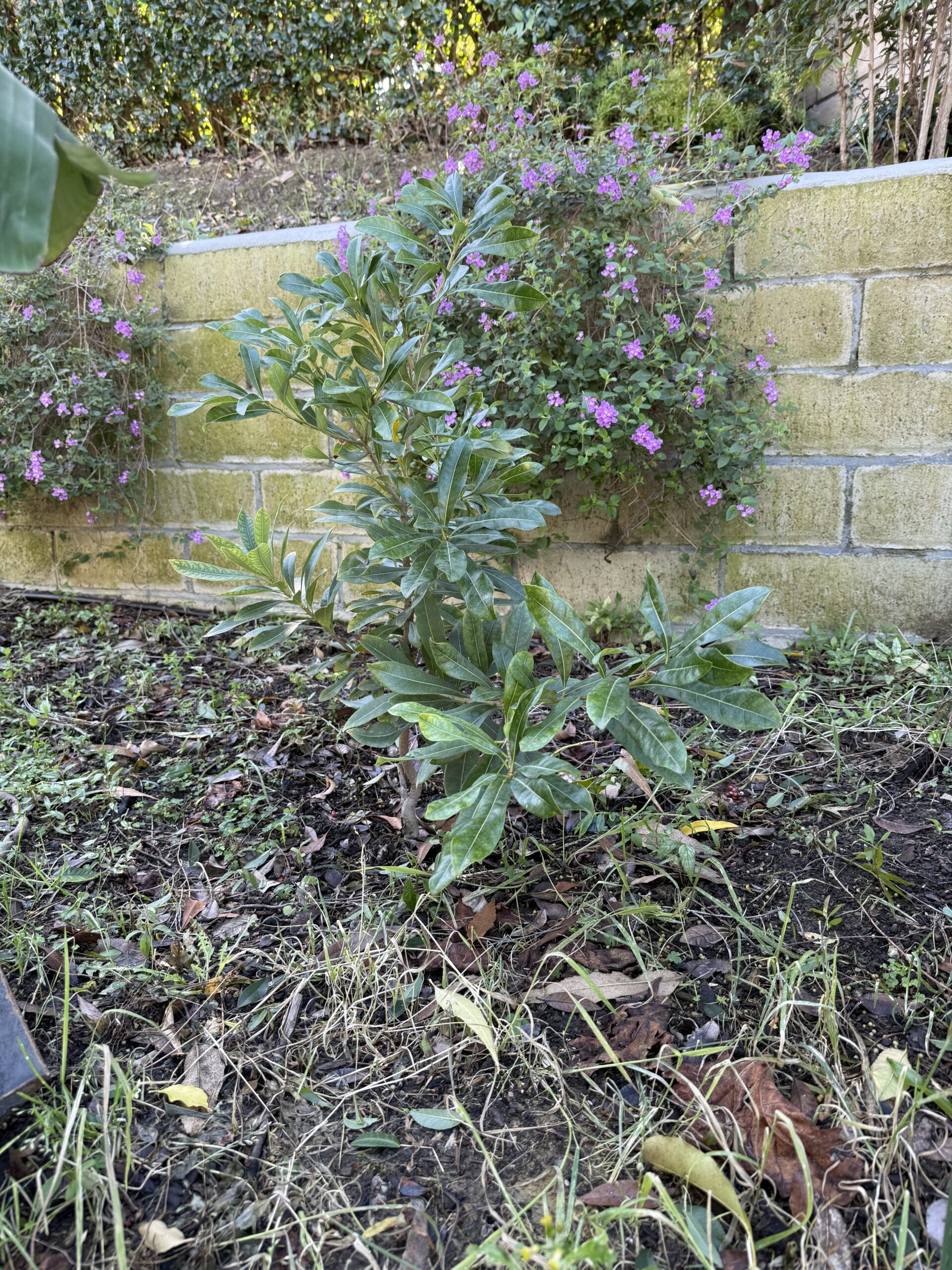
    • Appearance: A very young seedling with smaller, more compact leaves than the Dongkui variety. The terminal buds show active growth potential.
    • Growth Habit: Prefers acidic soil. Being nursery-grown in the U.S., it is theoretically more resilient to local water salinity and the dry air of Southern California.

    📅 Precise Ripening Months

    In the Rowland Heights climate, the fruit development cycle is relatively short:

    • Expected Harvest: May to June.
    • Harvest Window: Typically a very short 2–3 week window. Quality is peak when the fruit transitions from bright red to deep purple-black.

    📝 My Gardening Notes

    • New Addition: Planted in February 2026. Learning from the previous challenges with the Dongkui variety, I opted for this domestically-grown Myrica rubra to ensure a smoother transition to the local environment.
    • The “Dual-Track” Strategy: By having both the authentic Chinese Dongkui and this domestic variety, I am doubling my chances of successfully harvesting Yangmei in my backyard.

    🛠️ Care & Maintenance

    • Establishment Phase: As a fresh planting, I have applied a thick layer of mulch to keep the roots cool and will monitor sun exposure to prevent leaf scorch.
    • Micronutrient Focus: I am maintaining a strict low-pH soil environment and avoiding heavy synthetic nitrogen to protect the beneficial nitrogen-fixing root nodules.
  • Dongkui Yangmei

    Dongkui Yangmei

    🍒 Plant Profile: Dongkui Yangmei (Waxberry)

    📊 Basic Info

    • Variety: Dongkui Yangmei (The “Giant” Waxberry)
    • Planting Date: Early 2023
    • Origin: Imported from China (The sole survivor of 4 seedlings)
    • Yield Performance: ★☆☆☆☆ (Currently in a long-term acclimatization phase)
    • Flavor Profile: Known for its massive size (comparable to a ping-pong ball), deep purple-black skin, and a perfect balance of sweet and tart juices.

    📖 Variety Overview

    Native to Zhejiang, China, the Dongkui variety is the crown jewel of waxberries.

    • Appearance: Features leathery, oblanceolate leaves with serrated margins.
    • Growth Habit: It strictly requires acidic soil (pH 4.5–5.5). The alkaline soil and dry air of Rowland Heights represent a significant environmental hurdle.

    📅 Precise Ripening Months

    While it ripens in June in China, the harvest window in Southern California is expected to be:

    • Expected Harvest: June to July.
    • Note: The fruit is extremely delicate and has a very short shelf life. Protection from birds and heatwaves is essential during these months.

    🛠️ Care & Maintenance

    • Acidification: This is non-negotiable. Use ferrous sulfate or fertilizers formulated for acid-loving plants (like Azaleas) to keep the soil pH low.
    • Water Quality: It is sensitive to the salts in tap water. Using filtered water or collected rainwater can help prevent leaf burn and nutrient lockout.
    • Humidity Control: During the dry Santa Ana winds, consider providing extra misting or temporary shade to mimic its humid native habitat.
  • Siam Red Pomelo

    Siam Red Pomelo

    🍊 Plant Profile: Siam Red Pomelo

    📊 Basic Info

    • Variety: Siam Red Pomelo (Tubtim Siam)
    • Planting Date: Spring 2023
    • Yield Performance: ★★☆☆☆ (First blooms appeared in 2025; steady production expected by 2026/2027)
    • Fruit Traits: Green skin with vibrant ruby-red flesh. Known for its intense sweetness, high juice content, and lack of bitterness.

    📖 Variety Overview

    A premium pomelo variety from Thailand, prized for its unique contrast between the emerald rind and deep red interior.

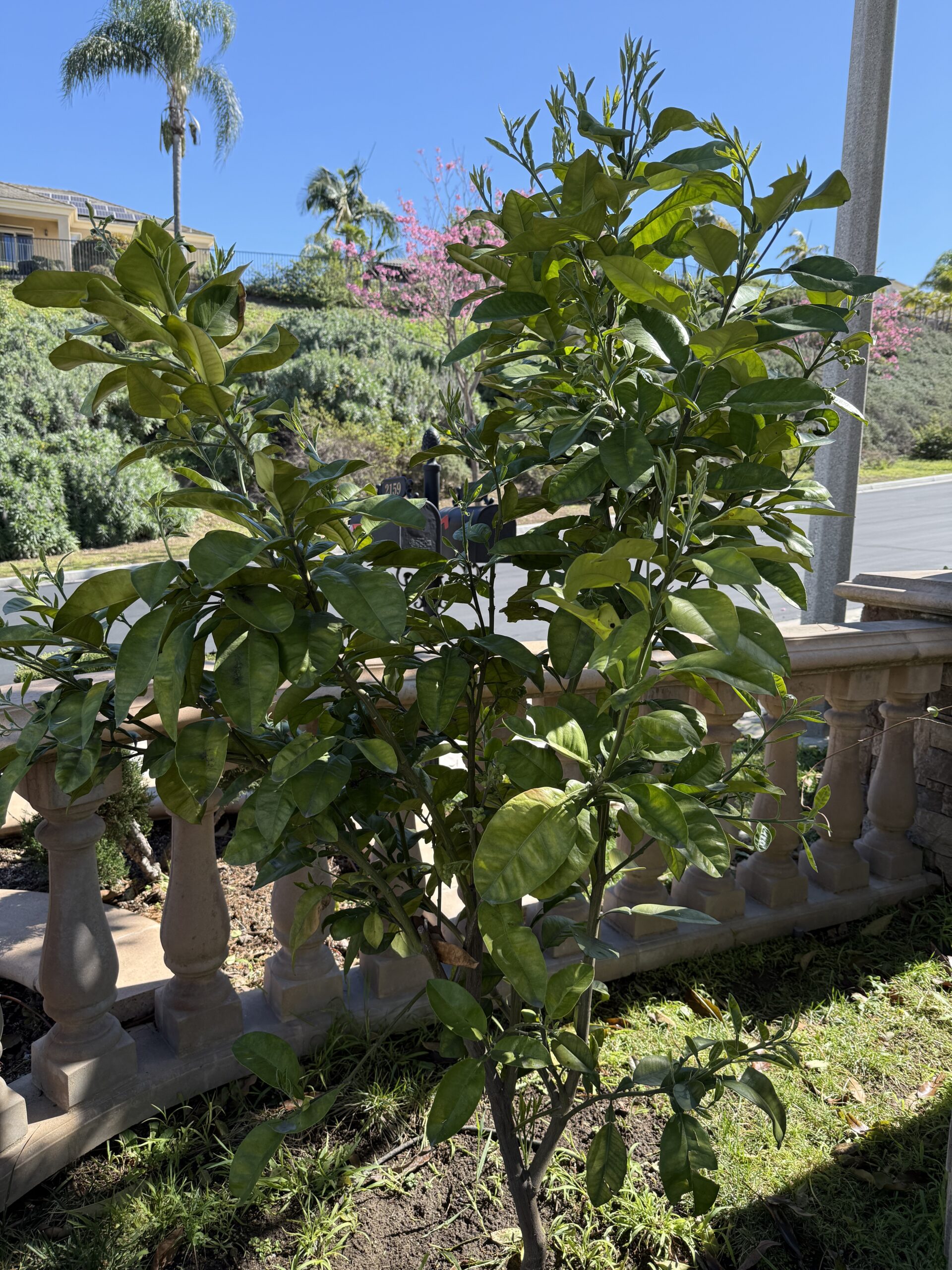
    • Appearance: Features large, lush leaves with prominent winged petioles. The tree is sturdy and well-adapted to the local sun.
    • Growth Habit: Loves full sun exposure in Rowland Heights. It is heat-tolerant but requires consistent moisture during the fruit-set phase.

    📅 Precise Ripening Months

    Pomelos have a long maturation cycle in Southern California, typically taking 8–10 months from flower to harvest:

    • Primary Harvest Window: November to February.
    • Peak Quality Month: December and January (This is when the flavor profile is most balanced and the sugars are at their peak).

    🛠️ Care & Management

    • Aphid Control (March–May): Use Neem Oil or horticultural soap on new spring flushes. Controlling ants in the garden is crucial, as they protect aphids from natural predators.
    • Nutrient Strategy: Apply phosphorus and potassium-rich fertilizers in late February to support blooming and fruit retention.
    • Irrigation: Maintain steady soil moisture during the summer to prevent fruit drop or rind splitting.