

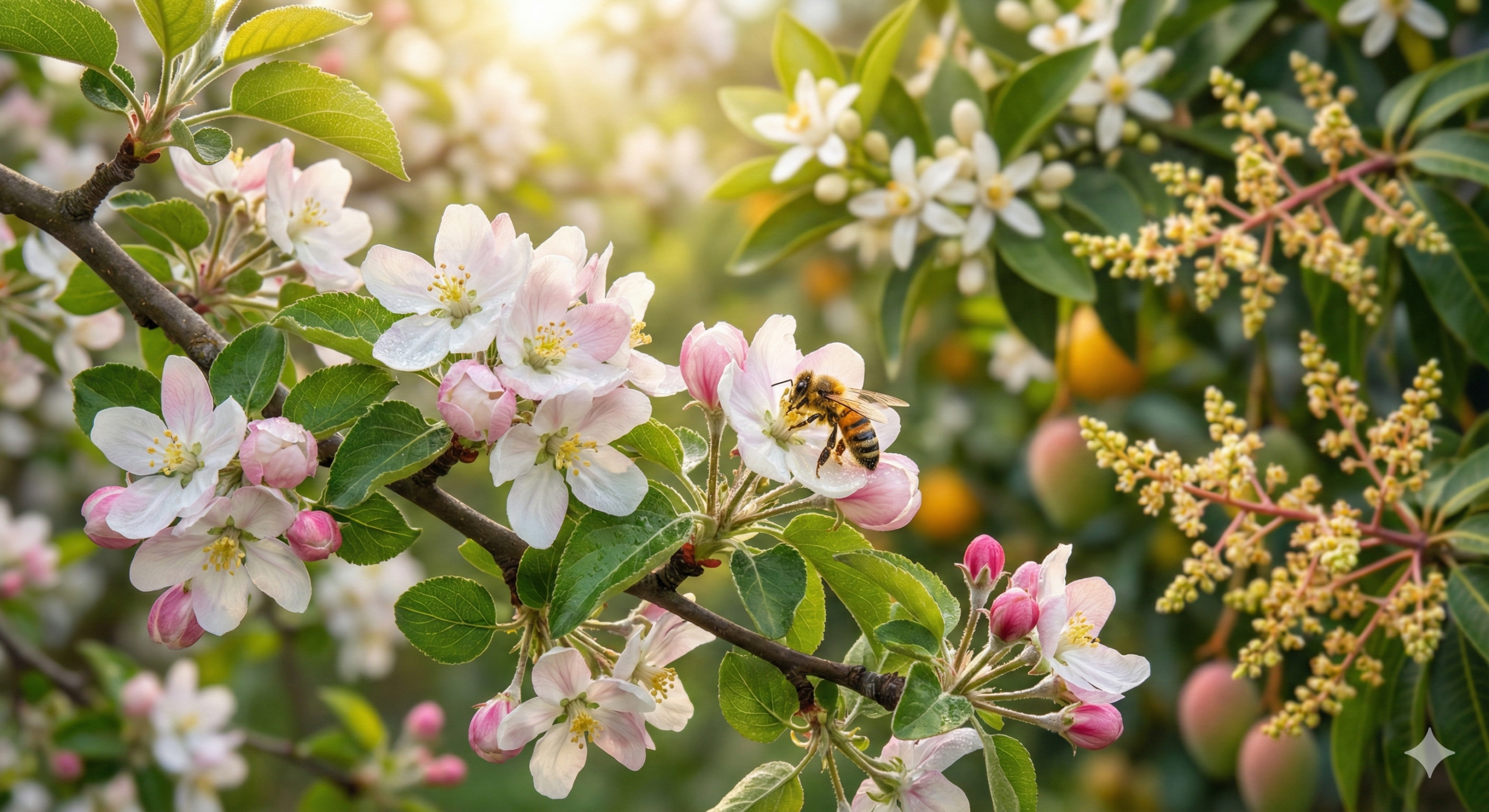
The arrival of March marks the beginning of the busiest and most hopeful season in the orchard. As temperatures rise, dormant branches burst into life, and the fruit trees enter their spectacular blooming phase.
However, for any orchard grower, “blooming” does not automatically mean “fruiting.” Spring temperature fluctuations, pollination efficiency, and how we manage water and nutrients directly impact the final fruit set. To ensure a bountiful harvest in the summer and fall, here are the crucial steps for securing your fruit crop this March:
1. Know Your Pollination Types The trees in the orchard generally fall into two categories, and they require completely different approaches:
- Self-fruitful: Trees like white peaches, citrus (navel oranges, grapefruits), and figs can pollinate themselves. A single tree can produce a full crop. For these, keeping the tree healthy is usually enough.
- Cross-pollination: This requires close attention! For example, the Minnie Royal and Royal Lee cherries. They strictly need to exchange pollen with each other to set fruit. If one blooms early and the other is a bit behind, we need to pay special attention to the window when their blooms overlap.
2. Become the Bee: Hand Pollination In early spring (especially late February into early March), Southern California can occasionally experience cold snaps or overcast days, making natural pollinators (like bees) less active.
- How to do it: Get a clean, soft, small brush (like a makeup brush or paintbrush). On a clear morning, gently brush the center of the flowers on one variety to collect the yellow pollen, and then brush it onto the flowers of the partner tree. This simple action can dramatically increase the fruit set of cross-pollinating trees like cherries.
3. The Art of Restraint: Water & Fertilizer Management Blooming consumes a massive amount of energy, but managing the tree during this time requires caution:
- Consistent Moisture: Check your drip irrigation system. Trees hate extreme dryness or wetness during the bloom. Bone-dry soil will cause flowers to shrivel and drop; flooding the roots causes oxygen deprivation, leading to massive blossom drop. Keeping the soil under the mulch “consistently slightly moist” is the sweet spot.
- Hold the Heavy Fertilizer: This is a common mistake. Do not apply heavy nitrogen fertilizers while the tree is in full bloom! Excessive nitrogen will trigger the tree to push rapid leafy growth (vegetative growth), causing it to naturally abort its flowers (reproductive growth). The correct method: feed well before blooming, hold off during the bloom, and start fertilizing again only after the flower petals fall and tiny green fruits have set.
4. Pest Control & Protecting the Bees Tender spring flushes are a favorite target for aphids and leafminers.
- Precision Control: If you spot pests, you must address them promptly. However, avoid spraying pesticides during peak bloom, even organic options like Neem Oil.
- Safe Timing: If you absolutely must spray, do it in the late evening when bees have returned to their hives. Aim strictly for the infested new leaves and avoid spraying the flowers to protect our hard-working pollinators.
Blooming is just the prelude to the harvest. With a little extra patience this month, and by balancing pollination, water, and nutrients, the heavily laden branches a few months from now will be nature’s greatest reward.