Tag: tm-03

  • Red Lady Papaya

    Red Lady Papaya

    🧡 Plant Profile: Red Lady Papaya

    📊 Basic Info

    • Variety: Red Lady (Hybrid 786)
    • Planting Date: Summer 2025 (The 5th member of the 6-tree grove)
    • Yield Performance: ★★★★★ (The king of productivity; exceptionally early-maturing)
    • Fruit Traits: Stunning deep orange-red flesh; large, heavy fruits with a high sugar content (Brix 13%+).

    📖 Variety Overview

    The Red Lady is the “all-rounder” of the papaya world, world-renowned for its robust disease resistance and gourmet quality.

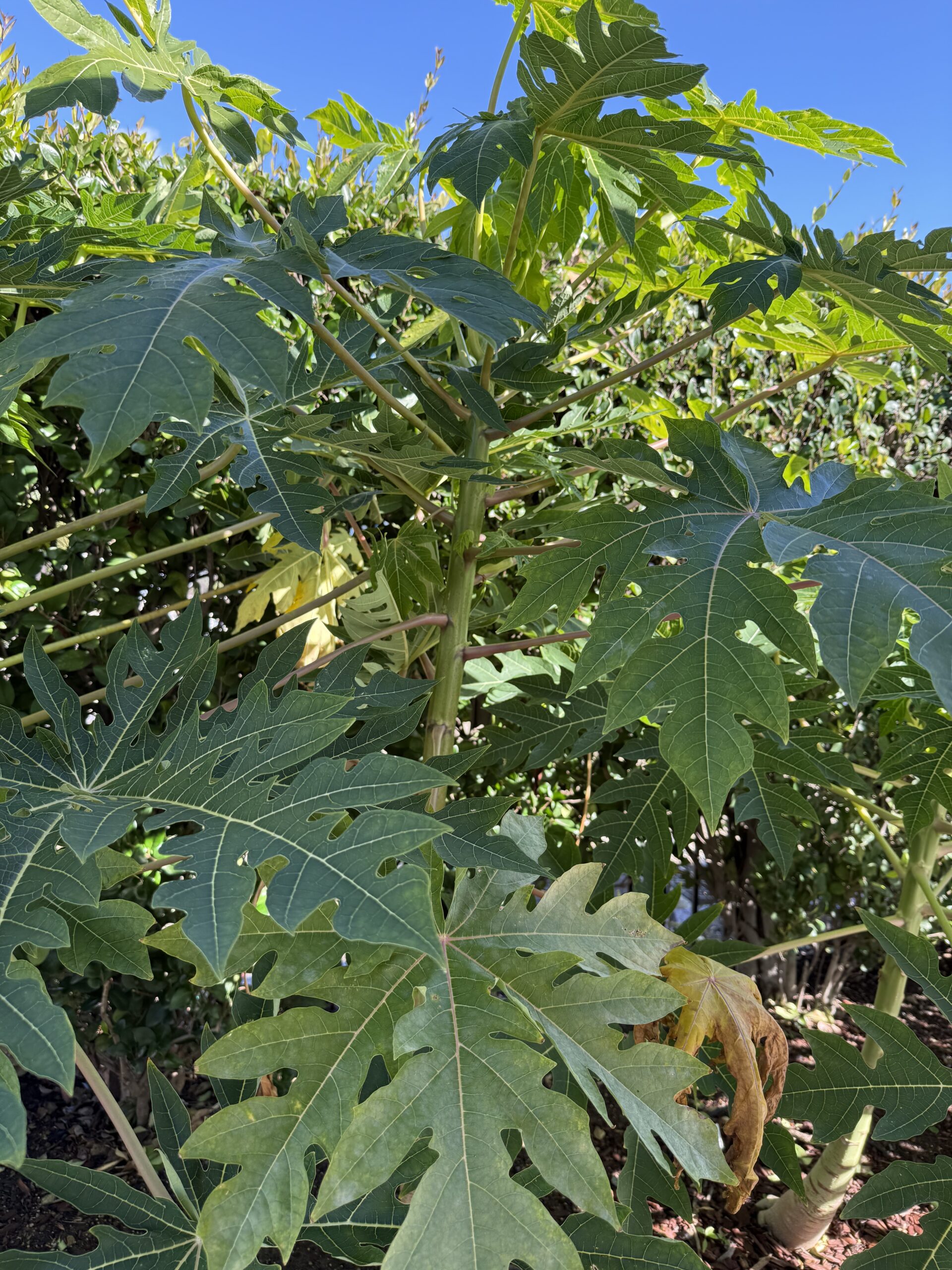
    • Appearance: It boasts a thicker, sturdier trunk compared to standard varieties, providing a solid foundation for its heavy crop. Its leaves are broad and dark green, maintaining excellent vigor even as it entered the fruiting stage in late 2025.
    • Flavor Profile: A classic red-fleshed variety. The meat is firm yet buttery, offering intense sweetness with a sophisticated tropical aroma. Its slightly tougher skin makes it more durable for post-harvest handling.
    • Growth Habit: This is one of the best choices for Southern California gardens due to its high tolerance to Papaya Ring Spot Virus. It thrives in the Rowland Heights heat and is highly adaptable to various soil conditions.

    📝 My Gardening Notes

    • Garden Staple: Acquired from the Cal Poly Pomona Farm Store in Summer 2025, it serves as the backbone of my tropical collection.
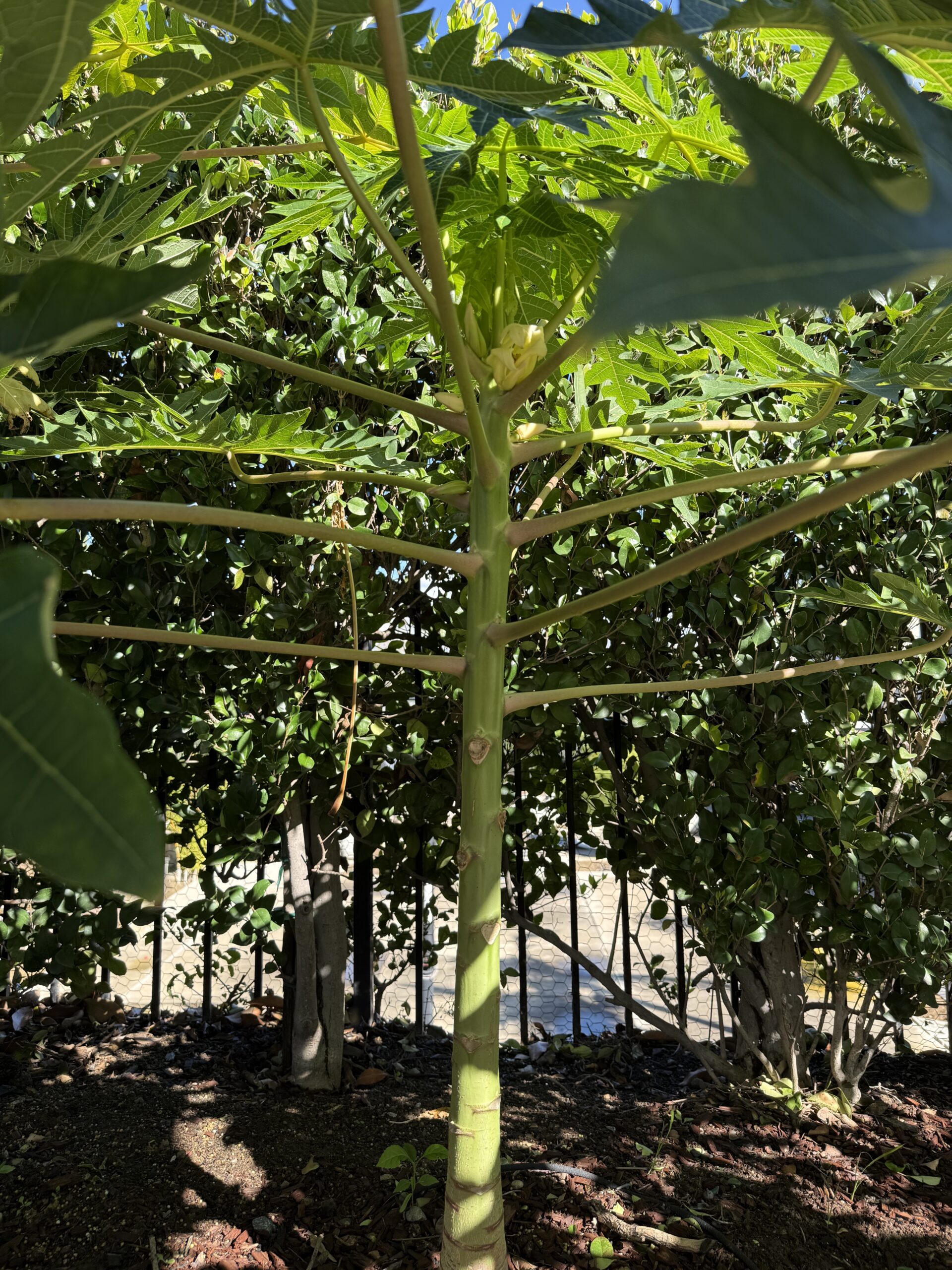
    • Early Success: This Red Lady has shown remarkable precocity, setting fruit comfortably by the end of 2025. The dense clusters of flower buds suggest a very prolific harvest ahead.

    🛠️ Care & Maintenance

    • Space Management: Due to its large fruit size and lush canopy, I ensure it has plenty of room for airflow to prevent humidity-related issues.
    • Stable Hydration: High yield requires consistent water. I use my smart irrigation system to prevent moisture stress, which is crucial for maintaining fruit quality during the rapid expansion phase.
  • Babaco Papaya

    Babaco Papaya

    🧡 Plant Profile: Babaco Papaya (Champagne Papaya)

    📊 Basic Info

    • Variety: Babaco (Champagne Papaya)
    • Planting Date: Summer 2025
    • Yield Performance: ★★★★★ (Known for prolific fruiting; distinct elongated and ribbed fruits)
    • Fruit Traits: Long, pentagonal-shaped fruit; seedless with a golden skin when ripe. Features a unique “champagne” effervescence and a blend of pineapple and strawberry flavors.

    📖 Variety Overview

    The Babaco is a natural hybrid from the Andes, famously known as the most cold-tolerant “papaya” relative, making it a perfect fit for the Southern California climate.

    • Appearance: As you noted, the fruits are notably long. They have a characteristic five-sided cross-section, looking like long stars hanging from the trunk.
    • Flavor Profile: Nicknamed the “Champagne Papaya,” it offers a juicy, slightly tangy flesh with a refreshing fizzy sensation. It lacks the heavy musk of tropical papayas, leaning more toward a citrusy, tropical mix.
    • Growth Habit: It thrives in Rowland Heights because it can handle cooler temperatures much better than varieties like Red Maradol. Its leaves are large and lush, providing a beautiful tropical aesthetic.

    📝 My Gardening Notes

    • The Final Piece: The 6th member of my Summer 2025 planting. Sourced from the Cal Poly Pomona Farm Store, it adds a gourmet touch to the grove.
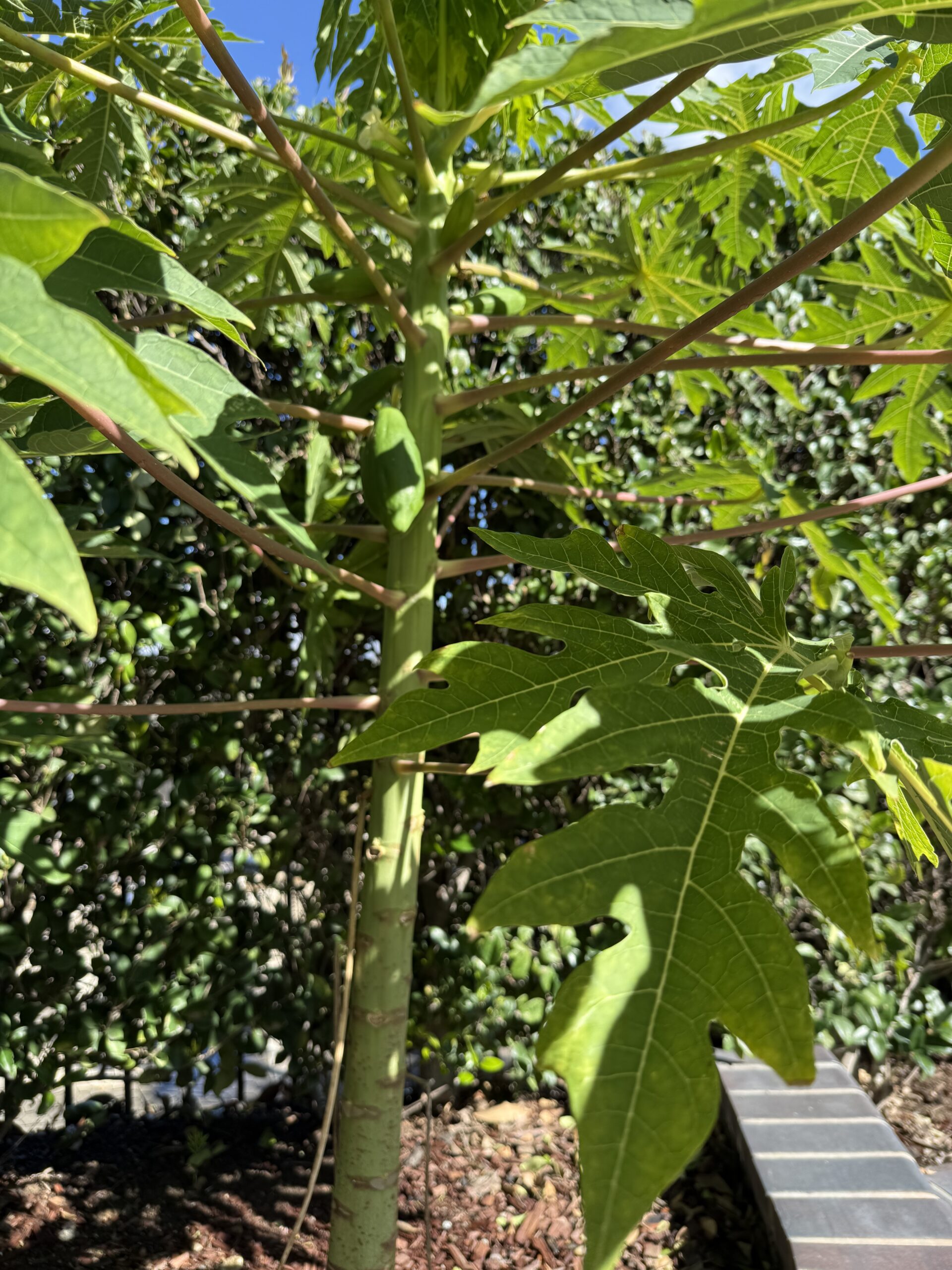
    • Distinctive Shape: By late 2025, it was already distinguishing itself with its long, angular fruits. It’s a striking contrast to the rounder solo varieties in the yard.

    🛠️ Care & Maintenance

    • Weight Support: Babaco fruits can become quite heavy due to their size. I monitor the trunk stability to ensure the tree can support the bountiful harvest.
    • Hydration Balance: While it loves regular water, I tip-toe the line during ripening to concentrate those unique “effervescent” sugars.
    • Harvesting: Since the skin is very delicate and edible, I wait for a full golden color-break before picking to ensure the peak flavor profile is achieved.
  • Waimanalo Papaya

    Waimanalo Papaya

    🧡 Plant Profile: Waimanalo Papaya (Solo X-77)

    📊 Basic Info

    • Variety: Waimanalo (Suspected; sourced from Cal Poly Pomona Farm Store)
    • Planting Date: Summer 2025
    • Yield Performance: ★★★☆☆ (Prioritizing vertical reach; building a strong frame for future harvests)
    • Growth Traits: Slender and tall; the reigning “skyscraper” of the current grove.

    📖 Variety Overview

    The Waimanalo is a staple in Southern California nurseries, known for its resilience and high-quality fruit that bridges the gap between commercial and home-grown excellence.

    • Appearance: This tree is characterized by its elegant, slender trunk and vigorous upward growth. Its future fruits are typically larger than the standard Sunrise Solo, with a smooth, yellow skin.
    • Flavor Profile: Expect thick, golden-orange flesh that is remarkably sweet and firm. It is often praised for its “clean” papaya flavor without the strong musky odor found in some wilder types.
    • Growth Habit: It has thrived in the Rowland Heights sun, using its height advantage to maximize photosynthesis. It is generally more tolerant of our local humidity fluctuations than some pure tropical varieties.

    📝 My Gardening Notes

    • Farm Store Find: Acquired as a healthy seedling from the Cal Poly Pomona Farmers Market in Summer 2025.
    • Leader of the Pack: While the other 5 trees are spreading their canopies, this one is focused on height, standing tall as a distinct marker in my tropical collection.

    🛠️ Care & Maintenance

    • Structural Support: I’m keeping a close eye on its lean trunk during windier days in Rowland Heights, ready to provide staking if it becomes top-heavy with fruit.
    • Deep Hydration: To support its rapid vertical expansion, I ensure the irrigation system provides consistent, deep moisture to the root zone.
    • Strategic Feeding: As it reaches higher, I am maintaining a balanced organic fertilizer regimen to ensure the growing tip remains vigorous and healthy.
  • March in the Orchard: A Guide to Spring Blooms, Pollination, and Fruit Set

    March in the Orchard: A Guide to Spring Blooms, Pollination, and Fruit Set

    The arrival of March marks the beginning of the busiest and most hopeful season in the orchard. As temperatures rise, dormant branches burst into life, and the fruit trees enter their spectacular blooming phase.

    However, for any orchard grower, “blooming” does not automatically mean “fruiting.” Spring temperature fluctuations, pollination efficiency, and how we manage water and nutrients directly impact the final fruit set. To ensure a bountiful harvest in the summer and fall, here are the crucial steps for securing your fruit crop this March:

    1. Know Your Pollination Types The trees in the orchard generally fall into two categories, and they require completely different approaches:

    • Self-fruitful: Trees like white peaches, citrus (navel oranges, grapefruits), and figs can pollinate themselves. A single tree can produce a full crop. For these, keeping the tree healthy is usually enough.
    • Cross-pollination: This requires close attention! For example, the Minnie Royal and Royal Lee cherries. They strictly need to exchange pollen with each other to set fruit. If one blooms early and the other is a bit behind, we need to pay special attention to the window when their blooms overlap.

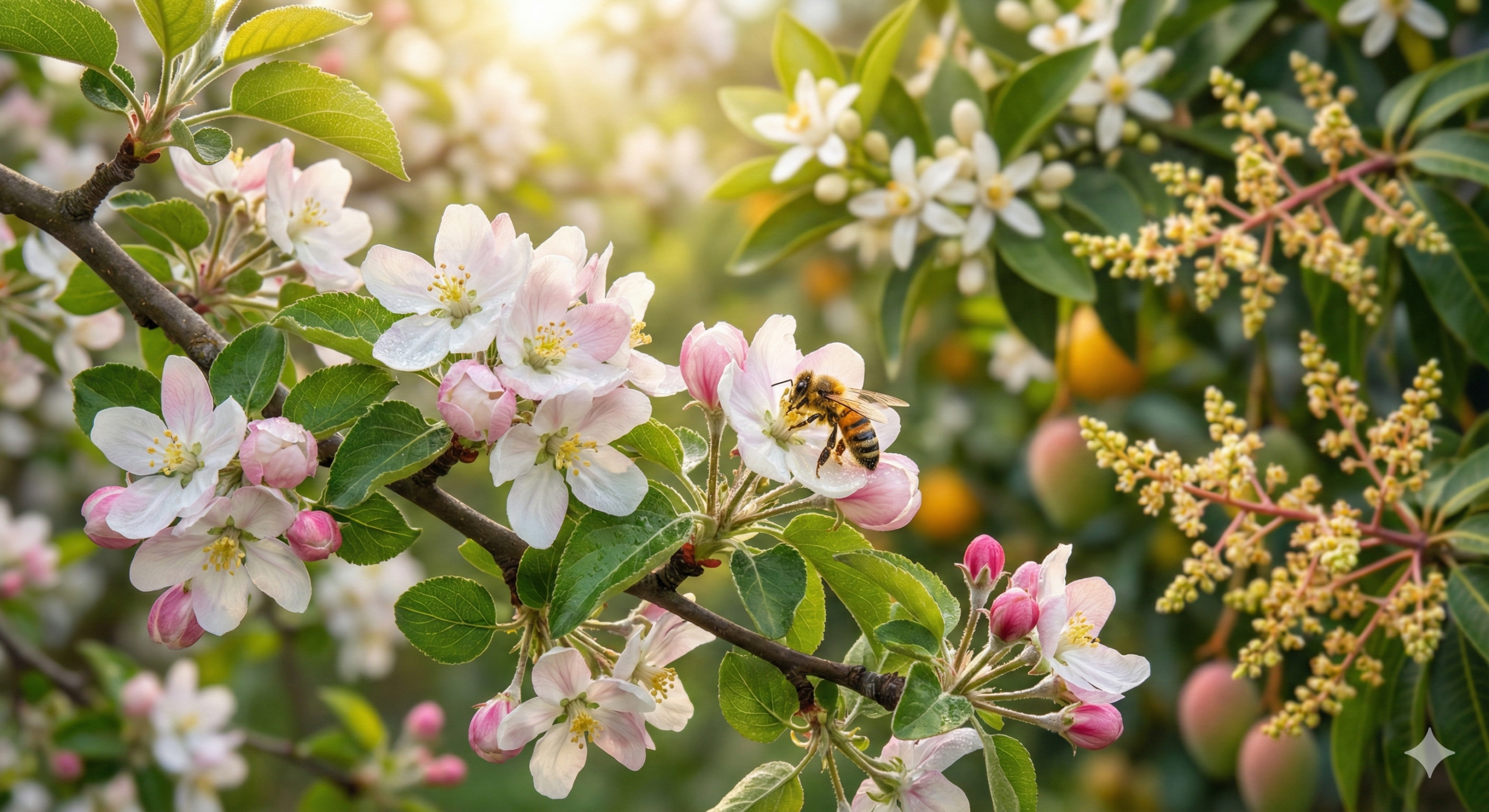
    2. Become the Bee: Hand Pollination In early spring (especially late February into early March), Southern California can occasionally experience cold snaps or overcast days, making natural pollinators (like bees) less active.

    • How to do it: Get a clean, soft, small brush (like a makeup brush or paintbrush). On a clear morning, gently brush the center of the flowers on one variety to collect the yellow pollen, and then brush it onto the flowers of the partner tree. This simple action can dramatically increase the fruit set of cross-pollinating trees like cherries.

    3. The Art of Restraint: Water & Fertilizer Management Blooming consumes a massive amount of energy, but managing the tree during this time requires caution:

    • Consistent Moisture: Check your drip irrigation system. Trees hate extreme dryness or wetness during the bloom. Bone-dry soil will cause flowers to shrivel and drop; flooding the roots causes oxygen deprivation, leading to massive blossom drop. Keeping the soil under the mulch “consistently slightly moist” is the sweet spot.
    • Hold the Heavy Fertilizer: This is a common mistake. Do not apply heavy nitrogen fertilizers while the tree is in full bloom! Excessive nitrogen will trigger the tree to push rapid leafy growth (vegetative growth), causing it to naturally abort its flowers (reproductive growth). The correct method: feed well before blooming, hold off during the bloom, and start fertilizing again only after the flower petals fall and tiny green fruits have set.

    4. Pest Control & Protecting the Bees Tender spring flushes are a favorite target for aphids and leafminers.

    • Precision Control: If you spot pests, you must address them promptly. However, avoid spraying pesticides during peak bloom, even organic options like Neem Oil.
    • Safe Timing: If you absolutely must spray, do it in the late evening when bees have returned to their hives. Aim strictly for the infested new leaves and avoid spraying the flowers to protect our hard-working pollinators.

    Blooming is just the prelude to the harvest. With a little extra patience this month, and by balancing pollination, water, and nutrients, the heavily laden branches a few months from now will be nature’s greatest reward.